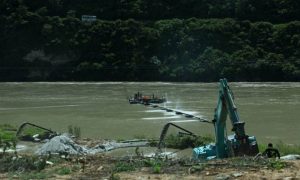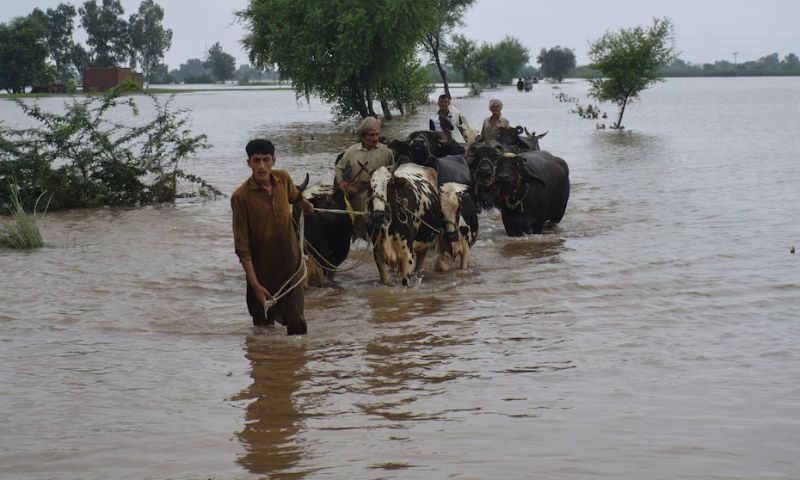
LAHORE/ISLAMABAD: Authorities in Pakistan warned on Sunday of an “extremely high flood” risk along the Chenab River after India released an estimated 800,000 cusecs of water from the Salal Dam without prior information.
Punjab’s Provincial Disaster Management Authority (PDMA) said the surge is expected to reach Head Marala within 48 hours, raising fears of fresh devastation in areas already reeling from severe monsoon flooding.
“All districts along the Chenab River have been placed on high alert. The next 36 hours are critical,” PDMA Director General Irfan Ali Kathia told reporters, urging residents of low-lying districts to move to safer ground.
According to irrigation officials, the release from Salal Dam follows an earlier outflow of 900,000 cusecs last week, compounding pressure on Pakistan’s river system.
After Salal Sam, India has also opened the gates of the Bhakra Dam on the Sutlej River, which is already flooding in Pakistan.
🚨 After Salal Sam, India has opened gates of Bhakra Dam on Satluj river, which is already flooding in Pakistan. pic.twitter.com/EmLc3kUIhT
— South Asia Index (@SouthAsiaIndex) August 31, 2025
Local media reported that all spillway gates of the dam had been opened, though no official notification was issued by New Delhi.
The Chenab, Ravi and Sutlej rivers are already flowing at dangerous levels. Punjab Relief Commissioner Nabeel Javed said more than 2,000 villages have been inundated, displacing over 2 million people.
So far, some 760,000 residents have been evacuated, while at least 33 deaths have been confirmed from flood-related incidents across the province.
Water level at dams
Officials said Tarbela Dam has reached full capacity and Mangla is 82 percent full, limiting Pakistan’s ability to absorb additional inflows.
شام 6 بجے ڈیمز/دریاؤں کے اہم مقامات پر پانی کے بہاؤ اور سیلابی سطح کی صورتحال۔ pic.twitter.com/VWyiErIAVO
— FFDLahore (@ffdlhr) August 31, 2025
Controlled breaches have already been carried out in Bahawalpur and other districts to protect major headworks.
In Multan’s Shujaabad tehsil, Commissioner Amir Karim warned that up to 800,000 cusecs could pass through the Chenab, threatening 140 downstream villages.
Floodwaters have inundated wide swathes of farmland, killing livestock and destroying standing crops.
In Jhang, 180 villages remain submerged, while in Vehari, more than 100,000 people are reported stranded.
Disease outbreak in flood-hit areas
Health risks are mounting in submerged settlements. Emergency medical teams reported outbreaks of diarrhoea, cholera, dengue and malaria, with doctors warning that shortages of clean water and overcrowded relief shelters could worsen the crisis.
Sindh province is bracing for the incoming surge as floodwaters move downstream.
Chief Minister Murad Ali Shah, visiting Guddu Barrage, said authorities are preparing for a potential “super flood” of up to 900,000 cusecs.
“Our top priority is to safeguard lives, livestock and barrages,” Shah said, adding that evacuation plans, medical camps and Navy boats are in place.
CM @MuradAliShahPPP Ali at Guddu Barrage:
“We are preparing for possible super flood of 0.9 million cusecs. Our priority is to protect lives, livestock & barrages. Sindh govt, PDMA, Navy & Army are fully mobilised. Evacuation plans, medical camps & boats are in place. pic.twitter.com/np4MBmkxhZ— Sindh Chief Minister House (@SindhCMHouse) August 31, 2025
Climate Change Minister Musadik Malik said the flooding highlights the impact of climate change on Pakistan, a country with minimal contribution to global emissions but high vulnerability to extreme weather.
“The major destruction has passed, but our focus must now shift to relief and rehabilitation,” Malik said, noting that around 800,000 displaced people are from middle-income families with limited resilience.
The National Disaster Management Authority (NDMA) said it is coordinating with provincial governments, distributing relief supplies and maintaining round-the-clock monitoring of river flows.