


CARACAS, Venezuela: Venezuela announced on Tuesday that it had withdrawn its invitation to the European Union to monitor July’s presidential election, condemning “interventionist practices ” through sanctions.
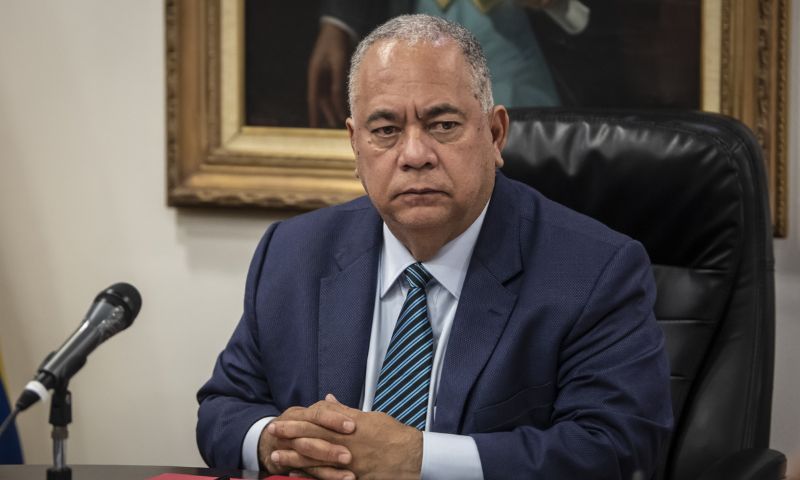
The head of the National Electoral Council, Elvis Amoroso, told reporters that it would be “immoral” to allow an EU mission to observe the election “knowing their neo-colonial and interventionist practices against Venezuela.”
He also called for a “total lifting” of the asset freeze and travel sanctions the EU ratified two weeks ago against 50 Venezuelan government officials.
At the same time, the EU eased some travel restrictions on Amoroso and his three colleagues to promote free and fair elections – a move the head of the electoral council described as “blackmail”.
Caracas in March called on the EU to send a team of observers to the July 28 election, in which President Nicol£s Maduro will seek a third term in office, with his main rival not running.
It also invited the UN, the US-based Carter Center, BRICS and the African Union.
Last year, Maduro’s government and the opposition agreed in Barbados to hold a free and fair election in 2024 in the presence of international observers.
The deal saw the United States ease sanctions against the oil-rich South American country, allowing US-based Chevron to resume limited oil production and leading to a prisoner exchange.
Since then, however, the Maduro-loyal Supreme Court has upheld a 15-year ban on opposition primary winner Maria Corina Machado on what are widely believed to be trumped-up charges and arrested several other opposition leaders and activists.
Maduro is accused of jailing dissidents and abusing state institutions to sideline political challengers ahead of the July 28 vote.
He was re-elected in 2018 for a six-year term, but was not recognized by the United States and dozens of other countries and faced a series of sanctions.
After inspecting the 2021 local elections, the European Union identified problems including the use of public resources in election campaigns and “arbitrary disqualification” of candidates.
The bloc has not yet accepted Caracas’ original invitation to return in 2024, but last month sent a team with Carter Center representatives to discuss a possible observer mission.
Maduro will face Edmundo Gonzalez Urrutia, the opposition’s pick for Machado.
Earlier this month, a human rights group and UN experts condemned what they called an alarming increase in “persecution” in the South American country ahead of the vote.
The non-governmental organization Foro Penal said on Tuesday that there are 273 confirmed political prisoners in Venezuela, more than half of whom have not been convicted of any crime.
And the UN Working Group on Enforced or Involuntary Disappearances has reported an increase in enforced disappearances – mainly of members of the opposition or the military – and said it could impede free and fair voting.
Rights group Provea says that during the ten years of Maduro’s rule, Venezuelan security forces have killed more than 10,000 people and tortured 1,650.


Where Integrity is Everything