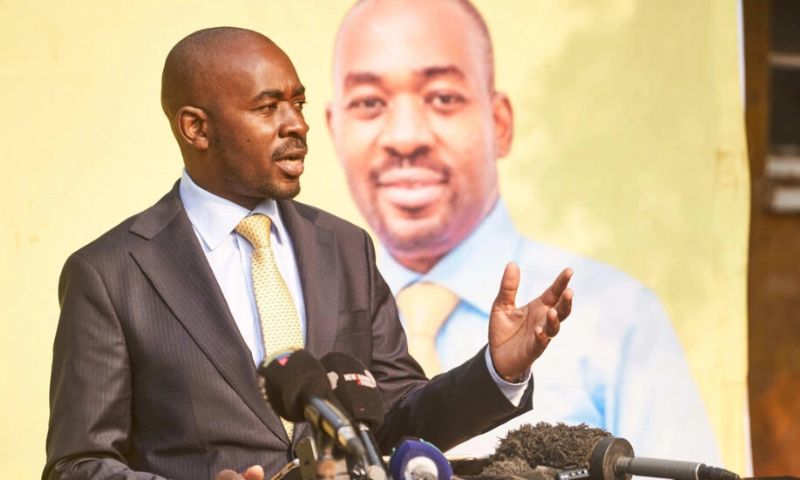



HARARE: Zimbabwe’s opposition leader, Nelson Chamisa, contested the official re-election of President Emmerson Mnangagwa on Sunday, claiming victory in an election that international observers criticized for falling short of democratic standards. President Mnangagwa secured a second term with 52.6 percent of the ballots, while his main challenger, Chamisa, received 44 percent, according to the Zimbabwe Electoral Commission (ZEC).
Chamisa, who leads the Citizens Coalition for Change (CCC), rejected the results, deeming them “false.” In a press conference in the capital Harare, he boldly declared, “We have won this election. We are the leaders. We are even surprised that Mnangagwa has been declared a leader.”
The election, which took place on Wednesday and Thursday, was marred by delays, leading to accusations of rigging and voter suppression from the opposition. Chamisa highlighted issues with the voter registration rolls, biased state media coverage, and voter intimidation as factors that compromised the electoral process.
Zimbabwe’s President Challenges Opposition
Despite concerns raised by foreign observers, including the European Union and the Southern African Development Community (SADC), Mnangagwa challenged those contesting the results to take the legal route. “Those who feel the race was not run properly should know where to go to,” he stated.
Mnangagwa’s presidency is seen as a test of support for the ruling ZANU-PF party, which has been in power for 43 years. The election results have deep implications for the country’s political landscape and the credibility of its democratic processes.
However, some expressed their disillusionment with the results in Harare, with concerns about the validity of the election process. The opposition’s decision to challenge the outcome in court has garnered attention, with political analysts suggesting that the CCC has valid grounds for doing so.
Mnangagwa, nicknamed “The Crocodile,” first rose to power after a coup in 2017 that ousted the late ruler Robert Mugabe. His presidency has been marked by attempts to rebuild the country’s economy and international relations.