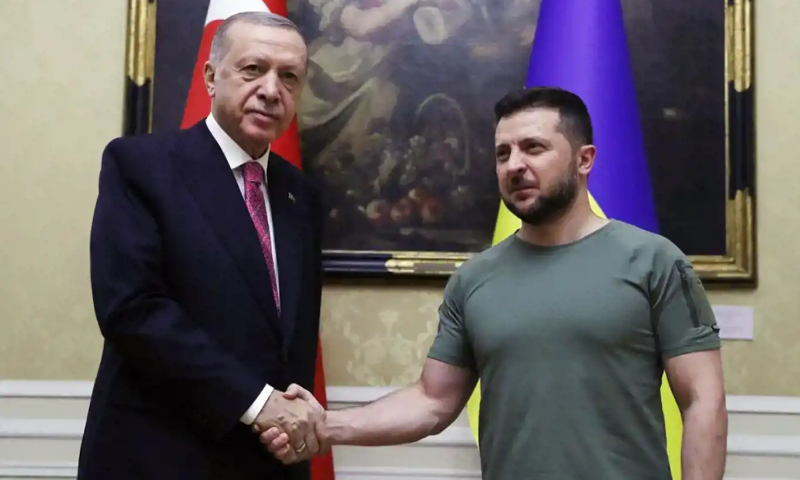



ISTANBUL: In a significant diplomatic move, Ukrainian President Volodymyr Zelensky is set to travel to Turkey on Friday to meet with his Turkish counterpart, Recep Tayyip Erdogan. This visit marks Zelensky’s first trip to Turkey since Russia’s invasion of Ukraine.
According to the officer of Turkish president, the two leaders may hold a joint press conference following their talks in Istanbul. The main agenda for the meeting is expected to include discussions on several key issues. One of the focal points will be the expiring agreement concerning the transportation of Ukrainian grain across the Black Sea. Additionally, the upcoming NATO summit, scheduled for next week, is also expected to be a significant topic of conversation.
Analysts anticipate that Zelensky will use this opportunity to urge Erdogan to support Sweden’s NATO membership, which has been currently blocked by Turkey. The deadlock arises from a long-standing disagreement between Turkey and Sweden regarding the perceived lenient approach of Stockholm towards alleged Kurdish militants residing in the Nordic country.
Erdogan’s Role in Ending Ukraine War
Both Zelensky and Erdogan also share an interest in extending a crucial United Nations and Turkey-brokered deal with Russia. This agreement allows Ukraine to export its grain to global markets amidst the ongoing conflict. Erdogan, known for his diplomatic relations with Zelensky and Russian President Vladimir Putin, has sought to mediate to end the war in Ukraine. Turkey has previously facilitated two rounds of peace negotiations and is pushing for further talks.
However, Western governments express concerns over Turkey’s deepening economic ties with Russia and its resistance to NATO’s expansion. As a member of the alliance, Turkey’s position on Sweden’s candidacy for NATO membership raises questions about the cohesion within the bloc.
The meeting between Zelensky and Erdogan in Istanbul holds significant geopolitical implications for the region. It provides an opportunity for both leaders to address pressing issues and potentially pave the way for diplomatic breakthroughs.