



KEY POINTS
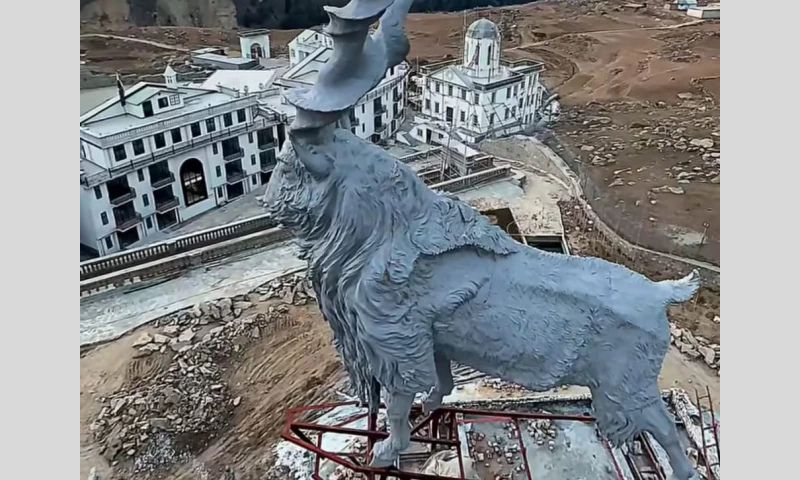
- The 105-foot-tall Markhor sculpture is the world’s largest representation of Pakistan’s national animal.
- The statue took five years to complete, highlighting dedication to art and wildlife conservation.
- The sculpture serves as a reminder of the endangered Markhor species.
ISLAMABAD: In a historic unveiling that celebrates both art and wildlife conservation, Kaghan Valley has become the home to the world’s largest sculpture of the Markhor, Pakistan’s national animal.
The monumental statue, towering at 105 feet and stretching 38 feet in width, was installed near the Shah Dawood Palace site in Batakundi, a scenic area in the valley known for its breathtaking landscapes.
Crafted by Pakistani engineer Muhammad Shehzad, the statue took five years to complete, showcasing an immense dedication to both his craft and to the conservation of Pakistan’s wildlife.
The sculpture, which is a striking representation of the Markhor’s spiral horns and unique, agile posture, is a powerful symbol of the animal’s ability to navigate steep, rugged mountain ranges, a characteristic that makes the Markhor one of the most resilient species in Pakistan’s diverse ecosystem.
Tribute to Pakistan’s National Animal
The Markhor, with its majestic appearance and impressive spiral horns, has long been a symbol of Pakistan’s high-altitude wildlife.
In addition to its aesthetic grandeur, the sculpture serves an important environmental message, bringing attention to the Markhor’s endangered status.
The world’s largest sculpture of the markhor, Pakistan’s national animal, has been unveiled in the country’s Kaghan Valley. The 105-foot-high and 38-foot-wide structure took five years to complete. pic.twitter.com/LGUlFJle1h
— Al Jazeera English (@AJEnglish) December 3, 2025
Found in remote mountainous areas of Pakistan, such as Chitral, Kohistan, Kalam, Gilgit-Baltistan, Balochistan, and parts of Azad Kashmir, the species has faced significant challenges, including poaching and habitat loss.
According to project organisers, the sculpture’s primary purpose is to highlight the need for the conservation of the Markhor, whose population has seen a decline in recent years.
The statue aims to raise public awareness about the importance of preserving not only the Markhor but also the fragile ecosystems of Pakistan’s mountainous regions, which are home to a wide variety of unique wildlife.
Tourism and Environmental Impact
Local authorities and tourism stakeholders have expressed high hopes that the statue will attract both national and international visitors.
As the largest Markhor sculpture in the world, it is expected to become a major landmark, drawing attention to Kaghan Valley and promoting cultural and eco-tourism in the region.
The valley, known for its picturesque landscapes, is already a popular tourist destination, and the addition of this grand monument is expected to bolster its appeal.
“We are excited to have such a remarkable piece of art installed in our region,” said a local tourism official.
“Not only does it celebrate our national animal, but it also promotes awareness of the importance of preserving the beauty of our natural environment. We believe this will boost both tourism and local pride in our heritage.”
The statue is strategically placed near Shah Dawood Palace, a significant historical site, adding to the region’s rich cultural landscape.
The combination of natural beauty, historical significance, and environmental consciousness offers a compelling reason for travellers to explore Kaghan Valley and engage with its history and wildlife.
Fusion of Art and Ecological Advocacy
The unveiling of the Markhor sculpture marks an important moment in the growing movement to combine art with environmental advocacy in Pakistan.
By creating a monument that both celebrates the country’s wildlife and underscores the importance of its conservation, the project aims to inspire a broader public engagement with environmental issues.
The hope is that the presence of this iconic sculpture will encourage locals and tourists alike to take an active role in protecting Pakistan’s ecosystems.
Shehzad’s work is not just a testament to his skill as an engineer and artist, but also to his passion for promoting environmental sustainability.
The project highlights the power of public art to communicate crucial messages about the need to preserve endangered species and the delicate ecological balance of the country’s mountainous regions.
Lasting Tribute to Pakistan’s Natural Heritage
As Kaghan Valley welcomes visitors to this new cultural and environmental landmark, the Markhor sculpture stands as a lasting tribute to Pakistan’s natural heritage.
It serves as a reminder of the beauty and resilience of the country’s high-altitude wildlife and a call to action for both the conservation of species like the Markhor and the protection of the ecosystems that sustain them.
This remarkable project not only celebrates artistic vision but also inspires future generations to appreciate and safeguard the stunning natural landscapes of Pakistan.
Brief History of Batakundi
Batakundi is a charming village nestled in the Kaghan Valley of Khyber Pakhtunkhwa (KP) province in northern Pakistan.
Located about 12 kilometers from the town of Naran, Batakundi is a picturesque destination surrounded by lush forests, snow-capped mountains, and sparkling rivers.
The village is known for its serene environment, making it a popular stopover for travellers heading to Naran and the higher elevations of Kaghan Valley, including the famous Lake Saif-ul-Malook.