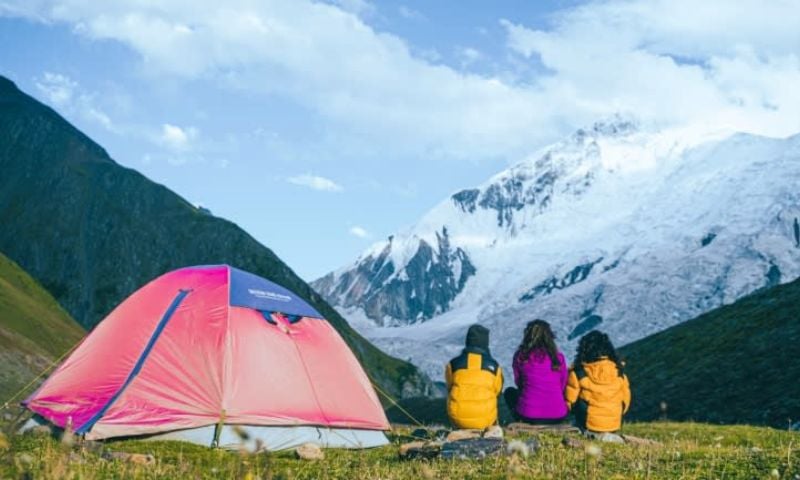



LAHORE: A growing number of women are emerging as key players in Pakistan’s expanding tourism sector, stepping into roles as tour guides, business founders and homestay operators at a time when the industry is steadily recovering.
Among them is Javeria Anwar, 36, whose first visit to the scenic Hunza Valley in 2019 inspired a career shift, according to a report published by Nikkei Asia.
Moved by the region’s dramatic peaks and tranquil rivers in Gilgit-Baltistan, she later joined a travel company and began leading group tours to remote areas of Khyber Pakhtunkhwa.
Over the years, Anwar has earned a professional guiding license and escorted both domestic and foreign visitors to destinations ranging from alpine lakes near the Chinese border to historic temples in Punjab and heritage sites in Sindh.
She represents a wider trend. After decades of decline triggered by political instability and security concerns following the 1960s and 1970s “hippie trail” era — when travelers crossed through the Khyber Pass linking cities such as Peshawar and Lahore — Pakistan’s tourism industry is showing renewed vitality.

According to official data, more than two million foreign tourists visited the country in 2024, with tourism contributing nearly six percent to national GDP. Domestic travel remains the sector’s main driver.
Industry stakeholders say the COVID-19 pandemic proved to be a turning point. Sobia Maq, co-founder of Hunza-based Route16, noted that when international travel halted, domestic tourism surged.
Visitors not only discovered scenic landscapes but also a sense of security that challenged common perceptions about travel in Pakistan.
Studies conducted by the Lahore University of Management Sciences show Hunza’s literacy rate is close to 95 percent for both men and women, significantly higher than national averages.
Despite Pakistan ranking among the lowest countries globally for women’s economic participation in recent reports by the World Economic Forum, female entrepreneurs in tourism are carving out visible space.

Women-run guesthouses and tour services are increasingly catering to female travelers, creating environments that prioritize safety and cultural engagement.
Industry observers say this model is encouraging more women to travel independently, further expanding the market.
Beyond the northern mountains, tourism activity is diversifying. In Lahore, Anwar guides visitors through Mughal-era landmarks, while in Multan she introduces travelers to the Tomb of Mai Maharban, a 13th-century shrine known for its distinctive tilework.
Members of the Pakistani diaspora are also reconnecting with their heritage.

Aisha Patel, a London-based entrepreneur of Pakistani descent, returned in 2024 after decades away. Following her experience traveling across mountain valleys and historic cities, she launched Sistours, a company organizing women-focused trips to Pakistan.
Digital platforms are accelerating this shift. Online communities such as Travel Girls are helping women connect, share travel plans and build confidence.
Challenges remain, particularly cultural resistance in conservative settings. Misa Talpur, a tour guide from Sindh, faced criticism when she began solo travel in 2016.
Today, she operates Misa Mountain Homestay, offering accommodation designed to feel safe and welcoming for women.

Industry leaders say sustained growth will require better financial access and improved mobility infrastructure.
Still, many remain optimistic that tourism offers one of the few expanding spaces for women’s economic leadership in Pakistan.