
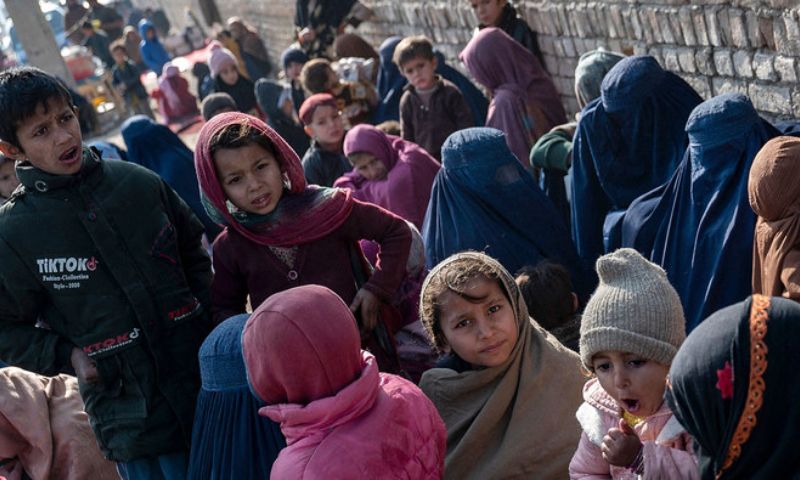



KABUL: As winter grips Kabul, millions of Afghans are sliding deeper into hunger following large-scale deportations from Iran and Pakistan and sharp reductions in international assistance, compounding an already dire humanitarian crisis, according to the World Food Programme.
In a makeshift tent on the outskirts of Kabul, 55-year-old Samiullah shares dry bread and tea—his family’s only meal of the day—with his wife, children and a three-month-old grandchild. Recently deported from Iran, the family lost their home, savings and livelihood almost overnight, reports Reuters.
“We have reached a point where we are content with death,” Samiullah said. “At least our children’s lives should be better.”
According to the United Nations World Food Programme (WFP), more than 17 million Afghans are now battling acute hunger.
Iran and Pakistan have deported over 2.5 million Afghans in the past year, swelling Afghanistan’s population by nearly 10% and cutting off vital remittances that once sustained families.
Many returnees, once employed abroad, now face joblessness as winter freezes economic activity. “Those remittances were a lifeline for Afghanistan,” said John Aylieff, WFP’s country director, warning that three million more people have slipped into acute hunger.
The crisis is being compounded by global aid reductions. Funding cuts following the return of U.S. President Donald Trump to the White House, along with donor fatigue elsewhere, have severely constrained humanitarian operations.
The WFP recorded Afghanistan’s worst-ever surge in malnutrition last year and expects conditions to worsen, with an estimated 200,000 additional children facing acute malnutrition in 2026.
At aid distribution centres, supplies fall short of demand. In Bamiyan, long queues form for limited rations of rice and oil. “Sometimes we eat, sometimes we don’t,” said Zahra Ahmadi, a widowed mother of eight, receiving assistance for the first time.
Health facilities are also overwhelmed. At Kabul’s Qasaba Clinic, malnutrition cases have doubled since the influx of returnees. The clinic treats around 30 malnourished children daily, but available supplements are insufficient to sustain families who once relied on regular WFP support.
“My son improves, then loses weight again,” said Laila, a 30-year-old mother. “After the Taliban takeover, my husband lost his job, and our economic situation collapsed.”
Afghan authorities say assistance is being provided where possible, but acknowledge that decades of conflict and economic collapse cannot be reversed quickly.
As temperatures plunge after sunset, Samiullah lights a small stove to keep his children warm. “When they say they are freezing, I hold them and say it will be OK,” he said quietly. “What choice do we have?”