


Key points
- Australia stunned by Zimbabwe’s 23-run upset
- Upcoming matches offer Australia quick reset
- Powerplay and middle overs must improve
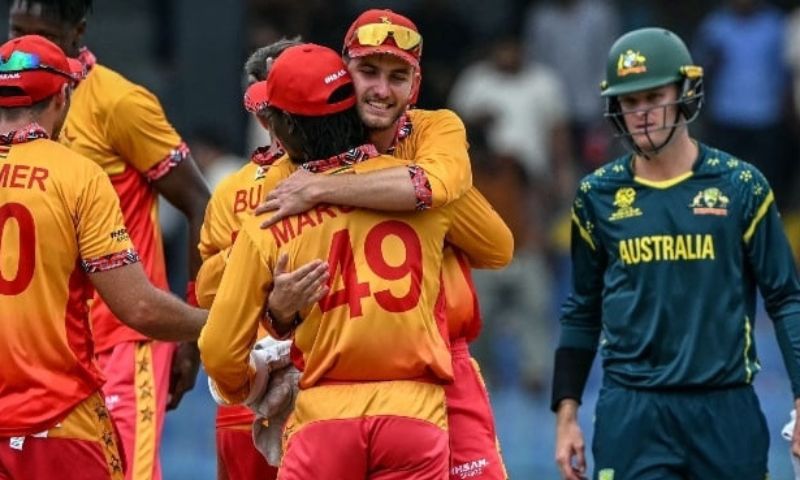
COLOMBO: Australia’s T20 World Cup 2026 campaign has been jolted by a result few saw coming — a 23-run defeat to Zimbabwe at the R. Premadasa Stadium that has tightened Group B and turned the remaining fixtures into near must-wins.
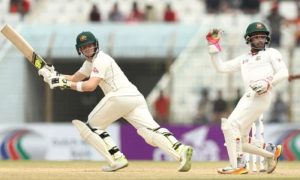
Zimbabwe’s upset was built on a calm batting effort and a ruthless new-ball burst. After being sent in, they posted 169-2, with Brian Bennett unbeaten on 64 and captain Sikandar Raza adding a late cameo. Australia’s reply then collapsed to 29-4 inside the powerplay, leaving too much to do despite Matt Renshaw’s 65. Zimbabwe seamer Blessing Muzarabani led the charge with 4-17, supported by Brad Evans’ 3-23, as Australia were bowled out for 146.
The bigger question now is whether Australia can rebound in the way tournament heavyweights often do — by simplifying the plan, tightening execution, and letting depth do the work. The schedule offers them an immediate chance to reset: Australia face Sri Lanka on 16 February at Pallekele (Kandy), followed by Oman on 20 February, also at Pallekele.
Grand comeback
Mathematically, Australia are still in control of their own fate, but the margin for error has evaporated. Updated standings and points-table coverage show Zimbabwe’s win has pushed them ahead in the race for Super 8 places, leaving Australia needing results — and likely net run-rate help — depending on other outcomes.
So what must change for a “grand comeback” to be realistic?
First, Australia must fix the powerplay — both with bat and ball. Against Zimbabwe, early wickets created scoreboard pressure that never truly lifted. Second, their middle-order hitters need to convert starts into momentum, rather than rebuilding slowly and leaving too much for the final overs. Third, Australia’s bowling — particularly spin and pace variations on Sri Lankan surfaces — must be sharper, because Pallekele has rewarded teams who control the middle overs and force mistakes under rising required rates.
If Australia respond with the ruthlessness associated with their best tournament sides, two wins can still restore momentum. But after Colombo, the message is clear: this World Cup will not wait for anyone to find form — not even Australia.