


KEY POINTS
- Pakistan arrested Kabul airport bombing suspect, sending him to Washington.
- Trump publicly thanked Pakistan for key counterterrorism success.
- Pakistan opened mineral reserves to American companies for economic cooperation.
- ‘Jafar’ operation marked a turning point in US-Pakistan relations.
- Pakistan outspent India on powerful lobbying in the United States.
- Pakistan positioned itself as important Middle Eastern partner.
ISLAMABAD: Pakistan has regained strategic space in Washington by delivering visible results and rebuilding trust with the Trump administration, according to The Telegraph.
President Trump publicly thanked Pakistan for its key role in the arrest of the Kabul airport bombing suspect, calling it a major counterterrorism success. Pakistan also secured preferential tariff treatment and rare face time for its civilian and military leadership at the White House.
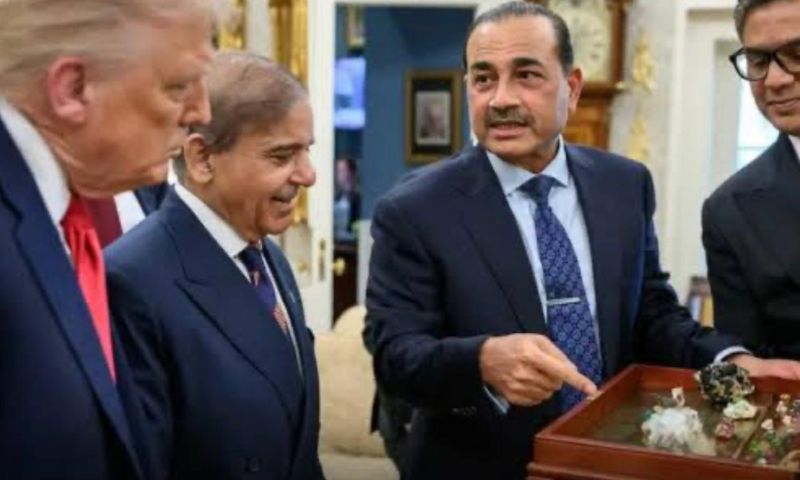
Agreements opening access to Pakistan’s vast mineral reserves for American companies further strengthened economic and strategic cooperation
Delivering key results
Pakistan’s recent cooperation with the United States went far beyond the arrest of a high-profile suspect accused of orchestrating a bombing that killed 13 American personnel during the chaotic US withdrawal from Afghanistan.
The country ensured that the suspect was immediately transported to Washington, sending a powerful signal of reliability to the White House.
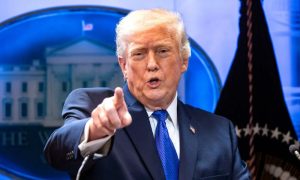
“Tonight, I am pleased to announce that we have just apprehended the top terrorist responsible for that atrocity, and he is right now on his way here to face the swift sword of American justice,” US President Donald Trump told a joint session of Congress in March. “And I want to thank, especially, the government of Pakistan for helping arrest this monster,” he added.
The Telegraph reports that this decisive act marked a turning point in Islamabad’s relationship with the Trump administration, which had been rocky during Trump’s first term. Back then, the US president accused Pakistan of “lies and deceit” for allegedly providing “safe havens” to Taliban groups while taking American aid.
Strategic lobbying and diplomatic edge
In contrast to India, which also invested heavily in US lobbying following border clashes, Pakistan has emerged with a notable edge in Washington. The country has secured preferential tariff rates and ensured direct access for both the army chief of staff and the prime minister to the Oval Office.
Islamabad achieved this through an assertive charm offensive, which included nominating Donald Trump for the Nobel Peace Prize and signing deals to open Pakistan’s mineral reserves to American companies. But experts say none of this would have been possible without the March breakthrough in counterterrorism cooperation.
The ‘Jafar’ operation
Sebastian Gorka, former senior director for counterterrorism under Trump, had identified two top priorities for the administration: rescuing hostages and capturing “Jafar” — the alias of Mohammad Sharifullah, a senior leader of the ISIS-Khorasan based in Afghanistan.
On 2 March, US authorities formally charged Sharifullah with orchestrating the deadly attack on Kabul airport’s Abbey Gate during the troop withdrawal. Just two days later, he was en route to Washington, coinciding with Trump’s public announcement.
A senior Pakistani official told The Telegraph, “That was the most important step. It reflected Pakistan’s intention to work closely with the administration.” A former Trump aide echoed this, calling it “a significant accomplishment so early on.”
South Asia and Washington’s attention
Tensions flared again in April when terrorists killed 26 tourists in Indian-administered Kashmir. India accused groups allegedly backed by Pakistan and retaliated with missile strikes, while Islamabad responded with airstrikes and artillery. The confrontation brought both nuclear-armed neighbours to the all-out war.
The Telegraph reports that these developments, coupled with Pakistan’s proactive diplomatic engagement, may have solidified Islamabad’s standing in Washington. Indian officials have denied any US mediation in the crisis, with Foreign Secretary Vikram Misri stating, “Prime Minister Modi emphasised that India has not accepted mediation in the past and will never do.”
Aggressive diplomatic campaign
Pakistan continued its outreach by nominating Trump for the Nobel Peace Prize. Additionally, Islamabad hired powerful lobbying firms in Washington, significantly outspending India in the process.
According to filings with the US Department of Justice, Pakistan retained Javelin Advisors, founded by two long-time Trump confidants — Keith Schiller and George Sorial — immediately following the Kashmir attack. Schiller, once Trump’s bodyguard and later director of Oval Office operations, and Sorial, reportedly guided Islamabad’s approach to align with the “America First” agenda.
High-level military engagement
One of the most notable milestones in Pakistan-US relations under Trump was the June visit of Chief of Defence Forces Field Marshal General Syed Asim Munir, Pakistan’s top military officer. His private lunch with Trump, off-camera and off-the-record, reflected the delicate balance of showcasing military leadership while respecting civilian authority.
Trump has publicly praised General Asim Munir since, even calling him his “favourite field marshal” during the Gaza ceasefire signing in October.
Strategic geopolitical positioning
Analysts say Pakistan has capitalised on the current geopolitical environment. Its close ties with Gulf Cooperation Council states, friendly relations with Iran, strategic location near the Middle East, and a new defence pact with Saudi Arabia position it as a key partner for US-led peace deals, according to Kugelman.
Additionally, Pakistan has emerged as a potential solution to Washington’s critical minerals challenge. In September, Islamabad signed a memorandum of understanding allowing US companies to access an estimated $6 trillion in mineral reserves, reducing Western reliance on China for essential resources.
Analysts note that Pakistan has successfully shaped the narrative that it is a stabilising actor with significant geopolitical and economic potential, including mineral resources valued at trillions of dollars.
Pakistan’s charm offensive has rebuilt goodwill in Washington and restored its relevance in US policy circles. However, experts caution that sustained delivery in counterterrorism cooperation, diplomacy and economic reform will be essential for Pakistan to consolidate and protect this renewed strategic advantage.