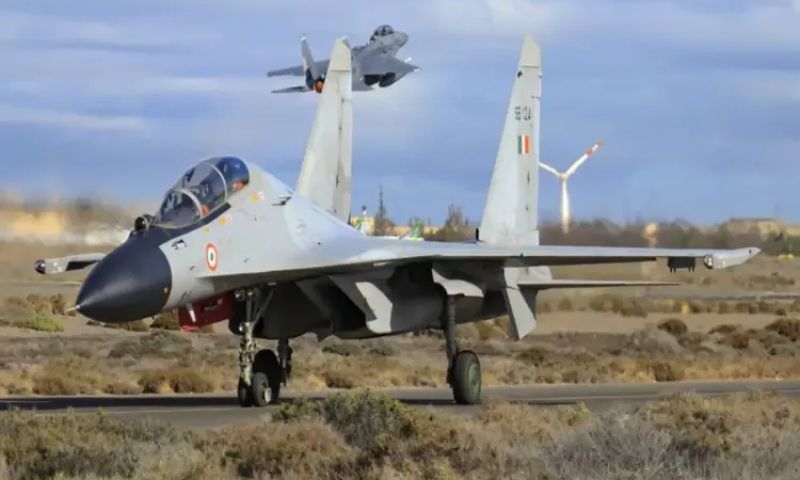
DUSHANBE: In a move with far-reaching geopolitical consequences, Tajikistan has reclaimed full control of the Ayni Air Base—also known as Gissar Military Aerodrome—effectively ending India’s two-decade-long presence at the facility.
The decision, finalized after months of silent negotiations, came amid increasing pressure from Russia and China, both of which view Central Asia as their strategic backyard. For New Delhi, the development represents not just the loss of a logistical outpost but a deep erosion of its ability to project influence north of the Hindu Kush.
India began its involvement with Ayni in the early 2000s, upgrading Soviet-era infrastructure to accommodate modern fighter jets, hangars, and radar systems. It was New Delhi’s only foreign military base—an effort to extend strategic depth and monitor developments in Afghanistan and Pakistan.
End of Lease and the Great-Power Squeeze
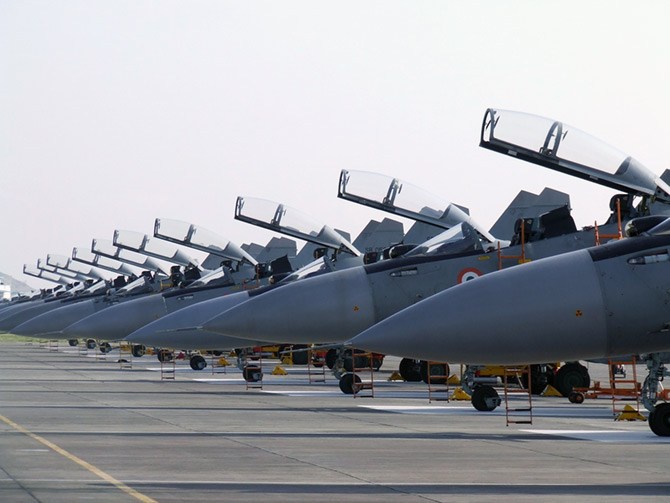
According to reports published in Indian media, including India Times (published October 31, 2025) and The Economic Times (published October 29, 2025), and Newsweek, India’s withdrawal from the Ayni Air Base took place gradually over several months. The bilateral lease agreement between New Delhi and Dushanbe expired in 2022 and was not renewed, prompting India to start removing its personnel and equipment from the facility that same year.
By early 2023, the process was completed, with all Indian infrastructure and staff fully withdrawn. However, the development only came to broader public attention in late October and November 2025, when news reports about the closure began circulating.
According to multiple reports, the Tajik government’s decision followed sustained geopolitical pressure from both Moscow and Beijing. Russia, maintaining its traditional dominance over Central Asia through the Collective Security Treaty Organization (CSTO), has long opposed the military presence of non-regional powers.
China, now Tajikistan’s largest creditor and infrastructure partner under the Belt and Road Initiative, is also said to have opposed India’s presence near its western frontier.
“Neither Russia nor China was comfortable with an Indian military facility operating within their shared sphere of influence,” said one regional security analyst quoted by Moneycontrol. “Tajikistan, heavily dependent on both powers for security and finance, simply could not resist the pressure.”
From Soviet Stronghold to Strategic Outpost
Located 15 kilometers west of Dushanbe, Ayni was built during the Cold War as part of the Soviet Union’s military network across Central Asia. It served as a key hub during Moscow’s invasion of Afghanistan (1979–89), allowing the Soviets to sustain operations in the rugged Pamir region.
Following the USSR’s collapse in 1991, Tajikistan inherited the facility but lacked the resources to maintain it amid civil war and economic crisis. India’s involvement in the early 2000s, reportedly costing tens of millions of dollars in upgrades, revitalized the base.
The move was strategically significant: it offered India a potential foothold near the volatile Afghanistan–Pakistan corridor and a vantage point to counterbalance China’s western expansion.
Afghanistan’s Fall and India’s Waning Leverage
India’s withdrawal from Ayni coincided with the Taliban’s return to power in Afghanistan in 2021, which effectively nullified New Delhi’s earlier strategic calculus. With no friendly regime left in Kabul and limited air corridors, the base’s utility sharply declined.
Still, analysts say India’s inability to retain even a symbolic presence reflects its declining leverage in Central Asia—an area now firmly within the orbit of Russia and China.
Moscow and Beijing Tighten the Noose
Reports indicate that after India’s departure, Russian military units under the CSTO umbrella assumed operational control of Ayni. While Tajikistan officially claims “full sovereignty” over the base, the reality points to an enhanced Russian presence—backed by China’s growing economic clout in Dushanbe.
Beijing’s influence in Tajikistan has expanded exponentially in the past decade, through mining rights, infrastructure loans, and security cooperation near the Wakhan Corridor. Together, Russia and China appear determined to limit India’s—and any other external power’s—military role in their shared neighborhood.
“This is the new Great Game,” said an expert at the Carnegie Moscow Center. “But unlike the 19th century, the players are no longer the British and the Russians—it’s Russia and China ensuring Central Asia remains closed to others.”
India’s Shrinking Strategic Space
The loss of Ayni underscores a broader reality for New Delhi: its continental outreach remains constrained by geography and diplomacy. Without direct land access to Central Asia—blocked by Pakistan—India has relied on limited air and sea corridors. The closure of its only overseas airbase now leaves it with no permanent military presence beyond its borders.
Critics in India have called the exit a “strategic blunder.” The opposition Parties in India described it as “a humiliation that signals the failure of India’s foreign policy under regional pressure.”
For Tajikistan, the decision reflects the difficult balancing act of smaller states in a crowded geopolitical theatre. Heavily reliant on Russian security guarantees and Chinese loans, Dushanbe’s room for independent maneuver has narrowed sharply.
While reclaiming Ayni may appear as a show of sovereignty, in practice it binds Tajikistan even closer to Moscow and Beijing—two powers whose rivalry with the West, and increasingly with India, is shaping the new security architecture of Eurasia.
India’s quiet withdrawal from Ayni marks more than the loss of a military installation—it symbolizes the end of its northern strategic horizon.