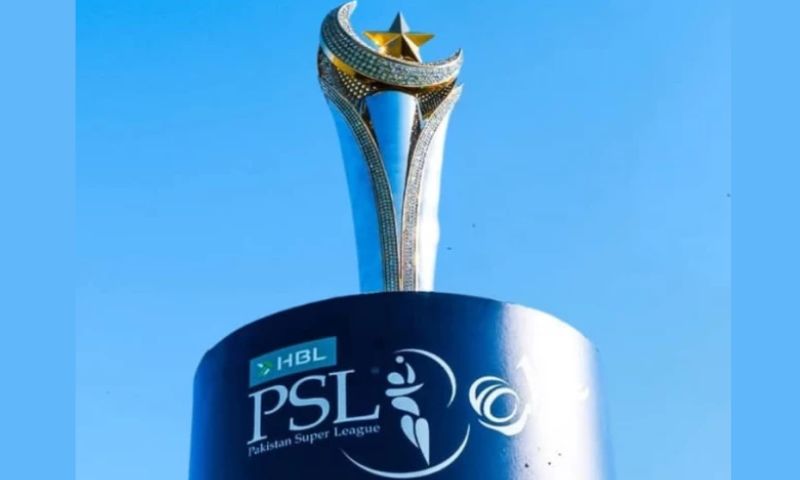



As the 2026 T20 league season unfolds, the contrast between PSL and IPL has rarely felt sharper. While the IPL rolls out across a packed roster of venues — giving every team a chance to play an equal number of home and away games — the PSL begins under constraints that underline its ongoing struggle for stability and stature.
This year, the PSL is being played largely behind closed doors due to Pakistan’s fuel conservation policy, with broadcast operations restricted primarily to Lahore and Karachi.
The spectacle, once celebrated for bringing international cricket back to Pakistan, will now be consumed merely on television rather than experienced in stadiums. It is a logistical compromise, but also a symbolic one: a league still negotiating its place in a rapidly evolving global T20 economy.
A Window of Unequal Power
The scheduling overlap between the PSL and IPL has once again exposed the imbalance between the two leagues. The IPL is no longer just a competitor—it is the axis around which the global T20 calendar revolves. The PSL, by contrast, finds itself adjusting, accommodating, and often conceding.
This season saw multiple players either withdraw from or decline PSL contracts after receiving IPL opportunities.
While not always publicly framed as a direct choice, the pattern is evident. For overseas players, the IPL offers not just higher financial incentives but a far greater platform — better career opportunities, global visibility, and career-defining exposure in multiple leagues where IPL team owners have bought franchises.
Cricket analysts and former players have increasingly labelled this trend of players pulling out of PSL because of IPL offers as “unprofessional” and “unsustainable.”
When players treat the PSL as a fallback option rather than a primary commitment, it raises uncomfortable questions: Has the PSL become a secondary marketplace for those outside IPL consideration? Is it evolving into a developmental league for others, rather than a destination league in its own right?
These are not easy questions, but they are now unavoidable.
The Uneven Journey of the PSL
To understand the PSL’s present, one must revisit its fragmented past.
Launched in 2016 in the UAE due to security concerns, the league began as an ambitious project to revive Pakistan’s cricketing ecosystem.
The 2017 final in Lahore was a landmark moment—a symbolic homecoming. In 2018, a few knockout matches were hosted in Pakistan, followed by eight matches in 2019, gradually building confidence.
The breakthrough came in 2020 when Pakistan hosted an entire PSL season at home, although the Covid-19 pandemic disrupted continuity.
The 2021 season was partially played in Pakistan before being shifted back to the UAE after 14 matches. The 2022 edition operated under strict health protocols.
Structural stagnation followed. Expansion plans stalled due to financial constraints, with no new teams introduced even by 2024.
In 2025, geopolitical tensions led to the postponement and rescheduling of the tournament. Now in 2026, the absence of crowds further dents its aura.
The PSL’s story has been one of resilience—but also one of interruptions. And in elite sport, continuity is currency.
The Talent Question: Promise vs Production
At the heart of the debate lies the PSL’s most critical mandate: talent development.
Over the years, the league has introduced many exciting players. Many arrived with immense promise, often dominating PSL seasons with eye-catching performances.
Yet, the transition to international cricket has been inconsistent at best.
Contrast this with players who have risen through Pakistan’s traditional domestic structure. These players, forged through longer formats and sustained domestic grind, have shown greater consistency at the international level.
The distinction is telling. The PSL often showcases raw talent—but without a structured pathway for refinement. The PCB, in turn, has frequently fast-tracked these players into international cricket without adequate grooming. When performances dip, replacements are swiftly introduced, creating a cycle of churn rather than continuity.
In contrast, India’s system—powered by the IPL—integrates talent into a broader developmental framework. The IPL is not the starting point; it is the finishing school. Players arrive there after progressing through robust domestic competitions and age-group systems, and they leave better prepared for international demands.
Reimagining the PSL Model
If the PSL is to evolve, it must move beyond being a tournament and become an ecosystem.
First, scheduling independence is crucial. The PSL must secure a dedicated window that does not overlap with the IPL, even if it means shifting to less traditional calendar slots. Competing directly with the IPL is not a battle it can currently win.
Second, match experience must be elevated. In an era where global leagues are investing heavily in production, the PSL cannot afford to lag behind with standard 1080p coverage. A shift to 4K broadcasting would significantly enhance viewer experience.
The PSL must transition into a true home-and-away league, with all teams hosting matches at their designated venues across Pakistan. Stadiums should reflect the identity of their franchises, adopting team-specific branding; it builds regional loyalty, commercial depth, and a stronger emotional connection between teams and supporters.
Third, franchises can invest in grassroots and regional cricket — sponsoring infrastructure, upgrading facilities, and supporting domestic teams aligned with their cities. Such collaboration would create a pipeline where talent is nurtured year-round and then showcased at the PSL level, rather than being discovered and fast-tracked within a few weeks of T20 cricket.
Fourth, the much-publicised PDP programs, often highlighted by franchises, also require reassessment. While they contribute to brand positioning and marketing narratives, their effectiveness remains limited without a robust domestic cricket system underpinning them. PCB must invest in player development beyond the PSL — year-round academies, skill enhancement programs, and data-driven coaching support that align with international standards.
Rethinking Selection: A Structural Reset
Perhaps the most pressing concern, however, lies beyond identification: it is retention and progression. There is a growing need to investigate why PSL-discovered talents often stagnate—or disappear—once dropped from the national side. PCB must redefine how it identifies and nurtures talent.
Leading cricketing nations operate on a clear principle: international teams are built from proven performers, not just promising prospects. Domestic cricket remains the foundation, with T20 leagues serving as complementary platforms.
For Pakistan, this means resisting the temptation to select players solely based on PSL form. Instead, a hybrid model is needed.
The Road Ahead
The gap between IPL and PSL is not just financial; it is structural and strategic. Closing it will demand planning and a willingness to rethink long-held assumptions.
For now, as empty stands host PSL matches and packed arenas celebrate IPL spectacles, the contrast serves as a reminder: franchise leagues do not just showcase cricket—they shape it.