


Pakistan on Thursday formally joined the US-led “Board of Peace” at the World Economic Forum (WEF) in Davos, signing its founding charter as part of Islamabad’s clear commitment to support a permanent ceasefire in Gaza, humanitarian relief for Palestinians and a political process anchored in United Nations resolutions.
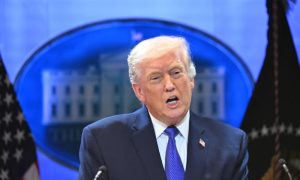
Pakistan’s Prime Minister Shehbaz Sharif signed the charter alongside leaders and senior officials from 18 other countries at a ceremony chaired by US President Donald Trump.
Pakistan’s Chief of Defence Forces and Chief of Army Staff Field Marshal Syed Asim Munir also attended the ceremony.
White House Press Secretary Karoline Leavitt announced at the ceremony that the charter had come into force, declaring the Board of Peace an official international organisation.
The Board of Peace has been launched with an initial focus on Gaza, with stated aims of supporting a durable ceasefire, scaling up humanitarian assistance and facilitating reconstruction after months of a relentless Israeli bombardment campaign.
The reconstruction framework under discussion includes rebuilding homes, hospitals and schools, restoring water and electricity systems, reviving livelihoods and addressing the long-term humanitarian impact of the war.
President Trump said the board would work “in conjunction with the United Nations” and described the initiative as a new mechanism to help resolve global conflicts.
“Once this board is completely formed, we can do pretty much whatever we want to do, and we’ll do it in conjunction with the United Nations,” Trump said, adding that the combination could be “very, very unique for the world”.
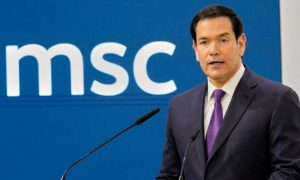
US Secretary of State Marco Rubio told the gathering that the board’s immediate priority was “first and foremost making sure that this peace deal in Gaza becomes enduring”.
Pakistan’s role and way forward
Analysts say that Pakistan’s participation reflects long-standing policy rather than a shift in position.
Pakistan’s stance on Palestine always remained unchanged: support for an independent Palestinian state based on pre-1967 borders, with Al-Quds Al-Sharif as its capital, and rejection of occupation and collective punishment.
Pakistan’s Foreign Office had earlier said it hoped the new framework would lead to concrete steps towards a permanent ceasefire, expanded humanitarian aid and the reconstruction of Gaza, alongside a “credible, time-bound political process” in line with international law and UN Security Council resolutions.
On the sidelines of the World Economic Forum, Palestinian Prime Minister Mohammad Mustafa met Prime Minister Sharif and personally thanked Pakistan for its unwavering support for peace in Gaza and its consistent advocacy for Palestinian rights at international forums.
Muslim world participation
Pakistan joined the board alongside several Muslim-majority countries, including Saudi Arabia, Turkiye, Egypt, Jordan, Qatar, the United Arab Emirates, Indonesia, Bahrain and Morocco.
On Wednesday, the foreign ministers of eight Muslim countries, including Pakistan, Egypt, Saudi Arabia, Qatar, Turkiye, Indonesia, Jordan, and the UAE, announced a “shared decision” to join the body.
In a joint statement, the foreign ministers announced that each country would sign the joining documents according to its respective relevant legal and other necessary procedures.
Analysts said the presence of multiple Muslim-majority states was intended to ensure that Palestinian rights, statehood and self-determination remained central to the initiative.
At the signing ceremony, Prime Minister Sharif exchanged brief remarks with President Trump. Trump gestured towards Field Marshal Asim Munir and gave a thumbs-up, which analysts interpreted as symbolic recognition of Pakistan’s political and military leadership on a high-profile international stage.
Trump said “just about every country wants to be a part” of the board, adding that invitations had been sent out only days earlier.
“Everybody in this room is a star,” Trump told the signatories. “When you use that inspired genius for peace, the opposite of peace has no chance.”
Strategic calculus
Analysts stressed that Pakistan’s participation does not imply automatic military involvement or a commitment to any stabilisation force.
Any future security role, they said, would only be considered under a UN mandate, in line with national interests and with the consent of the Palestinian people.
“Pakistan chose presence over silence,” one analyst said, arguing that joining the board allows Islamabad to help shape outcomes rather than remain on the sidelines as decisions about Gaza’s future are discussed.
More countries are expected to join the Board of Peace as domestic procedures are completed, US Secretary of State Marco Rubio said.