


For decades, Pakistan’s position on Palestine has been unusually consistent in an often-fractured Muslim world: support for Palestinian self-determination, opposition to occupation, and insistence on a two-state solution grounded in international law.
That clarity has rarely been questioned. What is being questioned now—often loudly and emotionally—is Pakistan’s decision to participate in the newly established Board of Peace linked to the Gaza ceasefire framework.
The criticism misunderstands both the moment and the mechanism.
The Board of Peace did not emerge from ideal conditions or moral symmetry. It emerged from exhaustion—after Gaza was flattened, after regional escalation spread from Lebanon to the Red Sea, and after armed actors across the spectrum were either eliminated, marginalised, or politically cornered. In such circumstances, diplomacy does not arrive clean; it arrives compromised, transitional, and uncomfortable.
That is precisely what this arrangement is.
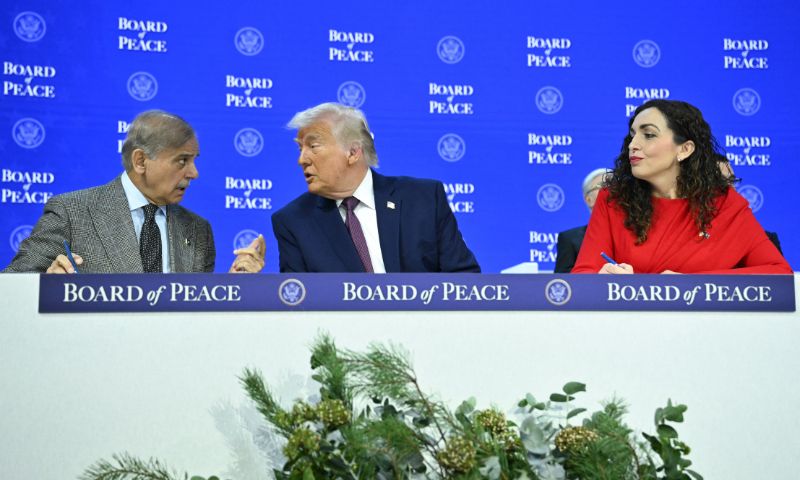
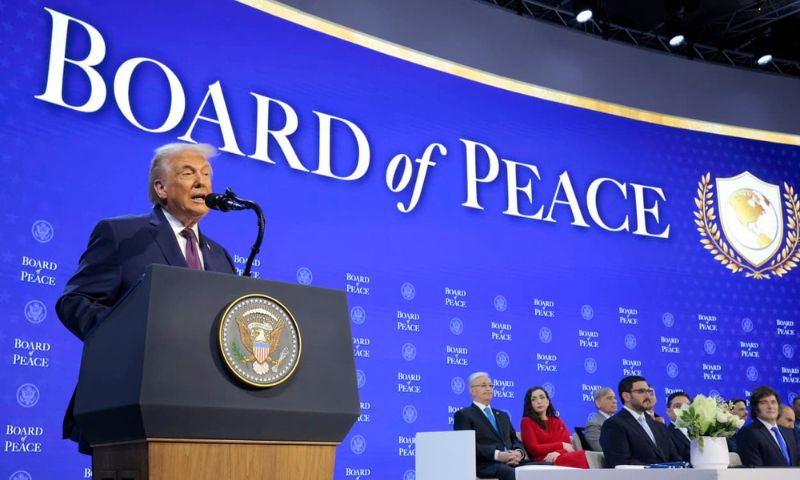
The Board of Peace, established under a UN-endorsed resolution, is not a permanent authority nor a substitute for Palestinian sovereignty. It is a transitional instrument designed to operationalise a ceasefire, facilitate humanitarian access, and prevent further territorial or demographic engineering in Gaza. Without such a mechanism, the so-called peace plan—however imperfect—would remain rhetorical.
For Pakistan, staying out would not have been a principled stand. It would have been strategic abdication.
Islamabad is neither a frontline state in this conflict nor a passive bystander. As the world’s only Muslim nuclear power and a country that maintains functional ties with Washington, Beijing, Moscow, and key Islamic capitals, Pakistan occupies a rare diplomatic space. Its participation brings balance to a process otherwise dominated by power asymmetry. Absence would have created a vacuum—one likely filled by actors less interested in Palestinian civilian protection and more invested in narrow geopolitical leverage.
There is also an inconvenient reality critics prefer to ignore: armed confrontation has reached a dead end. Hamas’s military leadership has been decimated. Gaza’s civilian population has paid the price. Even Palestinian factions now acknowledge that weapons alone cannot deliver statehood under current conditions. What remains—however limited—is diplomacy, humanitarian stabilisation, and political pressure through international forums.
That does not make the arrangement just. It makes it necessary.
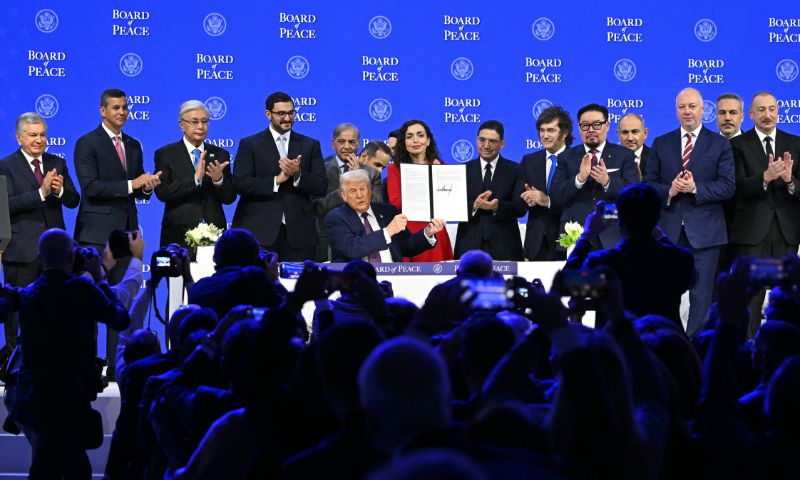
Importantly, Pakistan’s participation in the Board of Peace does not commit it to any future security deployment or enforcement role. Conflating the Board with a hypothetical international stabilisation force is either careless or deliberately misleading. Any such step would require a separate mandate, domestic consent, and Palestinian approval—conditions that do not currently exist.
What Pakistan has committed to is narrower but crucial: keeping Palestinian civilian protection, ceasefire durability, and humanitarian access at the centre of decision-making. Since the framework’s implementation, casualty rates have fallen sharply from daily mass fatalities to sporadic incidents, and aid flows—previously choked by blockade—have measurably increased. These are not abstractions. They are lives.
The deeper question is not whether the Board of Peace is ideal. It is whether perpetual war, political isolation, and maximalist posturing have delivered anything resembling justice for Palestinians. History suggests otherwise.
Pakistan’s foreign policy has long resisted bloc politics, preferring calibrated engagement without surrendering core positions—on Kashmir, on Palestine, and on sovereignty. Participation in this transitional mechanism follows that tradition. It is an attempt to influence outcomes rather than protest them from the sidelines.
In moments like these, diplomacy is rarely heroic. It is incremental, fragile, and often thankless. But for civilians trapped under rubble, imperfect peace is not a betrayal. Endless war is.
Pakistan’s participation in the Gaza Board of Peace is being framed by Islamabad not as symbolism, but as a test of whether international diplomacy can finally deliver what repeated wars have not.
By anchoring its decision in a UN-backed framework, Pakistan has set out clear expectations: a permanent ceasefire, an immediate and sustained expansion of humanitarian assistance, and the early reconstruction of Gaza without annexation, forced displacement, or fragmentation of Palestinian territory.
Central to this approach is the insistence that any post-war arrangement remain Palestinian-led, with the Palestinian Authority playing a decisive role in governance and institutional rebuilding.
More importantly, Pakistan has tied the credibility of the process to a defined political end-state. Its officials have been explicit that humanitarian relief and ceasefire management cannot become substitutes for a just settlement.
The Board of Peace, in Islamabad’s view, must advance a credible, time-bound pathway to Palestinian self-determination, culminating in an independent and contiguous Palestinian state on pre-1967 borders, with East Jerusalem as its capital.
In that sense, Pakistan’s engagement is conditional rather than open-ended: the initiative will be judged not by diplomatic momentum, but by whether it restrains ceasefire violations, protects civilians, and moves the international community closer to a durable and lawful resolution of the Palestinian question.