


Every year, Pakistan and Kashmiris across the world observe February 5 as Kashmir Solidarity Day, officially known as Yaum-e-Yekjehti-e-Kashmir. Yet for many in the younger generation, the day is increasingly reduced to a public holiday or a ritualised display of support, detached from the historical and legal realities that gave rise to it.
At its core, Kashmir Solidarity Day exists to underline a single point: the Kashmir dispute is neither settled nor obsolete.
Jammu and Kashmir has remained an unresolved international dispute since 1947, when the partition of British India left its final status undecided.
The Kashmir dispute was internationalised from the outset, resulting in multiple United Nations Security Council resolutions that formally recognise the Kashmiri people’s right to self-determination through a free and impartial plebiscite.
Pakistan maintains that this internationally mandated process was never carried out due to India’s refusal to honour its commitments under UN resolutions.
Pakistan said that India has systematically blocked the implementation of these resolutions while consolidating control over the territory.
The situation, Islamabad argues, worsened sharply in August 2019 when India unilaterally revoked Jammu and Kashmir’s limited autonomy — a move Pakistan describes as illegal and in violation of international law.
What February 5 Represents
Kashmir Solidarity Day was institutionalised as a formal national observance in 2004. Since then, February 5 has been marked by nationwide closures, official events, rallies, seminars, and diplomatic outreach.
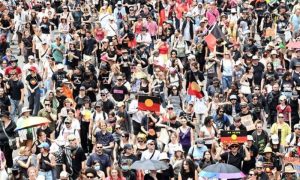
The day is observed with demonstrations, conferences, and prayer gatherings across Pakistan, Azad Jammu and Kashmir (AJK), and Indian Illegally Occupied Jammu and Kashmir (IIOJK) — often despite restrictions imposed by Indian authorities — as well as among Kashmiri diaspora communities across Europe, the Middle East, and North America.
For Pakistan, the day serves as an annual reminder that the Kashmir dispute predates many of today’s global flashpoints and remains rooted in unfulfilled international commitments rather than historical ambiguity.
A Continuing Human and Political Crisis
Since August 5, 2019, people in Indian Illegally Occupied Jammu and Kashmir have been living under sweeping restrictions following India’s unilateral revocation of the region’s special status. New Delhi imposed curfews, arrested political leaders and critics, and shut down phone, internet, and media services, effectively placing the population under prolonged military lockdown.
Large troop deployments, sealed roads, and strict movement controls disrupted daily life, while journalists were detained, social media was restricted, and thousands were held without trial, severely limiting civil liberties.
Pakistan maintains that the political aspirations of the Kashmiri people are clear and longstanding. Despite an extensive Indian security presence — which human rights groups estimate at close to one million troops — Kashmiris have continued to resist Indian rule amid allegations of arbitrary detentions, enforced disappearances, and extrajudicial killings.
It is against this backdrop that Kashmir Solidarity Day derives its significance for Pakistan: not as a symbolic observance, but as a reminder of an unresolved human and political crisis rooted in the denial of the Kashmiri people’s right to self-determination.
In recent years, the observance has increasingly extended beyond South Asia. Seminars, conferences, and online webinars are held in the United States, Canada, and across Europe, reflecting the growing role of the Kashmiri and Pakistani diaspora in sustaining international awareness.
Why the Day Still Matters
Critics often dismiss Kashmir Solidarity Day as symbolic. Pakistan counters that symbolism, in long-running disputes, carries political weight.
More than seven decades after 1947, Kashmir remains one of the world’s longest unresolved disputes — not because of legal uncertainty, Islamabad argues, but because of deliberate deferral. India’s assertion that Kashmir is now an internal or purely bilateral matter has not altered the dispute’s legal status in international law.
In the absence of a plebiscite or an internationally recognised settlement, Kashmir’s final status remains undecided.
For Pakistan, this is precisely why Kashmir Solidarity Day continues to matter: unresolved commitments do not expire with time, and disputes rooted in unfulfilled promises cannot be closed through unilateral action or narrative dominance.
Key Traditions and Observances
Kashmir Solidarity Day is observed across Pakistan and Azad Jammu and Kashmir through a range of symbolic activities, including a nationwide minute of silence at 10:00 am to honour those killed in the conflict and the formation of human chains at key bridges such as Kohala and Mangla to demonstrate unity with the Kashmiri people.
The observance also involves diplomatic outreach by Pakistan’s Foreign Office and its missions abroad, which use the occasion to brief the international community on developments in Indian Illegally Occupied Jammu and Kashmir.
More than a ceremonial exercise, the day represents Pakistan’s annual reaffirmation that the Kashmiri people’s right to self-determination remains unfulfilled and that long-standing disputes cannot be erased simply by the passage of time or shifting global attention.