


Key Points
- Nearly 700 oil and fuel tankers reported stranded near Strait of Hormuz
- Vessels waiting at anchorage points and in surrounding Gulf waters
- Crude transit volumes fall sharply in recent days
- Shipping schedules, insurance and freight markets under strain
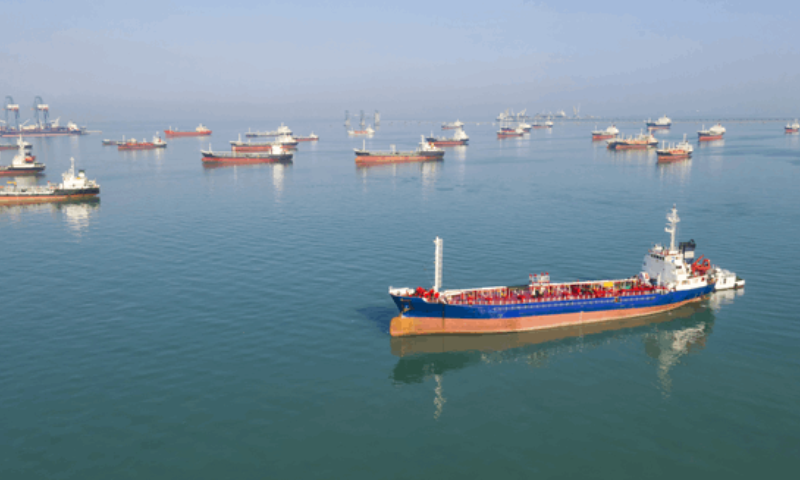
ISLAMABAD: Who is stuck where in the world’s most critical oil corridor? Maritime tracking data suggest that nearly 700 oil and fuel tankers are currently delayed, anchored or circling near the Strait of Hormuz as fighting in the Middle East disrupts vessel movement.
The narrow waterway, a gateway for a significant share of global seaborne crude exports, has become a zone of uncertainty.
Some vessels are waiting at designated anchorage points inside the Gulf, others remain positioned just outside the Strait, and several are reported to be slowing transit as operators assess security conditions.
Shipping analysts say the congestion is not limited to a single stretch of water.
Tankers loaded with crude, refined fuels and liquefied petroleum gas are scattered across holding areas, creating a ripple effect that goes back to export terminals and forward to discharge ports in Asia and Europe.
Crude traffic volumes through the Strait have fallen noticeably in recent days. Each delayed passage affects refinery schedules, port berthing plans and downstream fuel deliveries.
The question for traders and refiners is not only how many ships are stuck, but how long they will remain unable to move freely.
Insurance providers are reassessing risk exposure for voyages through the corridor.
Freight markets are reacting to the tightening availability of vessels as ships remain tied up in waiting zones rather than completing scheduled routes.
Although benchmark oil prices have edged higher amid the uncertainty, the physical disruption to tanker flows has drawn equal attention. The clustering of hundreds of vessels highlights how quickly a geopolitical shock can translate into logistical paralysis.
India, a major importer of Gulf crude and liquefied petroleum gas, is monitoring the evolving situation and reviewing contingency options, including rationing of the local energy supplies. Officials indicate that reserves and cosltlier spot buying of LNG can absorb short-term disruption, though prolonged delays would complicate supply planning.
For now, satellite images and shipping dashboards continue to show dense clusters of tankers near one of the world’s most strategic maritime chokepoints. The central question remains: when will the traffic begin to move normally again, and how many cargoes are effectively waiting at sea?