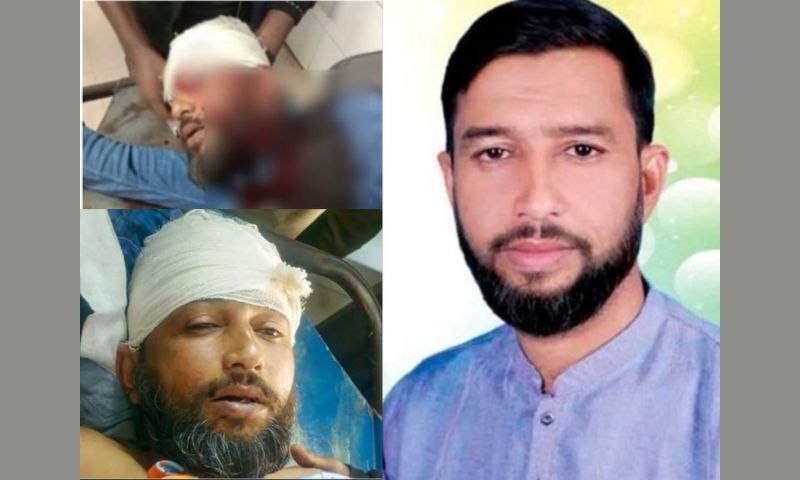



DHAKA, Bangladesh: Motaleb Shikder, an anti-India student leader in Bangladesh, survived an assassination attempt on Monday after being shot in the head by unidentified gunmen in the southern city of Khulna, authorities and party officials said.
The attack came four days after the killing of another prominent anti-India youth leader Sharif Osman Hadi, which triggered nationwide protests and anger against India across the country.
Police said the shooting took place around midday near Gazi Medical College Hospital in Khulna’s Sonadanga area. Shikder was rushed to Khulna Medical College Hospital in critical condition.
Who is Motaleb Shikder?
Shikder, 42, is the Khulna divisional head of the National Citizen Party (NCP) and a central organiser of its labour wing, Jatiya Sramik Shakti.
“The Khulna Division head of NCP and central coordinator of the party’s workers front, Motaleb Shikder, was shot a few minutes ago,” NCP joint principal coordinator Mahmuda Mitu said in a Facebook post shortly after the incident.
The National Citizen Party was formed earlier this year following the ouster of former prime minister Sheikh Hasina.
It emerged from the Students Against Discrimination movement and the Jatiya Nagorik Committee and is described as Bangladesh’s first major student-led political party.
Hospital sources, quoted by The Daily Star and Kaler Kantho, said the bullet struck the left side of Shikder’s head, causing heavy bleeding. Doctors later said that the bullet grazed his skull rather than penetrating it.
“He is now out of danger,” said Animesh Mondol, an investigating officer at Sonadanga police station.
He added that the bullet entered near Shikder’s ear and exited after piercing the skin, narrowly missing vital areas.
Party officials said the shooting occurred while organisational preparations for the upcoming labour rally were underway.
Second attack this month
The attack on Shikder is the second shooting of an anti-India student leader this month. It follows the killing of Sharif Osman Hadi, 32, a leading youth activist and spokesperson for Inqilab Mancha, who was shot by masked gunmen outside a mosque in Dhaka on December 12.
Hadi later died while undergoing treatment in Singapore. His death sparked violent protests across Bangladesh, with demonstrators accusing India of sheltering both the attackers and former prime minister Sheikh Hasina, who has been living in India since fleeing the country last year.
Bangladeshi police have suspected that killers linked to Hadi’s assassination fled across the border into India.
Bangladeshi police said Faisal Karim Masud, identified as the gunman in the shooting of Hadi, fled to neighbouring India shortly after the attack. Investigators believe his alleged accomplice, motorcycle driver Alamgir Sheikh, also crossed into India.
According to police sources cited by the Dhaka Tribune, the two men are suspected to have crossed the border illegally through the Haluaghat area of Mymensingh on Friday, just days after the December 12 shooting.
In response, Bangladesh’s Ministry of Foreign Affairs summoned India’s High Commissioner to Dhaka, Pranay Verma, urging New Delhi to arrest and hand over the suspects if they are found on Indian soil.
Diplomatic fallout
Hadi’s killing has ignited a fierce public backlash, sharpening already fraught debates over India’s influence in Bangladesh.
The unrest has also strained diplomatic ties. Bangladesh has rejected an Indian press note concerning a protest outside its High Commission in New Delhi, questioning how demonstrators gained access to a high-security diplomatic zone.
Bangladesh has temporarily suspended consular and visa services at its missions in New Delhi and Agartala due to security concerns, officials said.