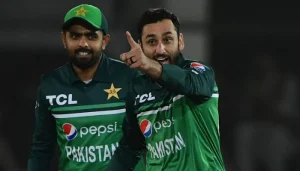



No major T20 league has ever chosen to go head-to-head with the IPL. PSL remains the only exception. The IPL auction has long functioned as cricket’s most powerful market force.
Still, the recent mini auction once again underlined just how disruptive its gravitational pull can be for every other franchise league. For PSL, the consequences are immediate and visible.
PSL 2025, on paper, appeared well-placed. It had assembled a comparatively strong group of active international cricketers—players in form, not retirees or fringe squad members filling gaps.
However, Tim Seifert, Jason Holder, Mitchell Owen and Matthew Short, all central overseas picks for their respective PSL franchises, have become unavailable for PSL 2026 after securing IPL contracts during its latest mini auction.
Why PSL 2025 clashed with the IPL window in the first place?
The PSL’s 2025 scheduling dilemma was born less from ambition and more from constraint. February–March traditionally offers the most weather-friendly, operationally viable window for PSL in Pakistan. Earlier windows clash BBL, BPL and ILT20; later windows risk extreme heat.
In 2025, however, Pakistan’s hosting of the Champions Trophy in February and March forced the PSL into April–May, a period the IPL occupies with immovable authority. The pattern will repeat in 2026.
With the Men’s T20 World Cup scheduled for February–March, the PCB has again been left with little choice.
Both leagues are set to begin on 26 March 2026, with the PSL expanding to eight teams and becoming the longest edition in its history.
The IPL’s window, protected by the BCCI’s influence within global scheduling discussions and underpinned by unmatched financial muscle, remains non-negotiable.
For boards like Pakistan’s, accommodation—not confrontation—has often felt like the only realistic option.
Why PCB Continues to Accept the Clash?
PSL’s broadcast ratings, player pool and viewership remain strong regardless of IPL competition. There is also an internal belief that PSL’s identity can withstand overseas attrition.
PCB decision-makers often argue that PSL’s window might clash with IPL, but April and May are months when international cricket largely pauses.
Outside the IPL, most boards do not schedule full-strength bilateral series, leaving a broader pool of overseas players technically available.
With the IPL able to contract a maximum of around 70 international players, there remains a belief that sufficient quality still exists for the PSL to function competitively.
Clashing with the IPL also allows the PCB to protect Pakistan’s international calendar. Even if bilateral cricket does occur during these months, touring sides often field second-string teams built around players not picked in the IPL.
Is IPL’s Talent Drain the Biggest Issue for PSL?
Yes—and not merely in numerical terms.
The real damage lies in continuity. Franchises build narratives around overseas players: leadership roles, tactical balance, and fan attachment.
When these players exit abruptly, franchises are forced into reactive replacements, often settling for less impactful options already bypassed by other leagues.
Moreover, the perception that PSL players are “temporary until IPL arrives” undermines long-term planning.
It discourages franchises from investing emotionally and commercially in overseas stars, reducing PSL to a stopgap league rather than a destination.
Has IPL Ever Been Affected by PSL?
The short answer is no.
IPL operates in a different ecosystem altogether. Its auction prices, broadcast deals, sponsorship revenues, and global visibility exist at a scale untouched by any competing league.
PSL’s scheduling decisions have no significant impact on IPL viewership, player availability or commercial outcomes.
If anything, the overlap disproportionately benefits the IPL. It reinforces the hierarchy of global franchise cricket, reminding players, agents, and boards where financial security and exposure truly lie.
What Should PSL Management Do Now?
The market is already speaking.
Players, agents, and franchises prefer certainty. Leagues that provide a protected window—like the Big Bash or SA20—benefit from retention, loyalty, and brand stability.
PSL must decide whether it wants to remain resilient or become truly competitive in the global ecosystem.
Realistically, PSL cannot outbid the IPL. Nor can it enforce restrictive clauses without risking player withdrawal altogether. The only viable solution is strategic repositioning.
Possible Alternative Windows for PSL
None are perfect—but some are better.
September–October & November – Early December
- Pros: No IPL interference, Cooler weather and normal player availability.
- Cons: Competition with the CPL and heavy congestion from bilateral series—particularly for Pakistan, which plays most of its internationals during this period.
February–March
- Pros: No IPL risk, manageable climate.
- Cons: Increasing clashes with ICC events and an already compressed international calendar, as seen with the Champions Trophy in 2025 and the T20 World Cup in 2026.
Each option demands compromise—but all offer something PSL currently lacks: protection from IPL dominance because every season that repeats this clash reinforces PSL’s subordinate position in the global franchise cricket hierarchy.
In franchise cricket, survival is not enough. Identity, continuity, and confidence matter just as much. And for PSL, the calendar may now be the most important battleground of all.