


WASHINGTON / CARACAS: The United States carried out overnight military strikes in Venezuela on Saturday and captured President Nicolás Maduro in an operation that Washington said was aimed at removing an authoritarian leader accused of narco-terrorism.
The action has triggered sharp international criticism and raised serious questions about international law and Venezuela’s future.
Below is what is known so far, based on statements from US officials, Venezuelan authorities and international reactions.
How the operation unfolded
Explosions were first heard in Caracas and nearby areas shortly before 2:00 am local time (0600 GMT), continuing until around 3:15 am, according to media reports citing witnesses.
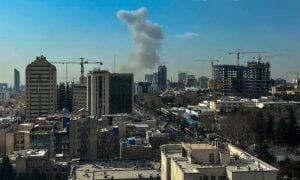
Images posted on social media showed helicopters flying over the capital and missiles striking targets, causing large fires and plumes of smoke.
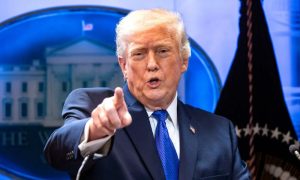
US President Donald Trump said at 0921 GMT on his Truth Social platform that the United States had “successfully carried out a large-scale strike against Venezuela” and that Maduro and his wife, Cilia Flores, had been “captured and flown out of the country”.
Top US General Dan Caine said the operation, named “Operation Absolute Resolve”, involved more than 150 aircraft and followed months of preparation.
He said air strikes were used to clear the way for helicopters that seized Maduro.
What was targeted
US strikes hit several key military and strategic sites, according to media reports.
Fort Tiuna, Venezuela’s largest military complex in southern Caracas, was among the main targets. The base houses the defence ministry, a military academy and residential areas for troops and their families.
La Carlota airbase, east of Caracas, was also struck, AFP reported.
Explosions were also reported in La Guaira, home to a major port and international airport, as well as in Maracay and Higuerote, within about 100 kilometres of the capital.
BBC later confirmed strikes on five locations, including Fort Tiuna, La Carlota airbase, Port La Guaira, Higuerote Airport and telecoms towers at Antenas El Volcan.
Casualties unclear
Venezuelan Defence Minister Vladimir Padrino Lopez accused US forces of firing missiles and rockets at residential areas.
As of Sunday, Venezuelan authorities had not released official casualty figures.
Trump said no US soldiers were killed. Speaking to Fox News, he later told the New York Post that “many Cubans” who were protecting Maduro had died.
Capture of Maduro
US officials said Maduro was captured during a special forces raid on his compound at around 02:01 local time.
Trump said US forces cut power in Caracas, though he did not explain how. He claimed Maduro tried to flee into a fortified safe room but was unable to secure it.
According to Trump, Maduro was captured by Delta Force, the US military’s elite counter-terrorism unit, after US intelligence tracked his movements with help from a source inside the Venezuelan government.
General Caine said US intelligence had studied Maduro’s routines for months. He said the 63-year-old leader and his wife surrendered without resistance.
Trump later posted an image showing Maduro handcuffed and blindfolded aboard a US naval vessel in the Caribbean.
The couple were taken to the USS Iwo Jima and then flown to New York, where they were transferred to the Metropolitan Detention Center in Brooklyn.
Charges in the United States
US Attorney General Pam Bondi said Maduro and Flores were indicted in the Southern District of New York.
They face charges including conspiracy to commit narco-terrorism, conspiracy to import cocaine into the United States, possession of machine guns and destructive devices, and conspiracy to use such weapons against the US.
“They will soon face the full wrath of American justice on American soil,” Bondi said in a post on X.
Maduro has previously denied all allegations, accusing Washington of using the “war on drugs” as a pretext to remove him and gain access to Venezuela’s oil.
Who is now in charge in Venezuela
Venezuela’s Vice-President Delcy Rodríguez has been sworn in as interim president by the Supreme Court, according to state media.
Rodríguez demanded Maduro’s release, saying he remained Venezuela’s “only president”. At the same time, she said the government was ready “to defend” the country.
Trump said the United States would “run” Venezuela during a transitional period, raising the possibility of US troops on the ground.
He later said governance would involve a “group” effort and that Secretary of State Marco Rubio had been in contact with Rodríguez.
Rodríguez publicly rejected the idea that Venezuela would become “a colony of an empire”.
Opposition and political uncertainty
Opposition leader María Corina Machado, a Nobel Peace Prize laureate, declared that Venezuela’s “hour of freedom has arrived” and called for opposition candidate Edmundo González to immediately assume the presidency.
Trump dismissed Machado as lacking “support or respect” inside Venezuela and said he had not spoken to her.
US plans and oil
Trump said US oil companies would move into Venezuela to repair infrastructure and boost production. He said the United States would extract oil, sell it abroad and be “reimbursed for everything we’ve spent”.
Venezuela’s government said the attack was aimed at seizing “strategic resources, particularly oil and minerals”, and forcibly undermining the country’s political independence.
Venezuela holds the world’s largest proven oil reserves, though much of it is heavy crude that is harder to refine.
International reaction
Russia accused the United States of committing “an act of armed aggression”. China said it was “deeply shocked” and demanded the immediate release of Maduro and his wife.
Iran called the strikes a “flagrant violation” of Venezuelan sovereignty.
Several Latin American countries, including Colombia and Brazil, condemned the action. Cuba’s president described it as a “criminal attack”.
Argentina’s President Javier Milei, an ally of Trump, welcomed the move, writing “long live freedom” on social media.
UN Secretary General Antonio Guterres, through his spokesman, said he was “deeply concerned that the rules of international law have not been respected”.
British Prime Minister Keir Starmer said his government would “shed no tears” over the end of Maduro’s rule but would discuss the situation with Washington.
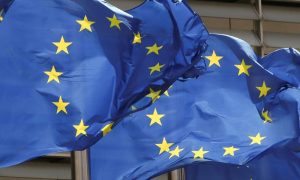
The European Union said Maduro lacked legitimacy but stressed that international law must be respected.
What happens next
US officials have said they do not currently plan further military action, but Trump warned he was “not afraid of boots on the ground”.
Diplomats say the episode has revived global debate over unilateral military action and the limits imposed by international law.
The Security Council is expected to discuss the crisis, though deep divisions make any formal outcome uncertain.