


Every January, a small Alpine town becomes a global nerve centre. Davos is once again hosting the largest concentration of political authority, corporate power and financial capital anywhere in the world.
Presidents, prime ministers, central bankers, hedge fund managers and technology chiefs are packed into meeting rooms, hotel lobbies and snow-covered walkways. Official sessions matter. The real business happens on the sidelines.
This year’s World Economic Forum (WEF) is unfolding at a time of fatigue with conflict, anxiety about growth, and deep uncertainty about the global order.
That mood explains why dialogue has emerged as the dominant currency in Davos. It also explains why Pakistan sees this gathering as an opening rather than a spectacle.
Why Davos still matters
Davos is not a negotiating table. No treaties are signed here. Yet it shapes priorities. It gets the connections in action. It sets the tone. It allows leaders to test ideas in a relatively informal setting. Investors listen closely. Governments watch signals. Markets read between the lines.
The 2026 meeting is defined by one shared concern. Fragmentation. Trade blocs are hardening. Wars are unresolved. New conflicts are erupting. Older ones are still lingering far from resolution.
Supply chains remain vulnerable. Financial capital is cautious. The conversation across panels and private rooms is less about ambition and more about stability.
From confrontation to conversation
The dominant theme this year is dialogue over disruption. Leaders are openly questioning the costs of escalation, sanctions and zero-sum politics. Respect for international law is no longer framed as idealism. It is being discussed as an economic necessity.
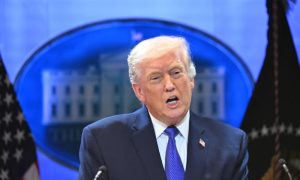
A new conflict regarding President Trump’s interest in Greenland has dominated discussions among power brokers at the WEF.
Dialogue, where Pakistan fits in
The Spirit of Dialogue is this year’s WEF theme. And here is where Pakistan’s delegation has leaned in. Its messaging is consistent. Dialogue as a stabiliser. Deterrence as a safeguard. International law as a shared baseline. This positioning aligns with the broader Davos mood and gives Islamabad relevance beyond its immediate region.
What Pakistan is doing on the sidelines
Beyond the main sessions, Pakistan’s engagement has been structured and deliberate. Finance Minister Muhammad Aurangzeb reached Davos ahead of the prime minister with a focused economic team. His early meetings with investors, multilateral lenders and corporate executives centred on macroeconomic stabilisation, fiscal discipline and the transition from recovery to growth. Debt management, energy sector restructuring, export-led growth and regulatory predictability have featured prominently in these conversations.
Deputy Prime Minister and Foreign Minister Ishaq Dar has used the sidelines to reinforce Pakistan’s diplomatic posture. His interactions have highlighted restraint, regional stability and adherence to international law as anchors for economic confidence.
Prime Minister Shehbaz Sharif’s schedule has combined formal interactions with informal outreach. According to posts shared by Information Minister Attaullah Tarar on X, the Prime Minister has been engaging global leaders and chief executives through a clear message. Pakistan is open for business. Reforms are under way. The country seeks partnership, not prescriptions.
Pakistan-Specific Business Roundtable
A key feature of Pakistan’s Davos engagement has been a high-level business roundtable, which Islamabad is hosting and co-chairing with leading global corporate executives. The closed-door session is designed to move beyond general discussion and into sector-specific opportunity mapping.
In addition to the roundtable, members of Pakistan’s delegation are holding targeted meetings with executives from energy companies, agri-business firms, technology platforms and infrastructure financiers.
The economy under a second look
One of the most noticeable shifts at Davos this year is investor tone toward Pakistan. It is not enthusiasm. It is curiosity. And in markets, curiosity is the first step back.
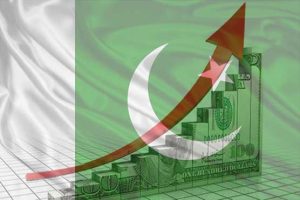
With inflation easing, currency stabilising, and external financing pressures managed, Pakistan is being discussed again as an emerging economy rather than a crisis case.
The message is simple. Stabilisation has taken hold. Growth is the next phase. The ask is not charity. It is investment, capital, partnership and patience.
What the Prime Minister is signalling
Prime Minister Shehbaz Sharif’s presence at Davos is less about stage appearances and more about access. His invitation to engage with world leaders and global CEOs is being framed domestically as prestigious positioning. Internationally, it is being read as availability.
The real Davos is off-camera
Panels dominate headlines. Side meetings shape outcomes. This is where Pakistan’s delegation has focused its energy.
Finance officials are walking the investors through reform sequencing. Diplomats are reinforcing Pakistan’s stance on peaceful engagement and regional restraint. Ministers are pitching sector-specific opportunities rather than abstract visions.
What Pakistan is selling
Technology, energy transition, agriculture value chains and infrastructure financing dominate Pakistan-related conversations. These align with global capital priorities discussed across Davos. Above all, Pakistan is marketing its unique location at the crossroads of trade transitions.
Ranking the trends shaping Davos 2026
First, dialogue over dominance. Leaders are speaking more cautiously. Investors are rewarding predictability.
Second, stability over speed. Rapid growth stories are being discounted. Stable reform paths are being valued.
Third, capital with conditions. Money is available. It is selective. Governance, policy continuity and transparency are central to every discussion.
Fourth, geopolitics as market risk. Wars and trade conflicts are no longer distant headlines. They are being priced into investment decisions.
Fifth, emerging markets under reassessment. Several frontier economies are back on the investor radar. Pakistan is among those being re-evaluated.
Why this moment matters for Pakistan
Pakistan is not expecting breakthroughs in Davos. It is aiming for repositioning. The goal is to shift perception from fragility to function. From exception to participant.
By aligning its message with the forum’s broader emphasis on dialogue, restraint and lawful conduct, Pakistan is speaking the language Davos understands this year.
The conversations will not end with the snow. Follow-up meetings, due diligence visits and capital decisions will take months. But Davos sets the tone.
For Pakistan, this is less about being seen and more about being heard.
How Pakistan is using the moment to reset its global story.