


KEY POINTS
- Arif Habib says PIA has “huge potential” and demand is not the core issue.
- Higher Rs 135 billion bid channels 92.5% of proceeds back into the airline.
- Consortium plans fleet expansion, route restoration and professional management.
- Workforce to be retained initially, with growth expected to create more jobs
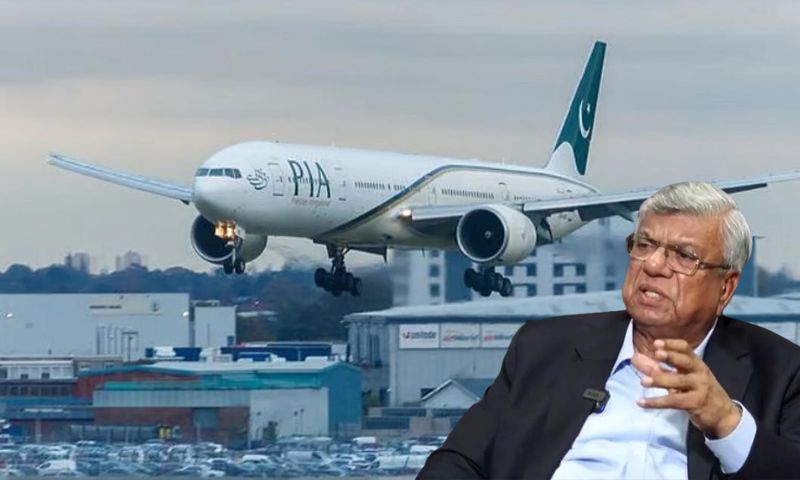
ISLAMABAD: Arif Habib says Pakistan International Airlines has “huge potential” and can be revived through focused investment and professional management, with most privatisation proceeds reinvested into the airline.
Arif Habib is a Pakistani businessman and head of the consortium led by investment firm Arif Habib Corp, which gave the highest bid of Rs 135 billion ($482.32 million) for the 75 percent shares of PIA in an open auction on Tuesday. The consortium initially submitted a sealed bid of Rs 115 billion that was the base for the open auction.
Speaking to a private television channel after the bidding, Habib said the group valued PIA at around Rs 131 billion but decided to go higher.
“When the bidding took place, we used the term entry premium. If you want to buy a running business, then you have to have an entry premium provision,” he said. “So under that, we went up to Rs 135 billion.”
PIA’s viability and potential
Rejecting the notion that demand is the problem, Habib said PIA’s core strength lies in its captive markets.
“There is no problem of customers,” he said, pointing to Pakistan’s large population, religious travel and the growing overseas community. “The biggest is our religious travelling. We have a captive market… Hajj and Umrah.”
He added that the number of non-resident Pakistanis has risen sharply. “There used to be 10 million. Now it is more than 14 million. And if you multiply it by family members, it becomes seven crore people who want to travel to Pakistan, (frequently).”
According to Habib, the issue has been capacity and service, not demand. “If there are 34 aircraft, then 18 were airworthy,” he said, noting that PIA holds valuable landing slots at major international airports but lacks sufficient planes to fully utilise them.
Why a higher bid helped the airline
Habib said the transaction structure made the higher bid beneficial for PIA itself. Under the deal, only Rs 10 billion goes to the government, with 92.5% of the amount earmarked for reinvestment in the airline.
“It was a great comfort,” he said. “Because the higher the bid, the more funds will be available to the company for development, for turnaround.” He described this reinvestment mechanism as a key reason the consortium was comfortable bidding aggressively.
75% Now, Option for the Remaining 25%
The consortium has acquired 75 per cent of PIA, with an option to purchase the remaining 25% government stake within 90 days. Habib said his group had argued for full ownership. “Yes, we were insisting that we want to buy 100%,” he said.
He explained that the remaining stake can be exercised within three months, with payment spread over 12 to 15 months at a 12% annual premium. The group is also open to bringing in additional investors for this portion, including foreign airlines.
“We will make an effort to bring the airline for the 25% option,” he said, referring to experienced international carriers. “We shall also invite the Fauji Foundation (One of the four qualified bidders that withdrew before final bidding) to partner with us for the remaining stake of 25 per cent of PIA shares,” he added.
Human resources and staffing plans
Addressing concerns about overstaffing, Habib said the workforce is largely professional and will be given space to perform. “I think most of the people are professionals,” he said. “If there are some politically affiliated people, then they will also be retained, and we will convince them that their loyalty should only be with the company.”
Under the privatisation agreement, employees cannot be laid off for at least a year. Habib said growth would, in fact, require more people.
“Because we will focus on business growth, and we have plans to bring more aircraft, we will need more people,” he said. “InshaAllah, best of best, we will accommodate existing people as well as additional people.”
Fleet expansion and new routes
Habib said the revival plan centres on increasing aircraft numbers and restoring routes. He highlighted PIA’s 97 air service agreements and more than 170 landing slots worldwide, many at airports where slots are ‘hard to obtain’.
“If we improve our services, we will have sufficient capital for that,” he said, adding that religious travel and overseas Pakistanis would be the primary drivers as routes are rebuilt and frequencies increased.
Professional management and partnerships
Acknowledging that aviation is a technical business, Habib said expertise can be brought in through professionals or partners. “Human resources are available all over the world,” he said. “Entrepreneurs are investors, and they can bring on board the high-quality professionals.”
He added that even within PIA, talent exists but has not always been fully utilised. “If they get the full opportunity, then we believe that the best people are also present in our existing team,” he said.
‘We have only won the toss’
Habib cautioned that winning the bid is only the first step. “The congratulations we are getting are for winning the toss,” he said. “We have just won the toss and selected the fielding. The fielding is yet to begin.”
He said the turnaround would require sustained effort and support. “We have to win the match after the fielding. So there is a lot of work to be done on this, and it will not be possible without everyone’s support and prayers.”