


WASHINGTON/BEIRUT/DUBAI: The war between the United States, Israel, and Iran widened further on Wednesday, with Israeli strikes hitting towns in Lebanon, fresh Israeli attacks reported inside Iran, and security alerts spreading across Gulf states as missile, drone, and air strikes continued to ripple across the region.
The conflict, triggered by coordinated US-Israeli strikes on Iran late last week, has expanded beyond confrontation between Tehran and Israel, drawing in Lebanon, Iraq, and several Gulf states while disrupting air travel and forcing diplomatic evacuations.
Regional airspace remains volatile with airlines cancelling flights and governments issuing emergency advisories as Washington urged its citizens to leave the region immediately.
Israeli strikes hit towns near Beirut
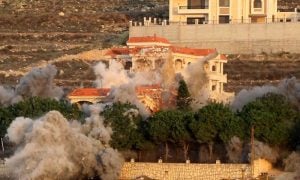
Lebanon’s health ministry said Israeli strikes on the towns of Aramoun and Saadiyat south of Beirut killed six people and wounded eight others.
“The Israeli enemy’s attacks on the areas of Aramoun and Saadiyat” left six dead and eight injured in a preliminary toll, the ministry said.
The two towns lie outside Hezbollah’s traditional strongholds but remain within areas where the Iran-backed militant group operates.
The Israeli military also issued an “urgent warning” calling on residents of 16 towns and villages in southern Lebanon to evacuate immediately ahead of planned operations against Hezbollah fighters.
“For your safety, you must evacuate your homes immediately,” the Israeli military’s Arabic-language spokesman Avichay Adraee said in a message listing locations near the border.
The warning raised fears that the Israel-Hezbollah front could intensify as the broader regional conflict expands.
Israel launches fresh strikes inside Iran
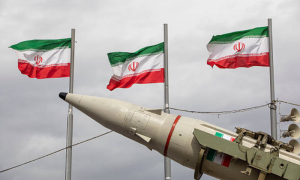
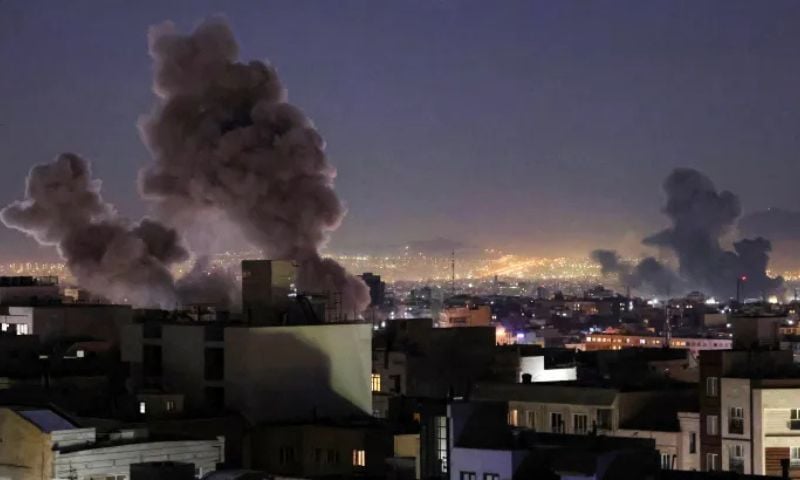
Israel’s military said it had launched a “broad wave of strikes” against Iranian targets including missile launch sites, air defence systems and military infrastructure.
The attacks came after Iran fired multiple missile barrages toward Israeli territory.
Air raid sirens sounded across parts of Israel overnight as defence systems intercepted incoming fire, while Iranian drones and missiles targeted US facilities and allied territory across the Middle East.
US says nearly 2,000 targets hit
Admiral Brad Cooper, commander of US forces in the Middle East, said in a video message that nearly 2,000 targets had been struck inside Iran since the start of the campaign.
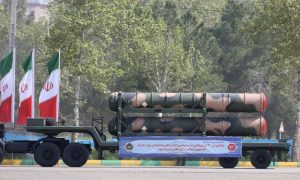
“We have severely degraded Iran’s air defenses and destroyed hundreds of Iran’s ballistic missiles, launchers and drones,” he said.
The strikes have targeted command centres, missile sites, naval assets and other strategic military infrastructure.
Explosion heard in Beirut
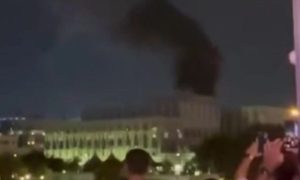
An explosion was heard in Beirut shortly after midnight Wednesday as Israel and Hezbollah exchanged strikes and rocket fire.
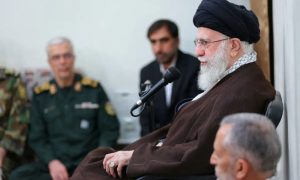
The latest round of fighting began earlier this week when Hezbollah launched rockets toward Israel, describing the attack as retaliation for the killing of Iran’s supreme leader in US-Israeli strikes.
The escalation has heightened fears that Lebanon could become a sustained front in the expanding regional conflict.
Qatar dismantles alleged Iranian spy cells
Qatar said it had dismantled two spy cells linked to Iran’s Revolutionary Guards, arresting ten suspects.
The official news agency reported that the suspects admitted during questioning that they had been instructed to conduct espionage and sabotage operations.
Qatar hosts the major US-run Al Udeid air base and has been targeted by Iranian missile strikes since the outbreak of the conflict.
Drone attack hits US consulate in Dubai
A drone struck a parking area adjacent to the United States Consulate General, Dubai, causing a fire that was quickly contained by emergency crews.
Witnesses reported hearing an explosion before seeing flames and smoke rising near the compound. No injuries were reported.
The incident followed earlier drone attacks targeting the Embassy of the United States, Riyadh.
Embassies close as evacuations begin
The United States has ordered non-essential diplomatic staff and their families to leave several Middle Eastern countries, including the UAE, Qatar, Kuwait, Bahrain, Iraq, and Jordan.
Embassies in Saudi Arabia, Kuwait and Lebanon have been closed to the public while consular services are being scaled back.
Washington also urged Americans to “DEPART NOW” from 14 countries across the Middle East as airlines cancelled flights and airspace closures stranded travellers across the region.
Charter flights have been arranged from Jordan, Saudi Arabia and the UAE to assist citizens seeking to leave.
Gulf states intercept missiles
Several Gulf states reported intercepting Iranian drones and missiles as the conflict spread.
A drone strike near the Dubai consulate compound triggered a fire, while Qatar and Bahrain said their air defence systems had intercepted incoming projectiles.
The United Arab Emirates said it had faced more than 1,000 attacks since Iran began retaliatory operations.
Iran’s Revolutionary Guards also warned that shipping in the Strait of Hormuz could be targeted, raising fears of disruptions to global oil supplies.
France deploys an aircraft carrier
French President Emmanuel Macron announced that France would deploy its flagship aircraft carrier, the Charles de Gaulle, to the eastern Mediterranean in response to the escalating crisis.
Iraq base hit amid widening conflict
An air strike hit the Jurf al-Nasr military base in southern Iraq, where members of the Iran-backed Kataeb Hezbollah group are stationed, causing material damage.
More than ten fighters have reportedly been killed in strikes across Iraq since the start of the conflict.
An explosion was also heard in the Kurdish city of Sulaimaniyah as Iranian drones targeted positions in the region.
Global concern over widening war
The expanding geography of attacks — stretching from Iran and Israel to Lebanon, Iraq and the Gulf — has raised concerns among global powers that the conflict could escalate into a prolonged regional war.
Energy markets have already reacted with rising oil and gas prices amid fears that Iranian threats to shipping routes could disrupt supplies.
With Israeli strikes continuing inside Iran, Hezbollah exchanging fire along the Lebanese border and Gulf states facing drone and missile threats, the Middle East remains on edge as the war enters a dangerous new phase.