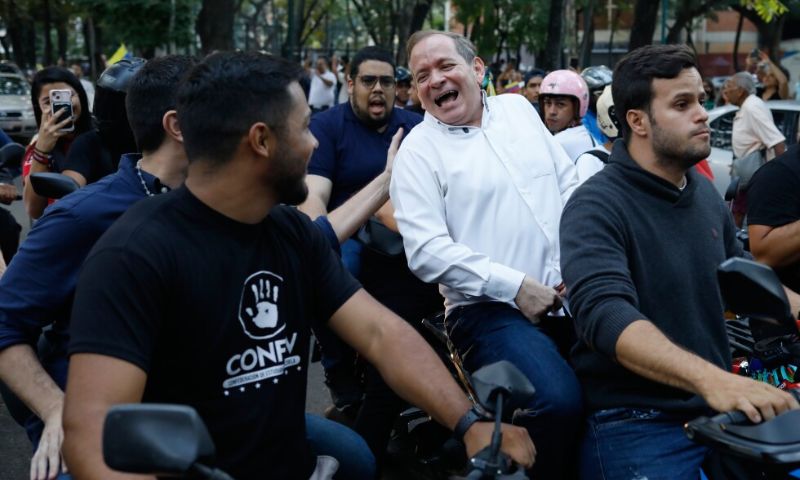



CARACAS, Venezuela: In a hopeful sign for Venezuela’s democratic future, three prominent opposition figures closely associated with Nobel Peace Prize laureate María Corina Machado were released from detention on Sunday, marking another step forward in the country’s ongoing process of political reconciliation.
The releases come amid preparations for a landmark vote in the National Assembly on Tuesday, when lawmakers are expected to consider a historic amnesty law.
The proposed legislation would cover charges that were widely used to imprison dissidents during nearly three decades of socialist rule, offering a pathway toward national healing, according to AFP.
Among those freed was Juan Pablo Guanipa, 61, a former vice president of the National Assembly and a leading opposition voice. Guanipa shared the news in a video posted on his X account, showing what appeared to be official release documents.
“Here we are, being released,” he said, reflecting on the difficult months behind him. Guanipa explained that he had spent “10 months in hiding, almost nine months detained here” in Caracas.
Speaking later to AFP, Guanipa struck a conciliatory and forward-looking tone, urging respect for democratic processes and the will of voters following the contested 2024 presidential election, which opposition candidate Edmundo González Urrutia was widely believed to have won.
“Let’s respect it. That’s the basic thing, that’s the logical thing,” Guanipa said. “And if not, then let’s go to an electoral process.”
Also released were Perkins Rocha, a former legal adviser to Machado, and Freddy Superlano, a well-known opposition leader who previously won a gubernatorial election in Barinas, the birthplace of late socialist icon Hugo Chávez.
Celebrating her husband’s return, Rocha’s wife, María Constanza Cipriani, shared a photo of the couple embracing at home. “We hugged at home,” she wrote on X, capturing a moment of long-awaited relief and joy.
Guanipa had been arrested in May 2025 on allegations of conspiring to undermine legislative and regional elections that were boycotted by the opposition.
Authorities charged him with terrorism, money laundering, and incitement to violence and hatred. Prior to his arrest, he had been in hiding and was last seen publicly in January 2025, when he appeared alongside Machado at an anti-government rally.
Machado, awarded the 2025 Nobel Peace Prize for her commitment to democratic change in Venezuela, warmly welcomed Guanipa’s release.
“My dear Juan Pablo, counting down the minutes until I can hug you!” she wrote on X. “You are a hero, and history will ALWAYS recognize it. Freedom for ALL political prisoners!!”
The releases are part of a broader process that began after former leader Nicolás Maduro was captured by U.S. special forces on January 3.
Since then, Venezuelan authorities have gradually freed hundreds of people detained for political reasons. Human rights organizations estimate that around 700 individuals remain imprisoned, though progress continues.
The NGO Foro Penal confirmed the release of 35 prisoners on Sunday alone and reported that nearly 400 political detainees have been freed since January 8.
Lawmakers last week gave initial approval to the draft amnesty law, which aims to eliminate legal tools previously used to silence dissent over 27 years of socialist governance.
While Venezuela’s largest opposition coalition has raised concerns about “serious omissions” in the proposed measures, the legislation is widely seen as a meaningful step forward.
Families of remaining detainees continue to press for faster releases, hopeful that the momentum will be sustained.
Acting President Delcy Rodríguez, formerly Maduro’s vice president, has championed the amnesty bill as a cornerstone of reconciliation.
Her administration, which assumed power with the backing of U.S. President Donald Trump, has also launched reforms to open Venezuela’s oil sector and restore diplomatic ties with Washington—relations that were severed in 2019.
Together, these developments point to a cautiously optimistic chapter for Venezuela, as the country works toward justice, democratic renewal, and reunification of families long separated by political conflict.