


Key Points:
- More than 850 missiles fired at Iran in 4 weeks; Pentagon concerned about stockpiles
- Israel Casualties: 5,492 injured since Iranian attacks; 116 in treatment; 261 treated in last 24 hours.
- Egypt Curfew: Shops, restaurants, malls close at 9pm (10pm Thurs-Fri) for a month to cut soaring energy costs.
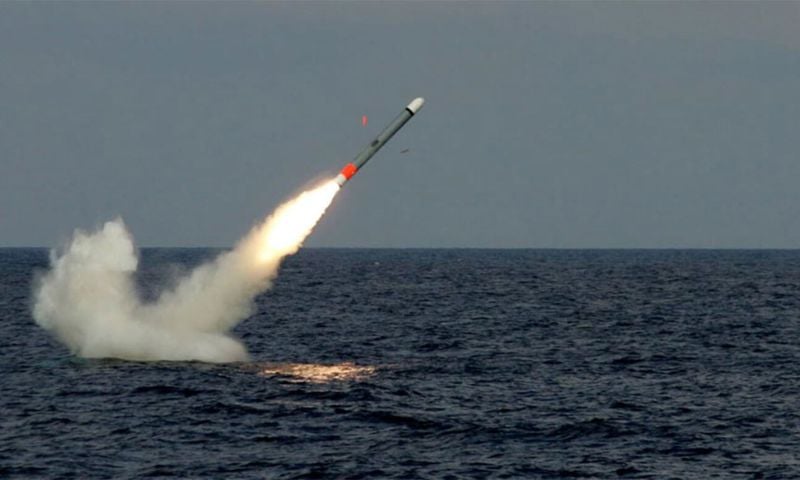
WASHINGTON: The United States has launched more than 850 Tomahawk cruise missile strikes during four weeks of conflict with Iran, a pace that has reportedly sparked concern among officials at the Pentagon, according to a report by The Washington Post.
The extensive use of precision-guided munitions has led to internal discussions within the Pentagon about maintaining adequate stockpiles and accelerating production to meet ongoing operational demands. Some officials are said to be closely monitoring the rate of consumption as the conflict continues.
Tomahawks, which can travel more than 1,000 miles and are launched from naval platforms, are produced in limited numbers, with only a few hundred manufactured annually. Each missile can cost up to $3.6 million and take up to two years to build, making rapid replenishment difficult.
Despite these concerns, the White House has sought to reassure that military readiness remains intact. Press Secretary Karoline Leavitt stated that US forces possess sufficient munitions and weapons reserves to achieve the objectives of Operation Epic Fury, as outlined by Donald Trump, and to sustain operations if required.
The developments highlight both the intensity of the ongoing military campaign and the logistical challenges associated with prolonged high-precision warfare, as policymakers balance immediate operational goals with long-term defense preparedness.
“Nevertheless, President Trump has always been intensely focused on [strengthening] our armed forces, and he will continue to call on defence contractors to more speedily build American-made weapons, which are the best in the world,” Leavitt’s statement reads.
A Pentagon spokesperson said the military “has everything it needs to execute any mission,” while senior officials insisted stockpiles remain sufficient.
More than 300 US troops wounded since start of war
More than 300 US troops have been wounded since the start of the war on Iran on February 28, US Central Command said.
“Since the start of Operation Epic Fury, approximately 303 US service members have been wounded. The vast majority of these injuries have been minor, and 273 troops have returned to duty,” US Navy Captain Tim Hawkins said.
Israel says 5,492 people injured in attacks
The Israeli Ministry of Health has reported that 5,492 people have been injured since Iran began its missile attacks on Israel, according to Al Jazeera.
Of those injured, 116 are currently receiving medical treatment, reflecting the ongoing strain on Israel’s healthcare system as the conflict continues.
The ministry also noted that in the past 24 hours alone, hospitals treated 261 people wounded in attacks carried out by Iran and Hezbollah. The steady influx of casualties highlights the sustained intensity of the cross-border strikes and their impact on civilians.
Egypt imposes business curfew
Egypt has ordered shops, restaurants, and shopping malls to close by 9pm starting Saturday, in an effort to reduce soaring energy costs driven by the ongoing conflict involving Iran, according to AFP.
Prime Minister Mostafa Madbouly announced that the measure will initially remain in place for one month. Under the new rules, businesses including retail outlets, malls, restaurants, and cafés must shut by 9pm on weekdays, while they will be allowed to stay open until 10pm on Thursdays and Fridays.
Madbouly highlighted the sharp rise in the country’s energy expenses, noting that Egypt previously paid around $560 million per month for energy. That figure has now surged to approximately $1.65 billion for the same level of consumption, placing significant pressure on the national economy.
He stressed that the government must prepare for the “worst-case scenario” as the outcome of the war remains uncertain, signaling the possibility of further measures if the crisis continues.
The move reflects broader economic challenges facing the country, as authorities attempt to manage rising costs and ensure energy sustainability during a period of regional instability.