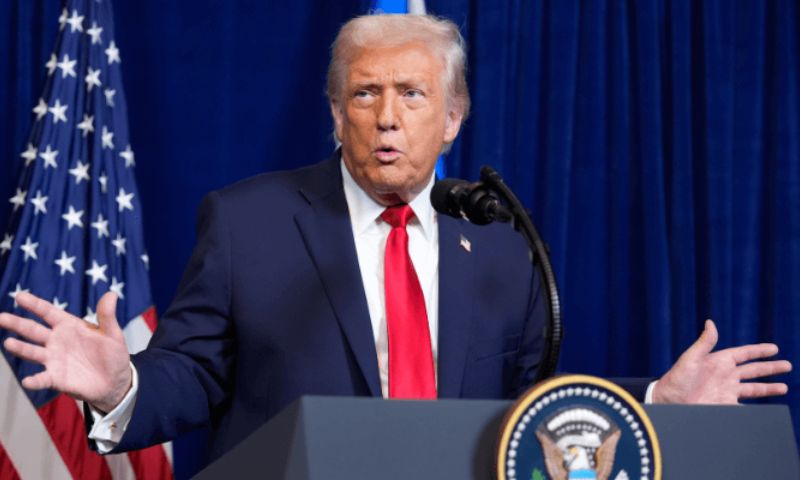



WASHINGTON: The United States is set to withdraw from 66 international organizations as part of a broad recalibration of its global engagement strategy under President Donald Trump, according to a new executive order, according to AP.
The move follows an administration-wide review of U.S. participation and funding across international organizations, including those affiliated with the United Nations, the White House said.
The decision affects a wide range of organizations, many of them linked to the United Nations and focused on issues such as climate change, labor, migration and population health. Administration officials say these bodies no longer align with U.S. priorities and values, particularly those the White House has described as promoting diversity-driven or “woke” agendas.
Among the organizations affected are the U.N. Population Fund, the U.N. Framework Convention on Climate Change (UNFCCC), and several advisory panels and commissions. Non-U.N. entities on the list include the Partnership for Atlantic Cooperation, the International Institute for Democracy and Electoral Assistance, and the Global Counterterrorism Forum, according to AP.
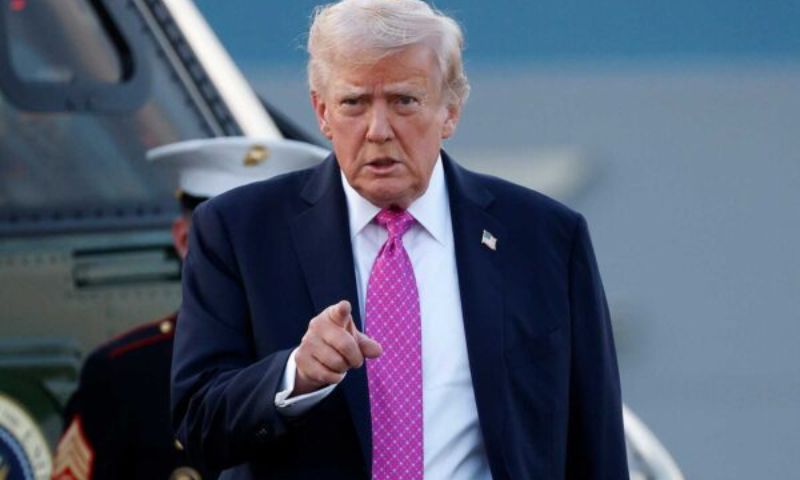
Secretary of State Marco Rubio said the administration determined that many of the organizations were “redundant in their scope, mismanaged, unnecessary, wasteful, poorly run, captured by the interests of actors advancing their own agendas contrary to our own, or a threat to our nation’s sovereignty, freedoms, and general prosperity.”
The latest move builds on a pattern established earlier in the administration. The U.S. had already suspended support for the World Health Organization, the U.N. Relief and Works Agency for Palestinian Refugees (UNRWA), the U.N. Human Rights Council and UNESCO. Rather than fully disengaging from the United Nations, officials say the administration is adopting a selective, issue-by-issue approach to funding and participation.
Analysts view the decision as a clear articulation of Washington’s evolving stance on multilateralism. Daniel Forti, head of U.N. affairs at the International Crisis Group, said the approach reflects a desire for international cooperation strictly on U.S. terms. He noted that the shift has already forced the United Nations to make internal staffing and program adjustments.
The broader impact has also been felt across independent nongovernmental organizations, many of which work in partnership with U.N. agencies. Several have reported project closures following last year’s significant reductions in U.S. foreign assistance through the U.S. Agency for International Development.
Despite the withdrawals, administration officials say they continue to see value in the United Nations and intend to focus resources on areas where they believe American influence is strategically important, particularly in institutions where global standards are set and where competition with China is increasing. These include the International Telecommunications Union, the International Maritime Organization and the International Labor Organization.
One of the most consequential exits is from the UNFCCC, the 1992 treaty underpinning global climate negotiations and the Paris climate agreement. The U.S. withdrawal further distances Washington from international climate frameworks, a position Trump has long supported. Critics argue the move weakens global efforts to address climate change and reduces U.S. influence over international investment and policy decisions.
Former White House National Climate Adviser Gina McCarthy described the decision as damaging to U.S. leadership, while climate scientists warned that meaningful progress on emissions reductions will be difficult without U.S. participation, given its status as one of the world’s largest economies and emitters.
The withdrawal from the U.N. Population Fund has also reignited long-standing political debate. Republican administrations have historically opposed the agency, alleging involvement in coercive abortion practices — claims that were reviewed and rejected by the State Department during the Biden administration, which had restored funding in 2021.
Additional organizations the U.S. plans to exit include the United Nations University, the International Tropical Timber Organization, the International Cotton Advisory Committee, the International Federation of Arts Councils and Culture Agencies, the Pan-American Institute for Geography and History, the Carbon Free Energy Compact, and several commodity and research-focused international groups.
Together, the departures mark one of the most significant restructurings of U.S. engagement with international institutions in decades, underscoring a foreign policy approach centered on sovereignty, selective cooperation and recalibrated global leadership.