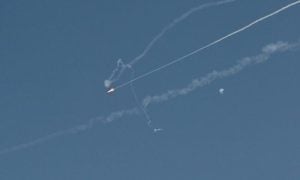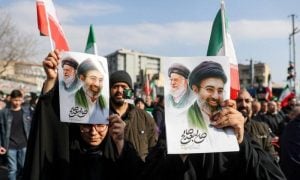
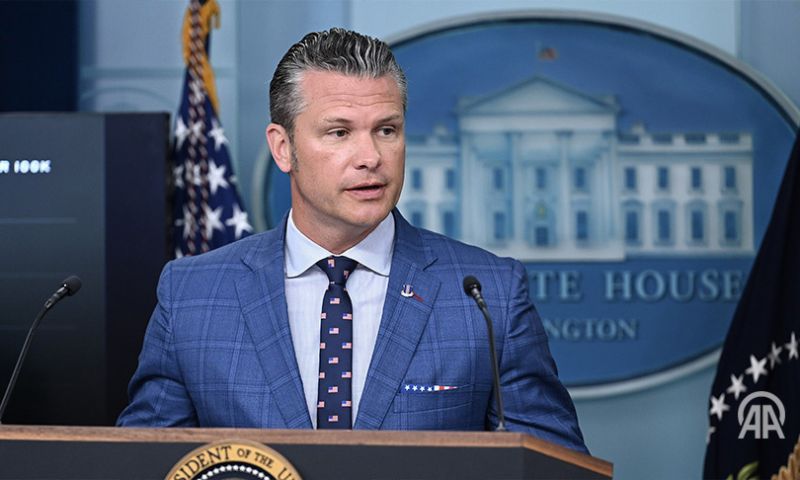



WASHINGTON: The United States is set to launch its “largest strike package yet” on Iran today, Defence Secretary Pete Hegseth said on Thursday, signalling a further escalation in the conflict as the war entered its third week.
Speaking at the Pentagon, Hegseth said US operations had already struck more than 7,000 targets across Iran, significantly degrading its military capabilities, including its missile production and naval assets.
“Today again will be the largest strike package on Iran,” he said, adding that Iran’s ability to produce new ballistic missiles had been “hit the hardest”.
No timeline for end of war
Hegseth said there was no fixed timeline for ending the conflict, stressing that the decision would ultimately rest with President Donald Trump.
“We wouldn’t want to set a definitive time frame,” he told reporters. “It will be at the president’s choosing… when we’ve achieved what we need to.”
He added that US objectives remained unchanged since the start of the campaign, including dismantling Iran’s missile systems, defence industrial base and naval capabilities, and ensuring it does not acquire nuclear weapons.
Hegseth described the ongoing campaign, dubbed “Epic Fury”, as decisive and not comparable to past US wars in Iraq or Afghanistan.
Iran’s capabilities degraded but intact
Despite sustained strikes, senior US officials acknowledged that Iran retains some military capability.
General Dan Caine said Iran “came into this fight with a lot of weapons” and still possesses “some capability” to strike US assets in the region.
However, he said US forces were employing “layered defences” and intensifying operations, including the use of heavy bunker-busting munitions against underground facilities.
Earlier, Director of National Intelligence Tulsi Gabbard told lawmakers that while Iran’s leadership structure appeared intact, it had been “largely degraded”.
Gas field strike
Tensions were further heightened by conflicting accounts over Israel’s strike on Iran’s South Pars gas field.
Israeli officials said the attack had been coordinated with Washington, while Trump said the United States “knew nothing” about the strike and warned against further attacks on the site unless Iran targeted Qatar again.
“Iran has weaponised energy for decades. Israel clearly sent a warning,” Hegseth said, while reiterating that “we hold the cards”.
Strait of Hormuz closure
The conflict has disrupted global energy flows, with the Strait of Hormuz effectively closed to US and allied shipping, driving oil and gas prices sharply higher.
Six major powers — Britain, France, Germany, Italy, Japan and the Netherlands — said they were ready to support efforts to ensure safe passage through the strategic waterway.
In a joint statement, they condemned Iran’s actions and called on it to halt attacks on commercial shipping and cease attempts to block the strait.
NATO Secretary General Mark Rutte said allies were discussing options to reopen the route, while US officials indicated that other countries should play a role in securing the passage.
Calls for de-escalation
Meanwhile, UN Secretary-General Antonio Guterres urged all sides to end the conflict.
“It is high time to end this war that is risking to get completely out of control,” he said in Brussels after meeting European Union leaders.
He also called for reopening the Strait of Hormuz, warning of the threat to the global economy.
The conflict has raised fears of a broader regional crisis, particularly after strikes near sensitive infrastructure.
Russia called for the creation of a “safety island” around Iran’s Bushehr nuclear plant, warning that any attack could trigger a major radiation disaster.
Alexei Likhachev, head of state nuclear corporation Rosatom, said the facility holds large quantities of fissile material and that any incident could have regional consequences.
Energy and economic fallout
The war has also intensified pressure on global energy markets.
QatarEnergy CEO Saad al-Kaabi said Iranian strikes had damaged facilities accounting for 17 per cent of the company’s LNG export capacity, with repairs expected to take three to five years.
Meanwhile, US Treasury Secretary Scott Bessent said Washington may ease restrictions on Iranian oil already at sea and could release strategic reserves to stabilise global supply.
Russia also signalled it could impose restrictions on fuel exports if prices rise further, according to energy ministry official Anton Rubtsov.
Pentagon seeks additional funding
The Pentagon is seeking additional funding for the war effort, with The Washigton Post reporting a request of up to $200 billion, although Hegseth did not confirm the figure.
“It takes money to kill bad guys,” he said, adding that the administration would work with Congress to secure necessary resources.
Hegseth reiterated that the United States would continue to target Iran’s industrial and military infrastructure, saying operations were “on track” despite the absence of a defined end point.