
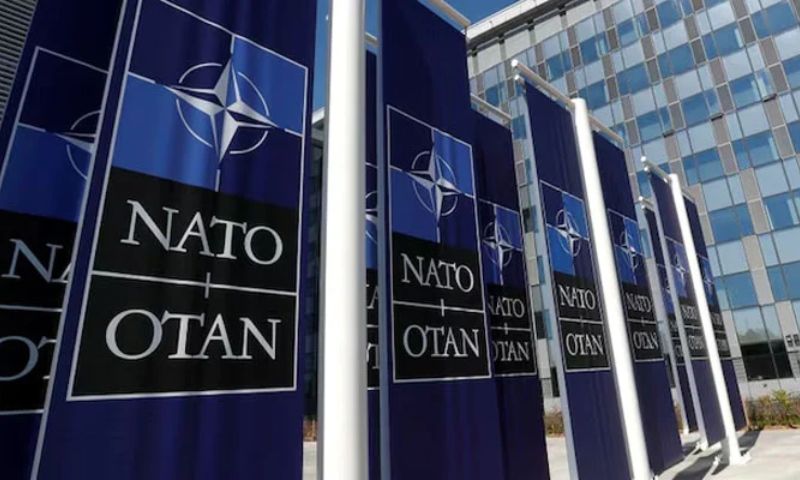



BRUSSELS: The United States is set to relinquish leadership of two senior regional commands within the North Atlantic Treaty Organisation (NATO) to European allies, diplomats said on Monday.
It marks a significant shift in the alliance’s military leadership structure amid growing pressure on Europe to take greater responsibility for its own defence.
Under the planned changes, Washington will transfer command of NATO’s Naples-based headquarters, which oversees operations in the alliance’s southern region, to Italy.
At the same time, Britain will assume leadership of NATO’s Norfolk command in the United States, which focuses on the alliance’s northern flank, according to two NATO diplomats speaking on condition of anonymity.
According to AFP, despite handing over these key regional posts, the United States will continue to play a central role within NATO by taking control of the alliance’s maritime forces command, which is headquartered in the United Kingdom, the diplomats said.
Confirming the development, a NATO official said the allies had agreed on a revised allocation of senior military leadership roles across the NATO Command Structure, aimed at giving European members a more prominent role.
“Allies have agreed on a new distribution of senior officer responsibility across the NATO Command Structure in which European Allies, including NATO’s newest members, will play a more prominent role in the Alliance’s military leadership,” the official said, adding that the decision was linked to planning for future command rotations.
The leadership reshuffle, first reported by French publication La Lettre, is expected to take several months to implement, diplomats told AFP. One NATO diplomat described the move as “a good sign of burden shifting in practice.”
The changes come at a time when Washington has signalled it may reduce its military footprint in Europe as it seeks to focus more heavily on strategic challenges elsewhere, particularly China.
However, despite the redistribution of certain command roles, the United States will retain control over NATO’s core air, land and sea commands and will continue to hold the alliance’s most powerful military position — that of Supreme Allied Commander Europe (SACEUR).
European nations have already increased defence spending in response to Russia’s invasion of Ukraine and last year agreed to raise NATO’s defence spending benchmark, reflecting growing concern over regional security threats.
President Donald Trump has repeatedly questioned the reliability of US commitments to NATO, unsettling allies, and, last month, further strained relations by making controversial claims about Greenland, triggering unease within the alliance.
Nevertheless, US Ambassador to NATO Matthew Whitaker sought to reassure allies on Monday, insisting that Washington’s objective was to strengthen the alliance rather than weaken it.
“We’re trying to make NATO stronger — not to withdraw or reject NATO — but to make it work like it was intended as an alliance of 32 strong and capable allies,” Whitaker said.