


Key Points
- Debate centers on interpretation of “arrive in” under US law
- Policy previously left thousands of migrants stranded in Mexico
- Some justices question ruling on a policy not currently in force
- Lower courts had ruled the practice violated legal protections
- Case is part of broader immigration challenges before the court
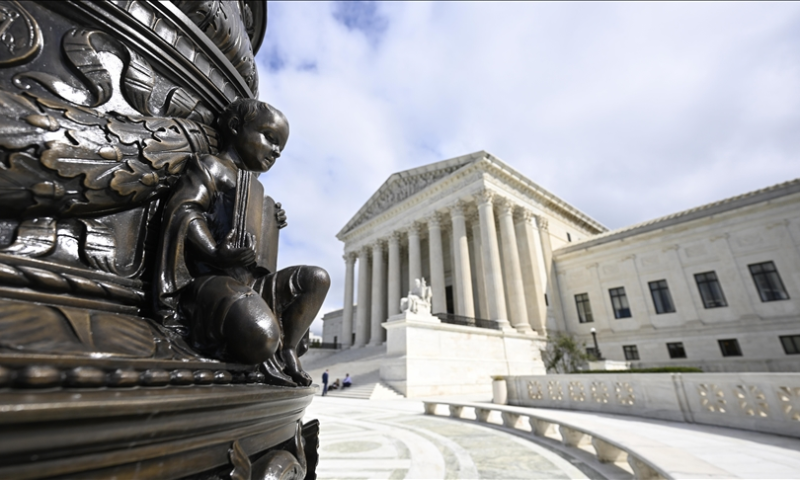
WASHINGTON: The US Supreme Court on Tuesday examined whether the Trump administration can reinstate a controversial immigration policy that limited access to asylum at the southern border, highlighting deep divisions over legal interpretation and humanitarian concerns.
At the center of the case is the practice known as “metering,” which allowed US immigration authorities to cap the number of asylum seekers processed at official border crossings.
According to AP, officials previously defended the policy as a necessary measure to manage surges in migration, while critics argued it effectively denied vulnerable individuals their legal right to seek protection.
During oral arguments, several conservative justices appeared sympathetic to the administration’s position that the policy remains a legitimate and practical tool for border management.
Government lawyers argued that metering has been used under multiple administrations and could be needed again in the future to handle capacity constraints. However, other members of the court raised concerns about fairness and legal consistency.
Questions emerged over whether the policy could create a paradox in which migrants who cross the border irregularly might still access asylum protections. At the same time, those attempting to enter legally at ports of entry could be turned away.
The legal dispute hinges on how federal law defines the right to seek asylum. Under U.S. statutes, individuals who “arrive in” the country are entitled to apply for asylum if they fear persecution.
The administration contends this applies only to those physically inside US territory, whereas immigration advocates argue that the protection extends to anyone presenting themselves at official entry points.
Critics of the policy say its earlier implementation led to severe humanitarian consequences. Thousands of migrants were left waiting in precarious conditions in Mexican border towns, often in makeshift camps, as they awaited opportunities to present their claims.
The justices also grappled with procedural questions, including whether it is appropriate to rule on a policy that is not currently in effect. Some suggested the absence of an active program complicates efforts to assess its real-world impact and legality.
Metering was first introduced on a limited basis during the Obama administration and later expanded nationwide under Trump. It was halted during the COVID-19 pandemic and formally ended in 2021 under President Joe Biden.
Lower courts subsequently ruled that the practice violated both statutory and constitutional protections for asylum seekers. The case is part of a broader set of immigration-related disputes before the court this term, reflecting ongoing legal battles over US border policy.
The eventual ruling could have far-reaching implications for how future administrations manage asylum claims and control entry at the nation’s borders.