


Key Points
• US Treasury proposes rule to sever a Swiss bank’s access to the dollar system
• Allegations include money laundering for Iranian, Russian and Venezuelan actors
• Move underscores the US drive to enforce sanctions and counter illicit finance
• Swiss regulatory action is also underway as geopolitical tensions rise
ISLAMABAD: The United States government has taken a striking step in its global sanctions strategy by proposing a rule to cut a small Swiss private bank off from the US financial system over alleged facilitation of illicit financial flows connected to Iran, Russia and Venezuela.
As the US Treasury intensifies its efforts to clamp down on what it calls “sanctions evasion and money laundering,” the proposed action signals a hardening stance that could ripple across international finance.
Under plans unveiled by the Treasury’s Financial Crimes Enforcement Network, MBaer Merchant Bank AG of Switzerland would be effectively excluded from correspondent banking services in the United States, a move that would sever its access to the US dollar-based financial system if the rule is finalised.
The proposal follows allegations that MBaer, since its establishment, funnelled more than $100 million through US correspondent accounts on behalf of sanctioned entities and individuals linked to Iran’s Islamic Revolutionary Guard Corps and Quds Force, as well as allegedly corrupt Russian networks and Venezuelan actors caught up in graft scandals, according to a Reuters report.
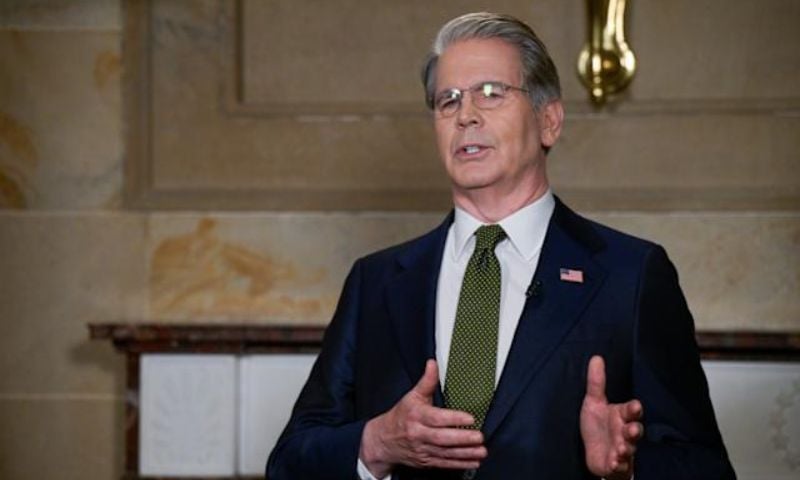
US Treasury Secretary Scott Bessent said that banks should regard the action as a clear warning that the department is prepared to use the full scope of its authority to protect the integrity of the US financial system.
The rule, put forward under Section 311 of the USA PATRIOT Act, would prohibit US banks from opening or maintaining dollar correspondent accounts for MBaer.
It is a step that can effectively cut the institution off from global dollar clearing, a crucial lifeline for international finance.
Officials also noted that Switzerland’s own regulator has launched a separate enforcement action against MBaer over deficiencies in anti-money-laundering controls, which the bank is contesting.
ALSO READ: Iran, US Hold Nuclear Talks in Geneva in Push to Avert War
The Swiss proceedings reflect broader pressure on European financial centres to tighten compliance with international sanctions and anti-corruption standards, even as geopolitical fault lines deepen.
Supporters of the US proposal argue that robust enforcement of sanctions is necessary to choke off revenue streams used to sustain wars and repression, particularly in states accused of supporting armed groups and undermining regional security.
Critics, however, warn that aggressive extraterritorial measures risk destabilising smaller financial institutions and may strain diplomatic and trade relations.
The public comment period on the proposed rule will remain open for 30 days, giving international banks, regulators, and civil society groups a chance to weigh in on what could be one of the most consequential sanctions-related actions of the year.