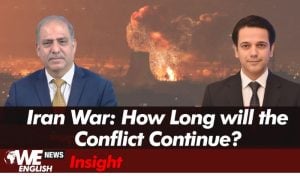
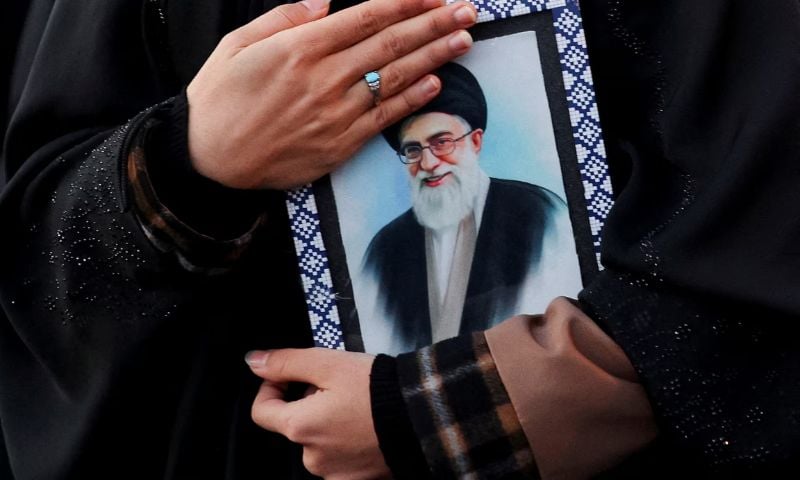



WASHINGTON: After the killing of Iran’s Supreme Leader Ayatollah Ali Khamenei, senior officials in Washington are expressing doubt that the joint US-Israeli military campaign will trigger the swift collapse of Iran’s ruling system.
Although U.S President Donald Trump has publicly encouraged Iranians to rise up and reclaim their country, intelligence officials familiar with classified assessments caution that a near-term overthrow of the Islamic Republic appears unlikely, according to Reuters.
Before and after the launch of military operations, American leaders indicated that weakening Iran’s ballistic missile capabilities and nuclear infrastructure were central objectives, alongside broader hopes of undermining the religio-political leadership that has governed since 1979.
However, multiple U.S officials briefed on intelligence findings say Iran’s fragmented opposition movement is not currently positioned to dismantle the entrenched decades-old religious leadership framework.
While none of the officials ruled out the possibility of political upheaval, they emphasized that such an outcome does not appear imminent.
Despite suffering leadership losses from sustained airstrikes and facing public anger after harsh crackdowns on protests in January, Iran’s governing apparatus remains cohesive.
Earlier intelligence evaluations presented to the White House concluded that if Khamenei were eliminated, succession would likely fall to hard-line figures within the Islamic Revolutionary Guard Corps (IRGC) or similarly conservative clerics. Officials noted that the IRGC’s vast patronage network and institutional influence make voluntary surrender of authority improbable.
Analysts also pointed out that during the recent wave of anti-government demonstrations, there were no reported defections from the IRGC – a factor widely seen as crucial for any successful revolution. Without fractures within the security establishment, the prospects for regime change remain slim.
President Trump has also signaled a willingness to reopen diplomatic channels with Tehran, a move interpreted by some officials as acknowledgment that the current government is unlikely to disappear in the immediate future.
The White House has not publicly commented on internal intelligence deliberations, and the CIA declined to respond.
Following Khamenei’s death, Iranian President Masoud Pezeshkian announced that a temporary leadership council – including himself, the judiciary chief, and a member of the Guardian Council – would assume the Supreme Leader’s responsibilities.
Meanwhile, senior security official Ali Larijani accused Washington and Tel Aviv of attempting to destabilize and fragment the country, warning local opposition groups of severe consequences.
Within U.S. intelligence circles, debate continues over whether Khamenei’s removal might alter Iran’s approach to negotiations over its nuclear program or affect its determination to rebuild missile and nuclear capabilities. No consensus has emerged on these questions.
In recent months, Trump’s special envoy Steve Witkoff reportedly held discussions with opposition figure Reza Pahlavi, the exiled son of Iran’s last monarch. However, officials say confidence has waned regarding the ability of any externally backed opposition leader to consolidate power inside Iran.
Security experts argue that any meaningful change will ultimately depend on the stance of Iran’s armed forces and rank-and-file security personnel. If those forces remain loyal to the ruling establishment, they are likely to use force to preserve authority.
For now, despite the dramatic elimination of Iran’s highest leader, U.S officials assess that the Islamic Republic’s core institutions remain intact, making rapid leadership change improbable.