


WASHINGTON: The United States military is preparing for the possibility of sustained, weeks-long operations against Iran if President Donald Trump orders an attack, two U.S. officials told Reuters, signalling the potential for a far more serious confrontation than previous flare-ups between the two countries.
The officials, speaking on condition of anonymity due to the sensitivity of the planning, said the preparations underscore rising stakes as Washington and Tehran attempt to revive diplomacy over Iran’s nuclear programme.
U.S. and Iranian diplomats held talks in Oman last week in an effort to restart negotiations, after Trump reinforced American military deployments in the region, fuelling fears of renewed hostilities.
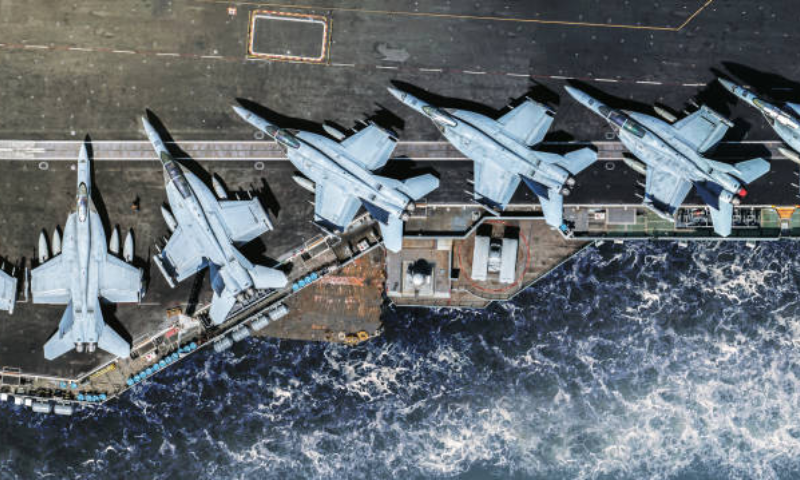
U.S. officials said the Pentagon was dispatching an additional aircraft carrier to the Middle East, along with thousands of troops, fighter aircraft, guided-missile destroyers and other assets capable of offensive and defensive operations.
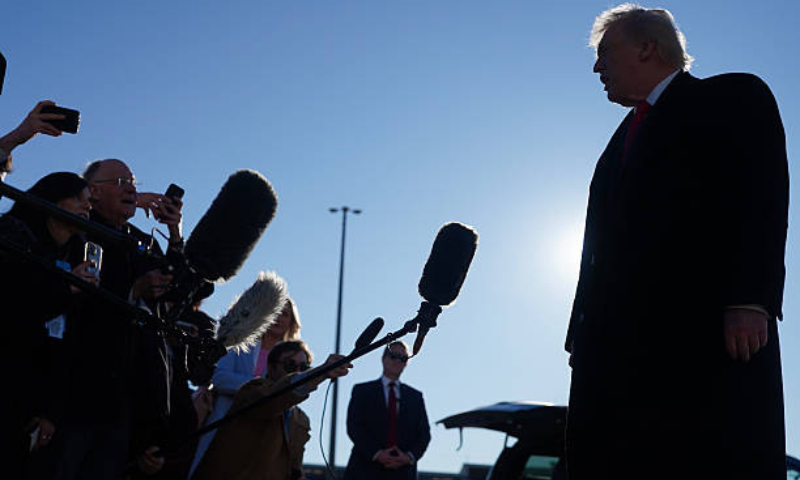
Speaking to U.S. troops at a base in North Carolina on Friday, Trump said reaching a deal with Iran had “been difficult.”
“Sometimes you have to have fear. That’s the only thing that really will get the situation taken care of,” he said.
White House spokesperson Anna Kelly said the president retains broad authority over next steps.
“President Trump has all options on the table with regard to Iran,” Kelly said, adding that he listens to varied perspectives before making decisions based on U.S. national security interests.
The Pentagon declined to comment on the reported preparations.
From One-Off Strike to Sustained Campaign
The United States last year deployed two aircraft carriers to the region during heightened tensions with Iran.
In June, Washington carried out a strike dubbed “Midnight Hammer,” involving stealth bombers flying from the United States to target Iranian nuclear facilities.
That operation was limited in scope. Iran responded with what officials described as a restrained retaliatory strike against a U.S. base in Qatar.
However, officials said current contingency planning is more complex and envisions the possibility of a sustained campaign.
In such a scenario, U.S. forces could target not only Iran’s nuclear infrastructure but also state and security facilities, according to one official, who declined to provide further detail, according to Reuters.
Rising Risks of Escalation
Security analysts warn that the risks to U.S. forces would be significantly greater in a prolonged conflict. Iran possesses a substantial missile arsenal capable of targeting American bases and regional allies.
The officials said Washington fully expects Tehran to retaliate in the event of U.S. strikes, potentially triggering a cycle of back-and-forth attacks over an extended period.
Iran’s Revolutionary Guards have warned that any attack on Iranian territory could prompt retaliation against U.S. military installations across the Middle East.
The United States maintains bases in several regional countries, including Jordan, Kuwait, Saudi Arabia, Qatar, Bahrain, the United Arab Emirates, and Turkey.
Diplomacy Under Strain
Trump has repeatedly threatened military action over Iran’s nuclear and ballistic missile programmes, as well as over what he describes as Tehran’s repression of internal dissent. On Thursday, he warned that failure to reach a diplomatic agreement would be “very traumatic.”
Israeli Prime Minister Benjamin Netanyahu met Trump in Washington this week, saying that any deal with Iran must include provisions vital to Israel’s security.
Tehran has said it is willing to discuss restrictions on its nuclear programme in exchange for sanctions relief but has ruled out negotiations that would limit its missile capabilities.
Reuters reported that U.S. reinforcements in the region and stalled diplomacy have heightened the risk of wider conflict.