


WASHINGTON: At least 16 US military aircraft have been lost since the start of the war with Iran, according to a Bloomberg report, with a mix of combat losses, accidents, and damage reflecting the intensity and complexity of ongoing operations.
The reported losses include 10 MQ-9 Reaper drones hit by enemy fire, along with around half a dozen other aircraft that were either destroyed or severely damaged in accidents or attacks, Bloomberg said, citing officials and sources familiar with the matter.
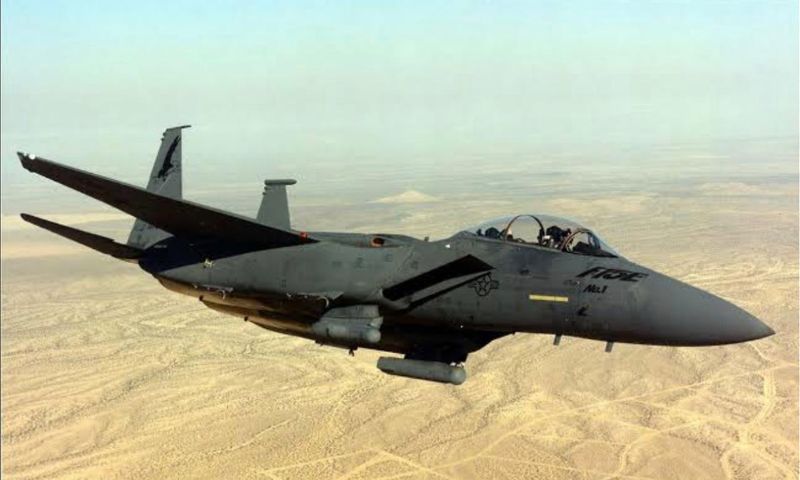
According to the report, the most serious incidents were linked to accidents rather than direct enemy engagement. Three US F-15 fighter jets were downed by friendly fire in Kuwait, while a KC-135 refuelling tanker was destroyed during an aerial refuelling operation, killing all six crew members onboard.
Five additional KC-135 tankers were also damaged in an Iranian missile strike while stationed at an airfield in the Gulf.
So far, only uncrewed Reaper drones have been successfully targeted by Iranian air defences. At least nine were shot down mid-air, while another was hit at an airfield in Jordan by a ballistic missile, Bloomberg reported, citing informed sources.
Two additional Reapers were lost due to operational accidents.
The MQ-9 Reapers are designed to be “attritable” — meaning they are deployed in higher-risk environments due to their lower cost and absence of onboard pilots compared to crewed aircraft.
In a separate incident, a US F-35 stealth fighter was forced to make an emergency landing at a Middle East airbase following a combat mission, according to US Central Command (CENTCOM). The pilot was reported to be in stable condition, and an investigation is underway.
Despite their extensive use over the past decade, no US crewed combat aircraft is known to have been shot down by Iranian forces so far.
However, analysts say Iran’s air defence systems remain a credible threat. Tehran is believed to operate the infrared-guided 358 surface-to-air missile, a mobile system capable of striking targets at altitudes of up to 25,000 feet.
Its lack of radar emissions makes detection difficult, giving aircraft little warning of incoming threats.
The scale of US operations may also explain the losses. Bloomberg cited Peter Layton, a former Royal Australian Air Force officer and visiting fellow at the Griffith Asia Institute, as saying the high tempo of missions increases risks.
“The difference might be a much greater rate of effort… more sorties flown each day,” Layton said.
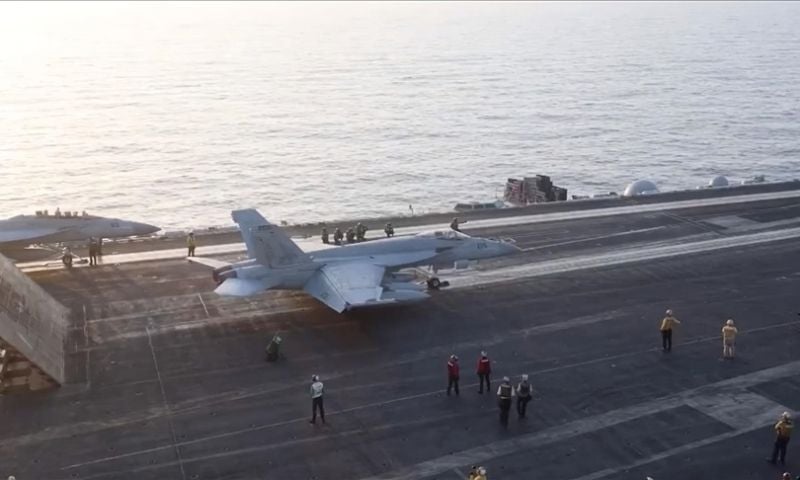
The US has conducted an intense air campaign, carrying out more strikes on the first day of the conflict than during the opening phase of the 2003 Iraq War.
US Central Command declined to comment on specific losses, saying it does not discuss battle damage assessments.
Although Iranian air defences were among the initial targets of US and Israeli strikes, achieving full air superiority has proven difficult.
Chairman of the Joint Chiefs of Staff Dan Caine has said the US currently maintains only “localised air superiority,” controlling limited areas of Iranian airspace.
The continued shootdown of Reaper drones also highlights the risks involved in securing key maritime routes such as the Strait of Hormuz, where active air defence systems complicate aerial operations.
Similar threats were seen in 2025, when Houthi fighters in Yemen downed multiple US drones.
The US operates around 225 Reaper drones, according to the International Institute of Strategic Studies.
Military experts note that accidents are not uncommon during high-intensity operations. Justin Bronk, a senior research fellow at the Royal United Services Institute, said such incidents are an inherent risk.
“Periodic accidents… are an unfortunate likelihood in large, high-tempo, high-pressure combat operations,” he said.
As the conflict enters its third week, Iran continues to launch strikes across the region, although US Defense Secretary Pete Hegseth claimed the frequency of attacks has dropped by around 90 percent since the early days of the war.
On Thursday, Iran targeted key energy infrastructure in Qatar and Saudi Arabia in retaliation for earlier strikes on its South Pars gas field, further widening the scope of the conflict and raising concerns over regional stability and global energy security.
Qatar reported “extensive” damage on Thursday to the world’s largest liquefied natural gas (LNG) facility following Iranian strikes, sparking concerns about global energy supplies.
Qatar’s energy minister stated that the damage from the attacks reduced the site’s liquefied natural gas (LNG) export capacity by 17 percent and would take years to repair.
Qatar is one of the world’s biggest LNG producers, alongside the United States, Australia, and Russia.
Two Kuwaiti oil refineries were also hit, as well as the Saudi oil refinery Samref in the industrial zone of the Red Sea port of Yanbu.