


ISTANBUL: Iran and the United States will resume nuclear talks on Friday in Turkiye, Iranian and US officials confirmed, as regional powers intensify efforts to de-escalate mounting tensions and prevent a broader conflict.
US Special Envoy Steve Witkoff and Iranian Foreign Minister Abbas Araqchi are scheduled to meet in Istanbul in an attempt to revive diplomacy over Iran’s nuclear programme, a dispute that has persisted for years and fuelled fears of a new regional war, according to AFP.
A regional diplomat said representatives from Saudi Arabia, Egypt, Qatar, and the United Arab Emirates, along with other countries, are expected to participate in parallel bilateral, trilateral, and multilateral meetings.
“Qatar, Saudi Arabia, UAE, and Egypt, as well as some other countries, will attend the Istanbul meeting. There will be bilateral, trilateral, and other meetings,” the diplomat said, underscoring the breadth of regional involvement.
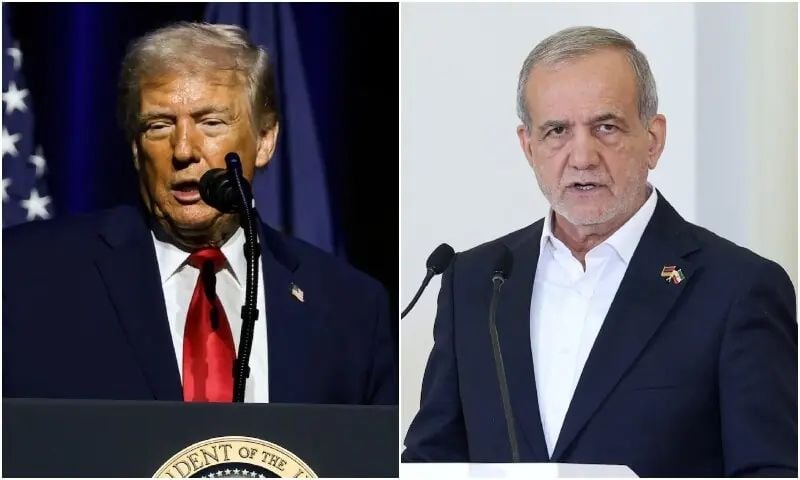
Earlier on Monday, Iranian news agency Fars reported that President Masoud Pezeshkian had ordered the initiation of nuclear negotiations with Washington.
“President Pezeshkian has ordered the initiation of nuclear negotiations with the United States,” Fars said, citing an unnamed government source, adding that the talks would be held “strictly within the framework of the nuclear issue”.
The report was also published by the government newspaper Iran and the reformist daily Shargh, signalling broad domestic acknowledgment of the diplomatic push.
Iran’s foreign ministry said it was finalising a method and framework for the negotiations, with messages between Tehran and Washington relayed through regional intermediaries.
“Several points have been addressed, and we are examining and finalising the details of each stage in the diplomatic process, which we hope to conclude in the coming days,” foreign ministry spokesman Esmaeil Baqaei said, without elaborating on the substance of the talks.
US naval buildup raises stakes
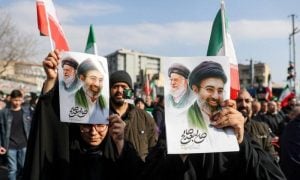
The diplomatic efforts come amid heightened tensions following a US naval buildup near Iran, after a violent crackdown on anti-government demonstrations last month — the deadliest domestic unrest since Iran’s 1979 revolution.
US President Donald Trump, who stopped short of intervening militarily during the unrest, has since demanded nuclear concessions from Tehran and dispatched a flotilla to the region. Trump said last week that Iran was “seriously talking”, while Iran’s top security official, Ali Larijani, confirmed that arrangements for negotiations were underway.
Iranian sources told Reuters last week that Trump had set three conditions for resuming talks: zero uranium enrichment on Iranian soil, limits on Tehran’s ballistic missile programme, and an end to its support for regional proxy groups.
Iran has long rejected all three demands as violations of its sovereignty, though two Iranian officials said the leadership viewed restrictions on the ballistic missile programme — rather than enrichment — as the more difficult obstacle.
Sanctions relief a priority for Tehran
Baqaei said Iran was weighing “the various dimensions and aspects of the talks”, stressing that “time is of the essence” as Tehran seeks faster relief from what it calls unjust economic sanctions.
A senior official from Turkiye’s ruling party told Reuters that Tehran and Washington had agreed to refocus on diplomacy this week, raising hopes of a reprieve from potential US military strikes.
Witkoff is also expected to travel to Israel to meet Prime Minister Benjamin Netanyahu and Israel’s military chief, according to two senior Israeli officials. Meanwhile, Araqchi was in Turkiye last week and has held calls with his Egyptian, Saudi, and Turkish counterparts, according to messages he posted on Telegram.
Speaking to CNN on Sunday, Araqchi said there was room for agreement. “President Trump said no nuclear weapons, and we fully agree. We fully agree with that.
That could be a very good deal,” he said. “Of course, in return, we expect sanctions lifting. So, that deal is possible. Let’s not talk about impossible things.”
Baqaei said the mobilisation of neighbouring states in favour of diplomacy reflected fears that any US attack on Iran could ignite a wider regional conflict — a warning echoed by Supreme Leader Ayatollah Ali Khamenei, who said on Sunday that a US strike would trigger a “regional war”.
‘Ball in Trump’s court’
An Iranian official said Tehran was open to flexibility if talks resume without preconditions. “Diplomacy is ongoing,” the official said, adding that Iran could show flexibility on uranium enrichment, including handing over up to 400 kilogrammes of highly enriched uranium or accepting zero enrichment under a consortium-based arrangement.
However, the official said Iran wanted US military assets moved away from its vicinity as a prerequisite for talks. “Now the ball is in Trump’s court,” he added.
Satellite imagery shows limited repairs
In June last year, the United States struck Iranian nuclear targets, joining the final stages of a 12-day Israeli bombing campaign. Tehran has since said it halted uranium enrichment.
Recent satellite imagery of the targeted Isfahan and Natanz facilities appears to show limited repair work since December, including new roofing over two previously destroyed buildings. No other major reconstruction was visible, according to images from Planet Labs reviewed by Reuters.
The Washington-based Institute for Science and International Security said satellite images from late January showed construction near tunnel entrances at Isfahan, which could indicate preparations for further military strikes or the movement of sensitive assets from other sites.
Longstanding standoff
Nuclear talks between Tehran and Washington stalled after five rounds ended in May 2023, with major disagreements remaining — notably Iran’s insistence on maintaining uranium enrichment on its soil and its refusal to ship its entire stockpile of highly enriched uranium abroad.
The UN nuclear watchdog has repeatedly pressed Iran to clarify what happened to its enriched uranium stock following the June attacks. Western countries fear Iran’s enrichment activities could provide material for a nuclear warhead, while Tehran maintains its programme is solely for civilian purposes such as electricity generation.
Iranian sources said Tehran could agree to ship its highly enriched uranium abroad and pause enrichment as part of a broader deal that includes lifting economic sanctions.
Protests and diplomatic pressure
Khamenei has likened the recent protests to an attempted “coup”, while authorities say the unrest — triggered by economic hardship — was inflamed by the United States and Israel.
Tehran has acknowledged thousands of deaths during the demonstrations. On Sunday, the presidency published the names of 2,986 people out of the 3,117 it said were killed, insisting most were security personnel or innocent bystanders and blaming the violence on “terrorist acts”.
As diplomats prepare to meet in Istanbul, regional and global attention will focus on whether the renewed talks can break the long-running impasse — or merely postpone a deeper confrontation.