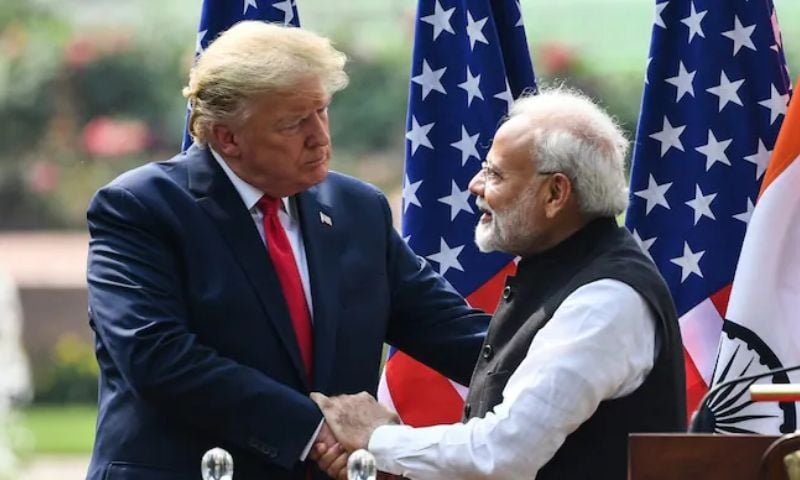



ISLAMABAD: An interim trade agreement between the United States and India has done little to quiet concerns about the durability of their broader partnership, analysts say, after months of public friction and diplomatic unease.
The deal, reached earlier this month following protracted negotiations, comes after a period marked by blunt public remarks from senior American officials, including Commerce Secretary Howard Lutnick and trade adviser Peter Navarro.
Critics argue that the confrontational trade posture of President Donald Trump created avoidable tensions with New Delhi.
The agreement was reached earlier this month after prolonged negotiations. Blunt remarks from senior American officials, including Commerce Secretary Howard Lutnick and trade adviser Peter Navarro, marked the trade talks between India and the US.
In India, leaders of the opposition Indian National Congress have attacked the agreement. They argue that the ruling Bharatiya Janata Party conceded too much and secured limited gains in return. Some party figures described the deal as a surrender to US demands.
The Indian government has defended the accord as a pragmatic step that protects national interests and keeps open market access. Officials say engagement with Washington remains vital for trade, technology, and security cooperation.
The debate unfolds at a sensitive time in bilateral relations. US Secretary of State Marco Rubio met India’s External Affairs Minister S. Jaishankar in Washington recently. Both sides described the talks as constructive.
Yet observers say deeper issues remain unresolved. Trust has been shaken by public criticism and policy unpredictability. Strategic cooperation depends on long-term confidence, not short-term transactions.
According to foreign policy analyst Sumit Ganguly of Stanford University’s Hoover Institution, economic agreements cannot by themselves restore damaged goodwill. Diplomatic relationships, he argues, require consistency and mutual respect.
The United States sees India as a key partner in Asia. India values American investment, technology, and strategic support. However, both sides are aware that public pressure and transactional diplomacy can erode political capital.
For now, the interim trade pact may stabilise economic ties. It does not erase months of acrimony. The larger test will be whether Washington and New Delhi can rebuild confidence and manage disagreements without public confrontation.