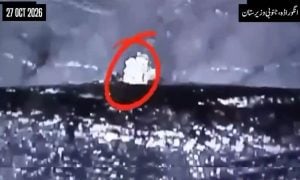
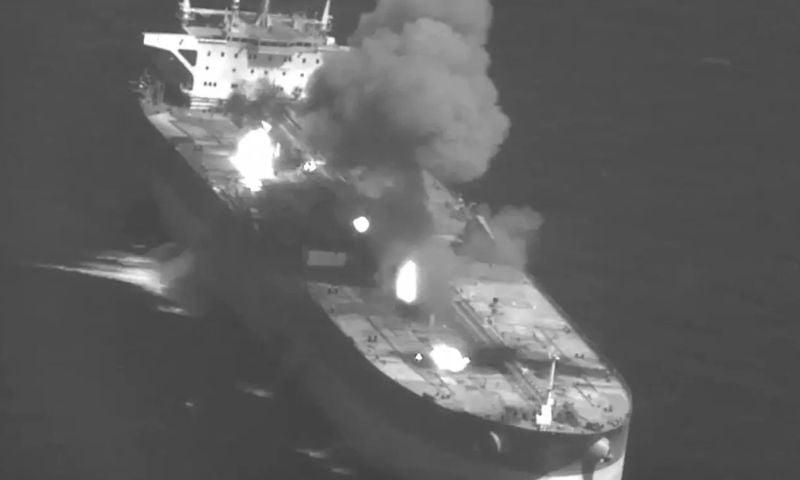
WASHINGTON: The US military said on Wednesday that it had destroyed 10 Iranian oil tankers over the past week, as Iran claimed attacks on US vessels and commercial shipping in the Gulf in a sharp escalation of the six-month-old conflict.
US Central Command (CENTCOM), which oversees US military operations in the Middle East, also rejected an Iranian claim that its forces had struck two US Navy destroyers.
“No US Navy warship has been struck; all IRGC attempted attacks failed,” CENTCOM said in a statement.
CENTCOM said the 10 Iranian tankers were part of a “multibillion-dollar shadow network” that finances Iran’s Islamic Revolutionary Guard Corps (IRGC).
🚫 CLAIM: Iran’s Islamic Revolutionary Guard Corps (IRGC) forces have claimed they struck two U.S. Navy destroyers operating in the Middle East. This is completely FALSE.
✅ FACT: No U.S. Navy warship has been struck; all IRGC attempted attacks failed. Meanwhile, U.S. forces… pic.twitter.com/yfC4OcwZ1f
— U.S. Central Command (@CENTCOM) September 9, 2026
US destroys five more tankers
The latest US announcement follows the destruction of five Iranian crude oil carriers on Tuesday.
CENTCOM said its forces destroyed the vessels after the IRGC targeted a US Navy warship with ballistic missiles twice over two days.
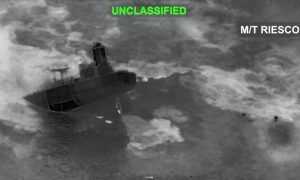
The US military said the warship successfully evaded both attacks and that no American personnel were harmed.
According to CENTCOM, the vessels destroyed on Tuesday were the Kaviz, Charminar, Horizon 1, Riesco and Derya. Four were struck in the Gulf of Oman and one near Iran’s Kharg Island.
CENTCOM forces destroyed five Iranian crude oil carriers, Sept. 8, after the Islamic Revolutionary Guard Corps (IRGC) targeted a U.S. Navy warship with ballistic missiles twice over the past two days. The U.S. warship successfully evaded the attempted Iranian attacks and… pic.twitter.com/Gi8a2tloN1
— U.S. Central Command (@CENTCOM) September 8, 2026
CENTCOM said American forces ordered the crews to abandon the vessels before they were struck and rendered inoperable. The command said Iran had used the tankers as part of a shadow network to finance the IRGC and its regional proxies.
CENTCOM had previously said it destroyed three other Iranian crude oil carriers on September 7 after the IRGC attempted to attack a US aircraft carrier and a guided-missile destroyer.
An E/A-18G aircraft launches from the flight deck of USS George H.W. Bush (CVN 77) during night flight operations while the ship supports enforcement of the U.S. blockade against Iran in the Arabian Sea. As of Sept. 7, CENTCOM forces have redirected 94 commercial vessels,… pic.twitter.com/yEQ7oKC5Jo
— U.S. Central Command (@CENTCOM) September 7, 2026
Iran claims attacks on US vessels
Iran’s IRGC said on Wednesday that its naval forces had attacked two US vessels and eight oil tankers in the Gulf in retaliation for the US destruction of the five Iranian tankers.
The IRGC said the attacks had inflicted heavy damage. It did not identify the US vessels or the tankers it said were targeted.
The IRGC also said its forces had targeted 10 other vessels attempting to enter what it described as a “prohibited and unsafe” area of the Strait of Hormuz.
CENTCOM rejected the claim that any US Navy warship had been hit. The US military said all attempted Iranian attacks on its warships had failed.
Attacks on commercial ships in Hormuz
The latest confrontation has extended the conflict beyond military targets to commercial shipping around the Strait of Hormuz.
Reuters reported that Iran attacked 10 ships after the US destroyed the five Iranian tankers. The attacks marked the biggest declared wave of tit-for-tat strikes on shipping by the two sides since the war began.
The oil products tanker Hercules Star was attacked while at anchor off Dubai, according to its charterer Peninsula. One crew member was killed and another was missing. Maritime security sources, cited by Reuters, said the vessel may have been hit by a drone.
The UK Maritime Trade Operations agency (UKMTO) said it had received reports of several merchant vessels being struck by disabling fire in the Gulf of Oman.
Iraqi port officials said a tanker carrying about two million barrels of fuel oil, the New Andros, caught fire after being struck by a drone in Iraqi waters. The vessel had 22 crew members and no casualties were reported, according to Reuters.
Strait of Hormuz under pressure
The escalation has intensified concerns over the Strait of Hormuz, a crucial global oil shipping route between Iran and Oman.
The waterway normally carries a significant share of the world’s oil and gas shipments. But traffic has fallen sharply since the conflict escalated.
Also Read: Brent Crude Rises Above $100 a Barrel as Middle East Conflict Intensifies
Iran has largely choked off transit through the strait, while Washington has imposed a blockade of Iranian ports. The United States says it has been able to guide tankers through the waterway.
Reuters reported that preliminary data showed only six ships with active transponders had crossed the strait during a recent 24-hour period.
Oil prices surge above $100
The disruption has sent oil prices sharply higher. Benchmark Brent crude briefly rose above $100 a barrel on Wednesday for the first time since July as the latest attacks heightened fears of further disruption to Middle Eastern oil supplies.
Benchmark Brent crude oil futures rose past $100 a barrel breaching the symbolic barrier for the first time since July 24 as intensifying conflict in the Middle East fueled growing concern about oil flows from the region https://t.co/DO5nqmtH9V
— Reuters (@Reuters) September 9, 2026
Brent futures earlier reached $100.19 before easing back. US West Texas Intermediate crude also rose sharply.
Brent has climbed about a quarter since early August as hopes for a lasting settlement to the US-Iran conflict have faded.
A growing number of banks, including Goldman Sachs, Bank of America and HSBC, have raised their crude price forecasts in recent days.
Rystad Energy chief economist Claudio Galimberti said around 8 million to 9 million barrels per day had moved through the Strait of Hormuz in the week before fighting resumed on August 30. More recently, the flow had fallen below 2 million barrels per day.
Jeffrey Currie, co-chairman at Abaxx Markets, said the increase in energy prices should not be treated as a temporary shock.
“This is structural. It’s not going away,” Currie said, adding that the security premium in oil prices could increase further.