


Key Points
- Iran claimed several American soldiers had been captured during the ongoing war
- Washington denied claims and said no US troops are in Iranian custody
- Senior Iranian security official Ali Larijani made the claim
ISLAMABAD: The US administration has rejected claims by Iranian officials that Tehran captured American soldiers during the ongoing war between Iran and the United States and Israel, saying no US service members are in Iranian custody.
The denial came after Iranian senior security official Ali Larijani said several American soldiers had been taken prisoner since the outbreak of the conflict.
In a message posted on social media, Larijani said he had received reports that US troops had been captured and suggested Washington might be presenting them as combat casualties instead.
The United States military responded by rejecting the claims of capturing the US troops. A spokesperson for US Central Command (CENTCOM) said that Iranian forces had captured no American soldiers.
Officials in Washington said American forces deployed in the region remain fully accounted for and dismissed the Iranian statement as inaccurate.
The exchange of claims comes amid a rapidly escalating conflict that began on February 28 when the United States and Israel launched large-scale air and missile strikes against Iran.
The military campaign targeted Iranian military facilities, missile infrastructure and command centres. In retaliation, Iran is attacking Israel and the US assets and bases in its neighbouring countries, mainly the United Arab Emirates.
The opening phase of the war resulted in heavy casualties inside Iran, with reports indicating that more than a thousand people were killed in the strikes, including senior officials and top civilian leadership.
Iran responded with retaliatory drone and missile attacks on US-linked sites and military facilities in the wider region, including bases used by American forces.
The exchanges have spread, disrupting life across the Middle East, and raising concerns among regional governments and international observers about the potential for further escalation.
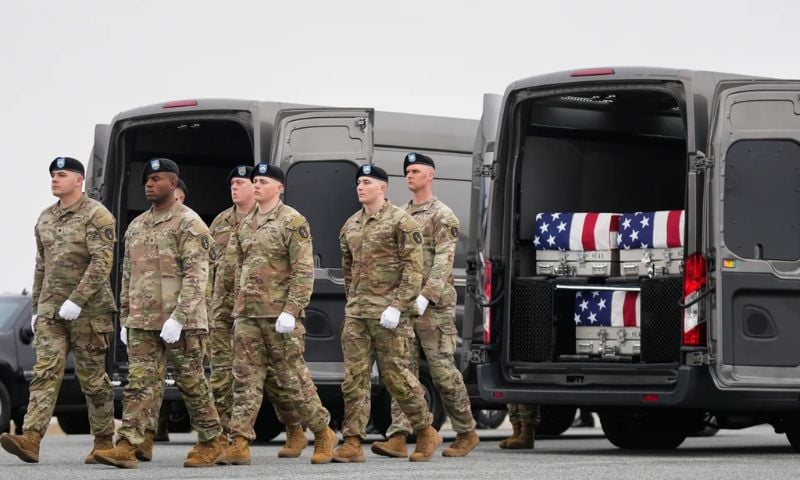
According to US officials, several American military personnel have been killed since the war began, including troops killed in an Iranian drone strike on a facility used by US forces in Kuwait early in the conflict.
Despite the casualties and ongoing exchanges of attacks, Washington has continued to defend the military campaign as part of its broader strategy toward Iran.
President Trump has said the United States would continue its operations until its objectives are achieved and has not ruled out further military steps depending on developments on the ground.
Tehran has stated that it will continue to respond to attacks on its territory and has warned that countries hosting US military facilities could face consequences if those bases are used for operations against Iran.
The confrontation marks the most serious direct military conflict between the United States and Iran in decades.
Tensions between the two countries have built over many years through disputes over Iran’s nuclear programme, regional security issues and sanctions imposed by Washington.
The current war has also drawn in Israel, which has long viewed Iran’s military and nuclear capabilities as a major strategic concern.
Israeli forces have participated in the strikes launched since late February, according to multiple reports.
International reaction to the war has been mixed, with several governments calling for restraint and dialogue and warning that a prolonged confrontation could destabilise the wider Middle East and disrupt global energy markets.
At present, Washington and Tehran continue to offer sharply different narratives about developments on the battlefield, including claims about casualties, military losses and operational outcomes.
The dispute over the alleged capture of US soldiers reflects the wider information struggle accompanying the ongoing war.