Key Points
- US budget airline Spirit Airlines ceases operations after fuel cost surge
- Rival carriers cap fares and assist stranded passengers
- Collapse linked to geopolitical tensions and failed merger plans
- Around 15,000 jobs affected across workforce and contractors
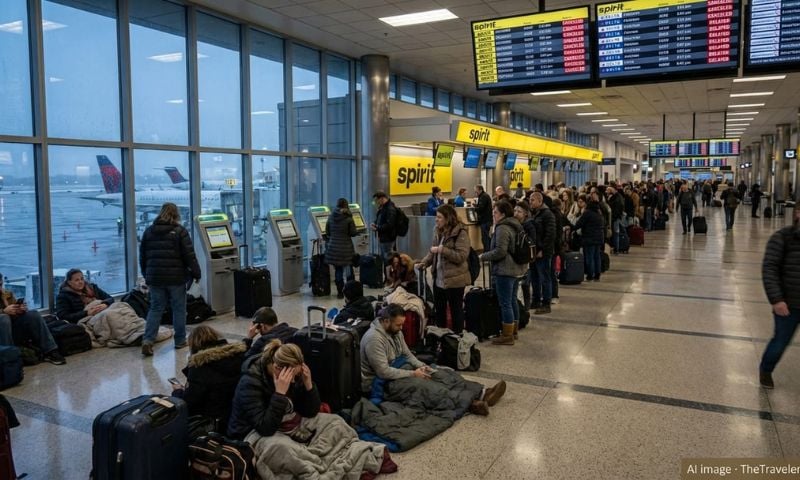
ISLAMABAD: Major global airlines and U.S. authorities scrambled to assist thousands of stranded passengers after US budget carrier Spirit Airlines abruptly ceased operations, marking one of the most significant airline failures in recent years.
The shutdown follows a sharp surge in jet fuel prices linked to disruptions around the Strait of Hormuz, a critical artery for global energy supplies.
The spike in fuel costs has strained airline finances worldwide, with low-cost carriers particularly vulnerable due to narrow margins.
Even a $500 million bailout package from the US Administration could not save the airline from collapse. Officals say the shareholders blocked the government capital injection.
The collapse is expected to result in the loss of about 15,000 jobs, affecting employees and contractors.
Spirit, which accounted for roughly 5 per cent of U.S. flights, had struggled financially for years and had not recorded a profit since 2019.
U.S. Transportation Secretary Sean Duffy said efforts to secure a rescue deal failed after creditors rejected a government-backed plan.
Some major bondholders, including hedge fund Citadel, opposed the proposal for concerns that it would weaken their claims.
Major American carriers, including United Airlines, Delta Air Lines, JetBlue and Southwest Airlines, moved to contain disruption by capping ticket prices for affected passengers.
Airlines also offered free standby seats to help displaced Spirit employees return home.
At key hubs such as Orlando International Airport, departure boards were dominated by cancellations as passengers sought alternative travel arrangements.
The airline’s failure also reflects structural challenges in the US airline industry.
Analysts point to the blocked 2024 merger between Spirit and JetBlue as a missed opportunity to strengthen the airline’s financial position.
In addition, shifts in post-pandemic travel demand have favoured higher-yield routes over ultra-low-cost domestic travel.
The collapse underscores broader risks facing the global aviation sector, where geopolitical tensions, fuel price volatility and regulatory decisions can quickly destabilise weaker carriers.