


WASHINGTON: The United States has announced that it has accepted an invitation to participate in China’s annual security forum, signalling a potential warming of relations between the two nations’ militaries.
This development highlights Washington’s eagerness to reestablish military-to-military communication with China, which is considered its primary strategic rival.
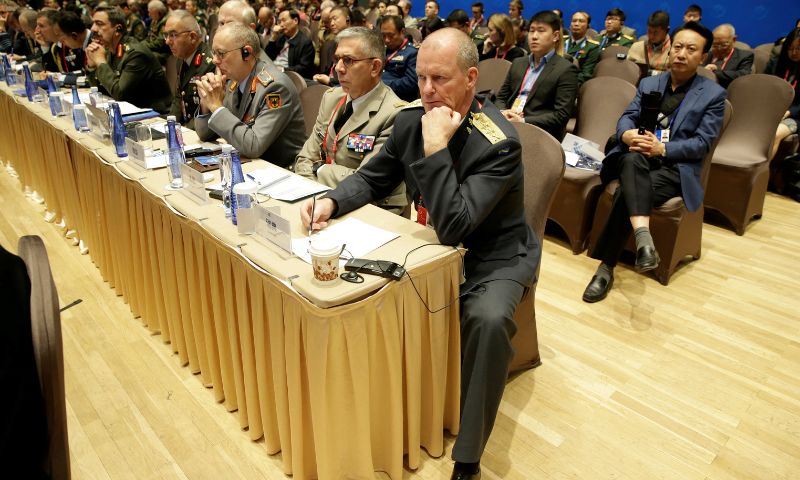
The Xiangshan forum, scheduled for October 29-31, is regarded by Beijing as its counterpart to Singapore’s annual Shangri-La Dialogue. This is a significant step, given that during the late May Shangri-La Dialogue, China’s defence minister, Li Shangfu, who has since been absent from public appearances, declined a formal meeting with the U.S. defence secretary.
While the invitation might be seen as a response to US criticism that China has been slow to rebuild military engagement, especially following US Speaker Nancy Pelosi’s visit to Taiwan in August 2022, it could also reflect Beijing’s desire to improve relations. U.S. officials have recently suggested there are early signs that better military communications may be restored.
Although the US has accepted the invitation to the Xiangshan forum, Defence Secretary Lloyd Austin will not be in attendance. The Pentagon did not specify who from the US side would attend, and the Chinese embassy in Washington declined to provide details.
In a statement, the Pentagon welcomed the opportunity to engage with representatives from China’s People’s Liberation Army (PLA) at the forum. They expressed their intent to participate at a level consistent with past precedents. Notably, in 2019, the last time the forum took place, the most senior U.S. official to participate was then-U.S. Deputy Assistant Secretary of Defence for China, Chad Sbragia.
However, the fate of this year’s forum remains uncertain, as Li Shangfu, who traditionally delivers a keynote speech, is currently under investigation over alleged corrupt procurement of military equipment. His disappearance raises questions about the event’s proceedings.
China’s decision to extend the invitation, aware that Secretary Austin was unlikely to attend, suggests a keen interest in stabilizing defence relations with the United States. This move underscores a significant desire to foster stability and cooperation in the realm of military diplomacy.
The Xiangshan forum, set amidst the tranquil hills away from Beijing’s bustling downtown, has traditionally been a platform for China to shape global discussions on defence and security matters. While past high-level U.S. delegation attendance has been rare, the decision to participate this year implies an evolving approach to international engagement.
China’s embassy in Washington emphasized that the forum provides an equal opportunity for all parties to express their views on advancing security cooperation, particularly within Chinese President Xi Jinping’s Global Security Initiative, a point of contention with Washington.
The Chinese embassy spokesperson, Liu Pengyu, highlighted that China and the US have been maintaining candid and effective communications through military diplomatic channels, signalling their ongoing commitment to dialogue and cooperation.