
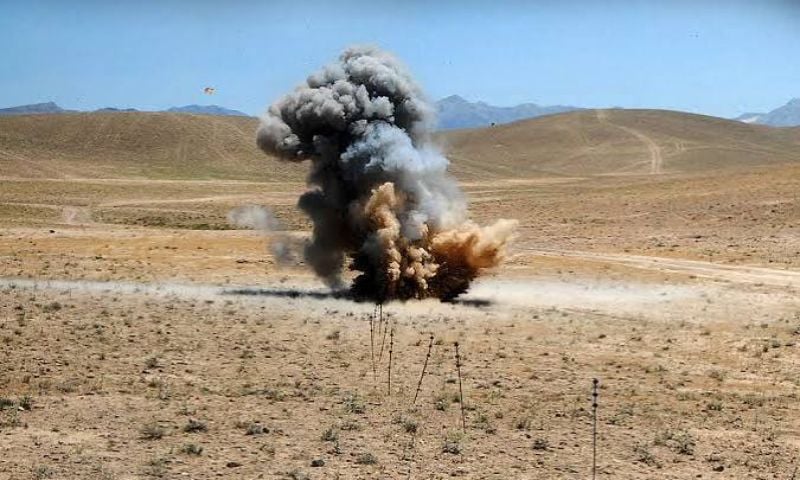
KABUL: A 12-year-old boy has been killed in an explosion involving an old unexploded munition in eastern Afghanistan’s Nangarhar province, underscoring the continuing threat posed by explosive remnants of war to civilians, particularly children, under the Taliban regime.
The incident occurred on Sunday evening, 25 October, in the Gandumak area of Sherzad district, when the boy, identified as Hemmat, was playing with an old piece of ammunition that exploded, according to a statement from the media office of the Taliban-appointed provincial governor.
The death comes after a similar incident in Shinwar district of Nangarhar killed four children, highlighting the persistent danger posed by abandoned munitions in communities across Afghanistan.
The recurring tragedies have raised concerns over the safety of children in a country where decades of conflict have left landmines and unexploded ordnance scattered across populated areas.
The incidents also underscore the need for more effective public safety measures, mine-clearance operations and awareness campaigns to prevent further casualties.
The International Committee of the Red Cross (ICRC) has warned that unexploded ordnance continues to endanger Afghan communities, with children among the most vulnerable to these hazards.
The United Nations Assistance Mission in Afghanistan (UNAMA) has also highlighted the need for increased funding to clear landmines and other explosive remnants of war, warning that contamination continues to threaten civilians in areas where people live, work and attend school.
In another deadly incident, nine children were killed by an old landmine in Ghazni province, demonstrating the devastating consequences of Afghanistan’s widespread explosive contamination.
Children bear the brunt
According to a United Nations report published on April 4, 2026, Afghanistan remains among the countries with the highest casualty rates from explosive ordnance, with approximately 50 people killed or injured every month. Nearly 80 per cent of those casualties are children.
The report estimated that more than 1,000 square kilometres of land across Afghanistan were contaminated by explosive hazards, placing nearly three million people, along with hundreds of educational and healthcare facilities, within one kilometre of contaminated areas.
The UN warned that funding shortages remained a major obstacle to mine-clearance operations, limiting efforts to remove dangerous devices and protect vulnerable communities.
READ ALSO: Unexploded Ordnance Kills and Injures 175 In Afghanistan In Five Months: UN
Figures from Afghanistan’s Mine Action Coordination Directorate showed that landmines and unexploded ordnance caused 467 casualties in 217 incidents last year. Of those affected, 92 people were killed and 375 injured. Children accounted for 309 casualties, representing approximately 66 per cent of the total.
Growing humanitarian challenge
The latest death adds to Afghanistan’s continuing humanitarian and public safety challenges under Taliban rule. While explosive contamination is a legacy of decades of conflict, the repeated deaths of children highlight the urgent need for sustained clearance operations, stronger public awareness initiatives and effective protection measures.
Mine-action organisations have warned that unexploded ammunition can remain lethal for years or even decades after fighting ends. Without adequate funding and systematic clearance, children and other civilians will continue to face potentially fatal risks in their daily lives.
Authorities and humanitarian organisations advise people never to touch, move or approach suspicious objects that may contain explosives. Such objects should be reported to the relevant authorities or mine-action organisations from a safe distance.
The latest tragedy in Nangarhar once again highlights the urgent need to protect Afghan children from preventable deaths and to ensure that explosive hazards are identified and cleared before they claim more lives.