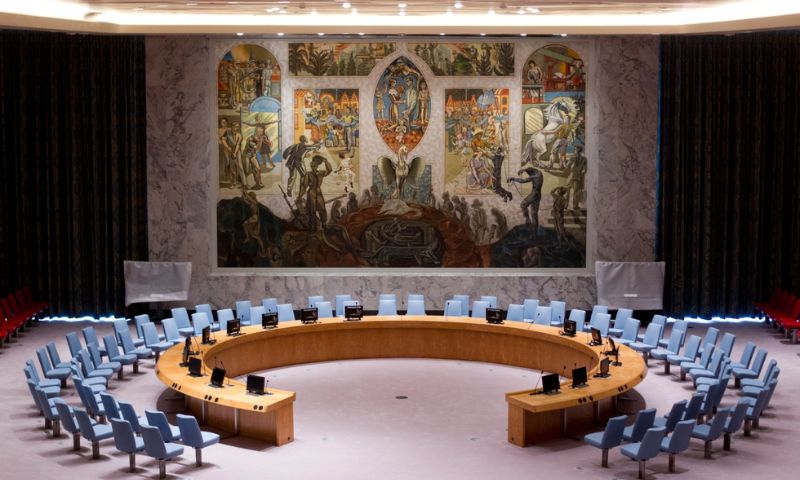
NEW YORK: The United Nations Security Council (UNSC) convened closed-door consultations on Wednesday to deliberate on the recent missile and drone attacks targeting the United Arab Emirates (UAE), as regional tensions in the Middle East continue to escalate.
Addressing reporters at the UN headquarters in New York, UN spokesperson Stéphane Dujarric confirmed that Rosemary DiCarlo, the Under-Secretary-General for Political and Peacebuilding Affairs, briefed council members on the latest security and political developments linked to the attacks.
The emergency discussions came after the UAE accused Iran of being responsible for Monday’s strikes. Tehran, however, has firmly rejected the allegations and denied any involvement in the attacks.
The UN Security Council meet for closed consultations on Wednesday to discuss the recent missile and drone attacks on the UAE.
The Secretary-General’s Personal Envoy for the Middle East conflict continues his diplomatic engagement in the region.https://t.co/GqyjT8R0p2
— UN News (@UN_News_Centre) May 6, 2026
According to Dujarric, DiCarlo reiterated the position of UN Secretary-General António Guterres, who has consistently condemned all unlawful attacks across the Middle East since the conflict intensified on February 28.
The spokesperson noted that the UN chief had again stressed the importance of adhering to Security Council Resolution 2817, which was adopted in March in response to earlier Iranian attacks on neighbouring states. The resolution calls for the protection of civilians and civilian infrastructure amid growing regional hostilities.
According to media reports, Dujarric further stated that diplomatic efforts aimed at easing tensions were continuing at multiple levels.
He said Jean Arnault, the secretary-general’s personal envoy for the Middle East conflict, remained actively engaged in consultations with regional stakeholders.
As part of these diplomatic engagements, Arnault held discussions on Wednesday with Türkiye’s foreign minister and other regional representatives to explore possible avenues for de-escalation and dialogue.
The United Nations also reaffirmed its commitment to supporting diplomatic initiatives intended to secure a comprehensive and lasting resolution to the ongoing conflict.
The closed-door UNSC consultations reflected growing international concern over the widening instability in the region, with fears that continued attacks and retaliatory rhetoric could further undermine regional security and diplomatic efforts.