


Key Points:
- UNSC confirms rise in TTP attacks launched from Afghan territory against Pakistan
- Afghanistan described as a hub for multiple terrorist groups, posing regional threats
- TTP given greater freedom by Afghan de facto authorities, report says
- Pakistan’s counterterrorism operations dealt major setbacks to TTP leadership
- Terrorists using advanced weapons and drones, increasing attack lethality
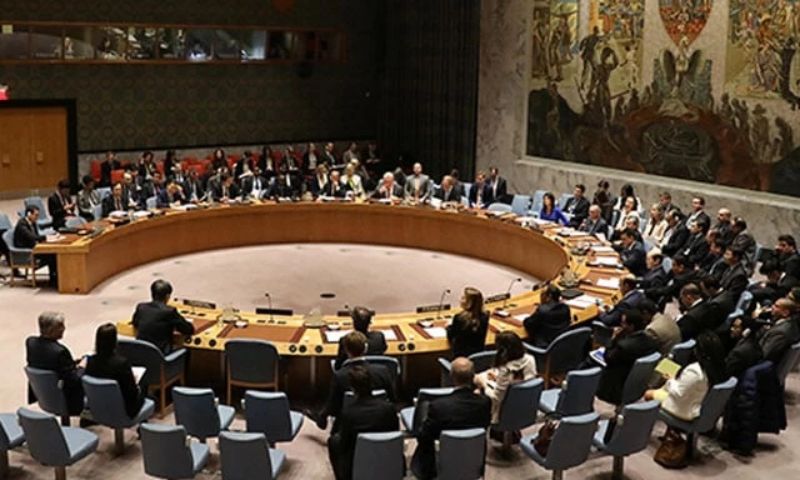
ISLAMABAD: A United Nations Security Council (UNSC) report has confirmed a sharp increase in terrorist attacks against Pakistan launched by the banned Tehreek-e-Taliban Pakistan (TTP) from Afghan territory, validating Islamabad’s long-standing concerns about militant sanctuaries across the border.
The 37th report of the UN Analytical Support and Sanctions Monitoring Team, dated February 4, states that Afghanistan continues to host multiple terrorist organisations whose activities pose serious threats to regional and international security. The report comes at a time when Pakistan is grappling with a renewed wave of militant violence.
Last week, at least 33 people were killed and 169 others injured in a suicide bombing at Imambargah Khadijah al-Kubra in Islamabad during Friday prayers.
Meanwhile, security forces concluded Operation Radd-ul-Fitna-1 in Balochistan following coordinated terrorist attacks. According to the military, 36 civilians, including women and children, lost their lives during the violence, while 22 security personnel embraced martyrdom. The military said 216 terrorists were neutralised during the operation.
Afghanistan a continuing source of regional concern
The UNSC report noted that the presence of terrorist groups in Afghanistan remained a major concern for Central and South Asia.
“There was an increase in attacks in Pakistan launched by TTP in Afghanistan, which led to military exchanges. Regional relations remained fragile,” the report said.
While acknowledging that Islamic State Khorasan (ISIL-K) remained under sustained counterterrorism pressure, the report warned that the group still possessed the capability and intent to conduct external attacks.
The report also highlighted growing concern among regional states over the spillover effects of terrorism emanating from Afghanistan, including cross-border attacks and the radicalisation of vulnerable communities.
Although Afghan authorities claimed there were no terrorist groups operating within their borders, the report noted that “no member state supported this view.”
TTP given greater freedom, attacks intensify
The report stated that while Afghan authorities continued action against ISIL-K and restricted the external operations of some militant groups, the TTP was granted greater liberty and support, leading to a rise in attacks against Pakistan.
“TTP was accorded greater liberty and support from the Afghanistan’s de facto authorities, and consequently TTP attacks against Pakistan increased, amplifying regional tensions,” it said.
Al Qaeda was also reported to enjoy the patronage of Afghan authorities, acting as a training and advisory service provider, particularly for the TTP.
The report described the TTP as one of the largest terrorist groups operating in Afghanistan, noting that its attacks against Pakistani security forces had become increasingly complex, at times involving large numbers of fighters.
It cited the November 11 attack on an Islamabad courthouse, which killed 12 people and was claimed by a TTP splinter faction, calling it the first such attack in the capital in several years.
Some member states expressed concern that the TTP could deepen cooperation with Al Qaeda-aligned groups, potentially expanding its targeting beyond the region.
Pakistan’s operations dealt major blows
Despite the growing threat, the UNSC report acknowledged that Pakistan’s counterterrorism actions inflicted significant operational setbacks on the TTP.
“TTP suffered several operational setbacks, notably the death of Mufti Muzahim, the group’s deputy emir, in a Pakistani operation in October,” the report said.
BLA attacks and militant coordination
The report also drew attention to attacks by the banned Baloch Liberation Army (BLA), particularly against Pakistani security forces and China-Pakistan Economic Corridor (CPEC) projects.
On September 16, BLA militants ambushed a military convoy, killing 32 troops. While Pakistani operations constrained the group’s operational space, the report noted that it remained active.
Some member states reported collaboration between the BLA, TTP, and ISIL-K, including shared training camps and logistical resources, though assessments varied regarding their links with Al Qaeda.
Advanced weaponry and foreign fighters
According to the report, militant groups in Afghanistan had acquired modern weapons through smuggling and black-market trade.
The TTP was reported to be using night-vision devices, thermal imaging systems, sniper rifles, drones, and advanced assault weapons, many allegedly provided with official permits and travel documents.
The report also warned about potential flows of foreign fighters, particularly from Central Asia, and noted that ETIM/TIP militants were operating freely under Afghan patronage, with some reportedly joining Taliban police units.
Pakistan’s stance reaffirmed
Pakistan has consistently alleged an Afghanistan–India nexus behind terrorism in the country. The interior minister recently stated that the mastermind of the Imambargah attack was an Afghan national linked to Daesh.
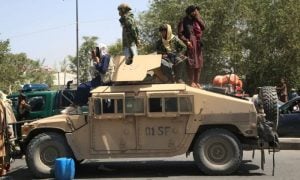
Earlier, Pakistan military’s media wing, the Inter-Services Public Relations (ISPR) Director General Lt Gen Ahmed Sharif Chaudhry had warned that the Afghan regime posed a threat not only to Pakistan but to global security, citing abandoned US military equipment and the harbouring of non-state actors.
Following tensions with India in May 2025, Field Marshal Asim Munir reiterated that Pakistan would not be coerced and that all attempts to undermine its counterterrorism efforts would be “comprehensively defeated.”
The UNSC report concluded by warning that fragile regional relations could be exploited by terrorist groups, reinforcing Pakistan’s position that unchecked militancy in Afghanistan poses a grave and continuing threat.