ISLAMABAD: The United Nations has rejected Taliban claims that 400 people were killed in a Pakistani airstrike on Kabul, saying instead that “dozens” were killed or wounded and that the drug rehabilitation facility was only “affected” by the strike, while residents said the targeted site was a former NATO base located near the treatment centre.
The United Nations Assistance Mission in Afghanistan (UNAMA) said it had not yet released precise casualty figures but indicated that the toll was far lower than the figure cited by Taliban authorities.
In a statement issued Tuesday, the UN mission did not refer to the rehabilitation centre being directly targeted in the Pakistani strikes. Instead, UNAMA said the drug treatment facility in Kabul was “affected” by the airstrike.
Taliban officials had earlier claimed the strike hit a centre used for the treatment of drug addicts, alleging hundreds of casualties.
Findings by Afghanistan International, an Afghan digital news outlet, indicate that the site targeted in Pakistan’s airstrike in eastern Kabul on Monday night was a former NATO base.
According to the report, evidence suggests that for roughly three years, the Taliban had been using part of the facility to manufacture suicide drones.
Findings by Afghanistan International indicate that “Camp Phoenix” was the main target of the airstrike.
Camp Phoenix was a large United States and NATO military base located in eastern Kabul near Pul-e-Charkhi and along the Kabul–Jalalabad highway. After the withdrawal of foreign forces in 2014–2015, the base was handed over to the Afghan government and later fell under Taliban control following the group’s takeover of Kabul in August 2021.
The British newspaper Daily Mail reported on June 7, 2025, that the Taliban had established a suicide drone manufacturing facility at Camp Phoenix. The report said construction of drones at the site had begun at least as early as 2023.
According to the report, the base had been transformed into a covert production line for unmanned combat drones.
The Taliban were reportedly modelling several drone types, including the US MQ-9 Reaper and the Shahed-136.
Taliban engineers at Camp Phoenix, some of whom studied at Kabul University’s engineering faculty, were working to increase the drones’ operational range and explosive payload.
Pakistan and several Western countries were said to be aware of drone development activities at the site.
The project raised concerns among Western intelligence agencies, as the Taliban appeared to be developing increasingly advanced unmanned systems capable of striking targets beyond Afghanistan’s borders.
Al-Qaida-linked engineer assisting Taliban drone programme
The Daily Mail also reported that the presence of an engineer allegedly linked to the Al-Qaida network at the Taliban drone facility had heightened security concerns.
The engineer is said to have studied in the United Kingdom. Following the Taliban’s return to power in 2021, training camps associated with Al-Qaida and other militant groups have reportedly become active again in parts of Afghanistan.
Engineers involved in the drone project are considered highly valuable and are reportedly provided with personal security.
“Drones instead of bread”
The magazine The Diplomat reported on March 5, 2026, that the Taliban are actively developing indigenous drone capabilities. Assembly is said to take place at Camp Phoenix near Kabul, while testing reportedly occurs in Logar province.
The programme is believed to draw on experience and technical exposure from Turkiye, China, Russia and Iran, while relying on civilian components such as GPS systems, engines and sensors obtained through black markets.
Analysts say the Taliban possess some of the conditions needed to develop a domestic drone industry. Infrastructure left behind at former NATO bases and technical expertise gained during decades of conflict have created a foundation for such efforts.
A resident of eastern Kabul told Afghanistan International in the early hours following the strike that “next to the drug treatment camp, a Taliban drone manufacturing facility was targeted in an airstrike”.
The findings suggest that both a drug rehabilitation centre and a suicide drone production facility were operating at the same site.
Under international humanitarian law, the use of civilians as human shields is prohibited and constitutes a war crime because it deliberately exposes civilian populations to the dangers of military operations.
Several residents said the main target was the intelligence directorate of the Taliban’s Defence Ministry.
Pakistani authorities said the targeted location was being used for terror-related activities rather than healthcare.
Officials said the actual Omid Hospital is located several kilometres away from the site that was struck. They added that available images show the real hospital as a multi-storey building, while the targeted location consisted of containers and temporary structures.
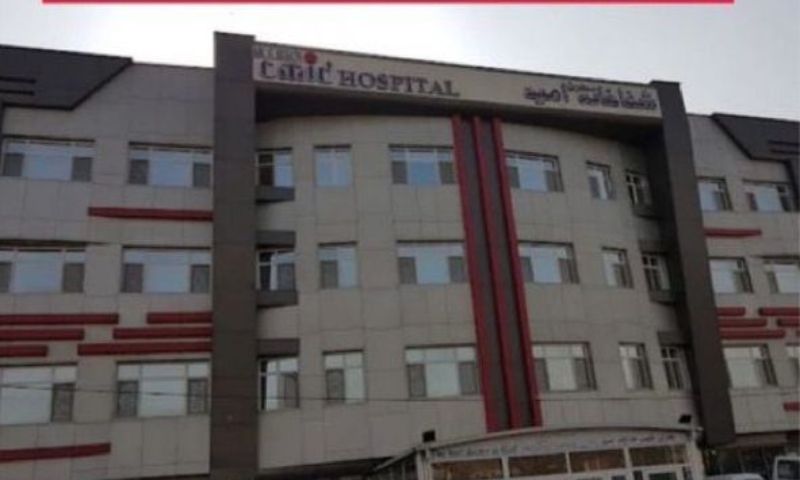
Authorities also said weapons and explosives were present at the site, suggesting it was being used as a terrorist training or logistical facility.
Separately, a video and related post shared by an Afghan government-linked social media account about the incident were later deleted without explanation.
Observers said the content contained misleading information, with some claiming the footage may have been generated using artificial intelligence after it failed to withstand independent scrutiny.