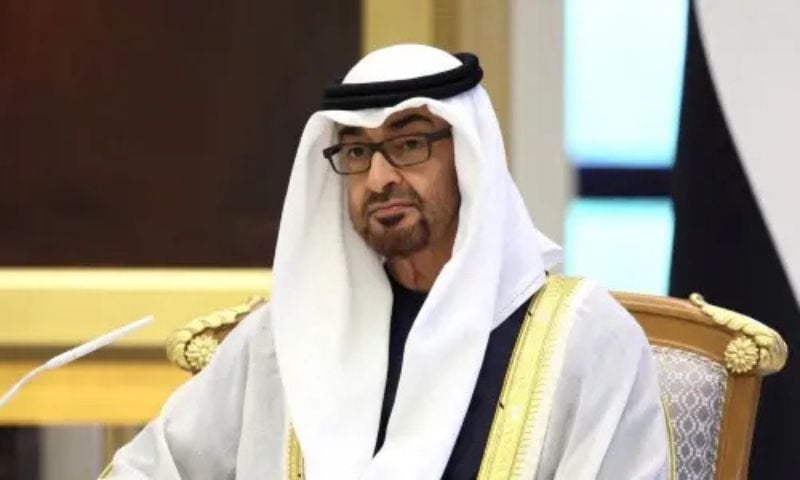



DUBAI: United Arab Emirates President Sheikh Mohamed bin Zayed Al Nahyan said the country would emerge “stronger” from the ongoing regional conflict, warning that the UAE should not be mistaken for weak as Iran continued retaliatory strikes across the Gulf.
In a rare televised address broadcast on Abu Dhabi TV on Saturday, Sheikh Mohamed said the UAE was passing through a period of regional war but remained resilient.
“The UAE is in a period of war, but we will emerge stronger,” he said.
The comments marked his first public remarks since Iran launched missile attacks towards Gulf states amid ongoing US and Israeli strikes against Iran.
‘Not an easy prey’
Sheikh Mohamed said the UAE’s strength should not be underestimated despite its prosperity and openness.
“The UAE may appear attractive, but its hand is firm,” he said.
He also warned potential adversaries not to view the country as vulnerable.
“The UAE has thick skin and bitter flesh — we are no easy prey,” he said.
He added that the leadership would continue fulfilling its responsibility to safeguard the country and everyone living in it.
“We will carry out our duty towards our country, our people, and our residents who are also part of our family,” he said.
The Emirati leader made the remarks during a visit to a hospital where he checked on people injured during recent missile strikes.
According to officials, five people were being treated, including two Emirati nationals, one Indian, one Sudanese and one Iranian.
Expatriates integral part
Addressing expatriates living in the UAE, he said residents were an integral part of the country.
“They are our guests and our family,” he said, praising their supportive stance during the difficult period.
He also asked for understanding if any shortcomings had occurred, noting that the country was facing extraordinary wartime conditions.
The UAE remarks came as tensions escalated across the Gulf with missile and drone threats reported in several countries.
Missile threat
The UAE Ministry of the Interior said air defence systems were responding to a missile threat and urged residents to stay indoors.
“Please remain in a safe place and follow the warnings and updates on official websites,” the ministry said in a social media post.
تنوّه وزارة الداخلية بأن تنبيهات نظام الإنذار المبكر لا تتم إلا عند وجود ما يستدعي اتخاذ تدابير وقائية إضافية عاجلة حفاظا على السلامة العامة، وتهيب بالجميع الالتزام بما يرِد فيها.#الداخلية_قطر pic.twitter.com/g07GYZyRdv
— وزارة الداخلية – قطر (@MOI_Qatar) March 7, 2026
In neighbouring Qatar, authorities said a missile had been intercepted after explosions and air raid sirens were heard in central Doha.
“Armed forces intercepted a missile attack which targeted the State of Qatar,” Qatar’s defence ministry said in a statement.
— وزارة الدفاع – دولة قطر (@MOD_Qatar) March 7, 2026
Separately, Qatar’s interior ministry issued a mobile phone alert saying the security threat level had been “elevated” and urging residents to remain indoors.
Iranian strikes widen regional conflict
Iran’s Islamic Revolutionary Guard Corps (IRGC) said it had launched missiles at a US military base in Juffair, Bahrain.
According to the IRGC, the attack was carried out in response to a US strike on a desalination plant in Qeshm.
روابط عمومی سپاه: در ادامه موج ۲۶ عملیات وعده صادق ۴ با رمز یا حیدر کرار، در پاسخ به تعدی تروریستهای آمریکایی از پایگاه جفیر، این پایگاه آمریکایی مورد اصابت موشکهای نقطهزن سوخت جامد و مایع سپاه پاسداران قرار گرفت
— خبرگزاری تسنیم – خبر فوری (@Tasnimbrk) March 7, 2026
Meanwhile, an Emirati official said the UAE wanted Iranian attacks on Gulf states to end immediately.
“Any sort of escalation is worrying. We want to contain the war. We don’t want the war to expand,” the official told Reuters.
The official added that Iran needed to recognise that targeting neighbouring countries was counterproductive.
“We want to start with the Iranians realising that they are not helping themselves by attacking their whole neighbourhood and to stop there and realise that,” the official said.
UAE to protect residents
Despite the escalating security situation, Sheikh Mohamed expressed confidence that the UAE would overcome the crisis.
He said the country would continue to protect its people and residents and maintain stability.
The UAE consists of seven emirates, including Dubai and Abu Dhabi, and hosts millions of expatriates as well as major international transport and financial hubs.
Sheikh Mohamed concluded his remarks by expressing hope for the country’s safety and stability.
“God willing, the UAE will overcome these challenges and emerge stronger,” he said.