


ISLAMABAD: As Pakistan welcomes global investors to anchor its economic turnaround, a high-profile U.S. delegation on Friday opened a new conversation on cooperation in critical minerals.
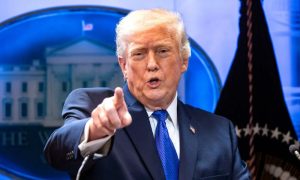
A meeting at the Finance Ministry signalled fresh interest from Washington in Pakistan’s emerging reform and resource landscape, with a focus on mineral exploration. Senior officials view the development in light of US President Donald Trump’s repeated statements about working with Pakistan on minerals, trade, tariffs, and investment.
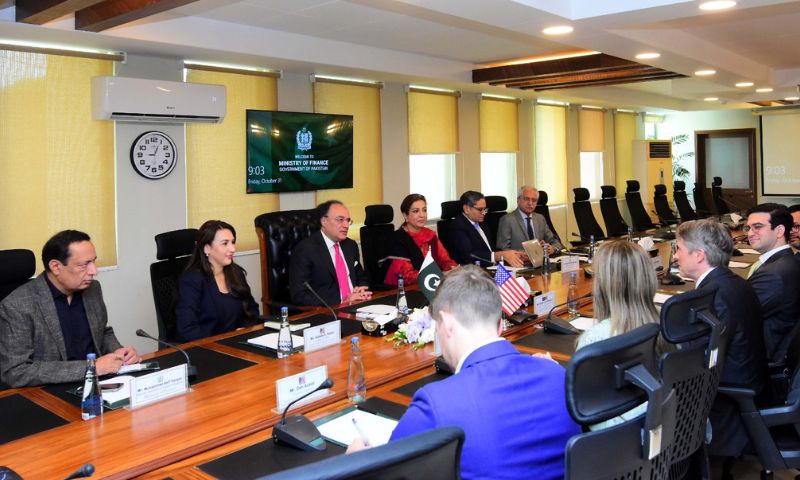
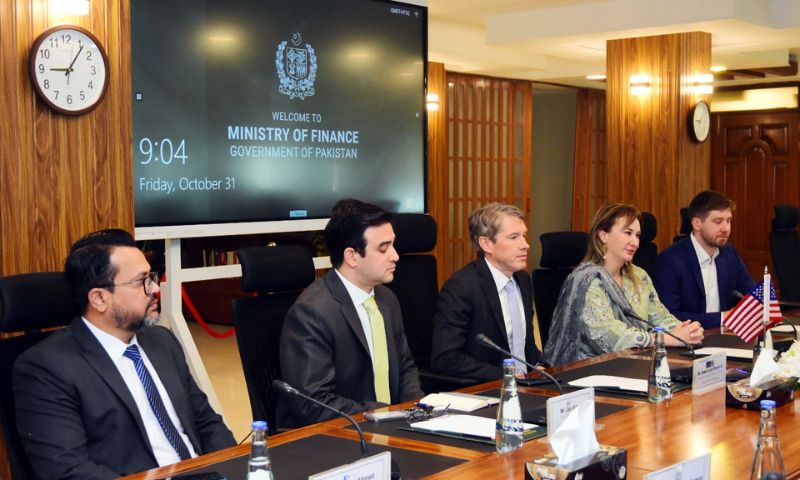
Robert Louis Strayer II, President of the US Critical Minerals Forum, met Federal Finance Minister Muhammad Aurangzeb in Islamabad. Accompanied by US Chargé d’Affaires Natalie Baker, the American delegation held detailed discussions with Senior officials from the Finance Ministry and related departments. The meeting’s focus was on developing secure and sustainable mineral supply chains and on identifying joint investment opportunities in Pakistan’s mining sector.
Reform optimism and investor signals
Finance Minister welcomed the delegation, saying Pakistan’s improving macroeconomic outlook and ongoing reforms had revived investor confidence. “Our priority is fundamental fiscal hygiene — the discipline where capital flows in, remains invested, and is protected through sound policy,” he said, noting that these reforms were translating into improved signals from international rating agencies.
He underlined that the government had launched deep-rooted structural reforms — from power-sector restructuring to broadening the tax base — and was now separating tax policy and administration through a new Tax Policy Unit in the Finance Ministry. The government, he added, remained focused on the privatisation of 24 state-owned enterprises and enforcing fiscal discipline to attract long-term capital.
Minerals as the next economic frontier
The Minister described Pakistan’s minerals and mining sector as a “transformational opportunity” that could shift the economy from consumption-led cycles to export-led growth, reducing future dependence on multilateral bailouts. “A strong minerals policy framework,” he said, “will help Pakistan stabilise its balance of payments and capture global demand for critical raw materials.”
U.S. sees potential in Pakistan’s technical base
Mr Strayer told the Minister that the Critical Minerals Forum, backed by the U.S. government, is working to create transparent and de-risked mineral supply chains in emerging markets. He said the Forum focuses on rare and niche metals, including copper and antimony, and emphasised technology transfer, IP protection, and investment security as key enablers.

Chargé d’Affaires Natalie Baker added that Washington viewed Pakistan’s engineering and science talent as a competitive advantage and expressed U.S. support for “strong investor confidence and enabling regulatory frameworks.”
Call for structured collaboration
Responding to queries, the Finance Minister invited the Forum to submit a structured collaboration framework, saying Pakistan would evaluate it in line with its policy of responsible investment and mutual benefit. He shared that during recent meetings in Washington with DFC and IFC, both institutions expressed readiness to expand investment portfolios in Pakistan — a sign of improving international sentiment toward the economy.
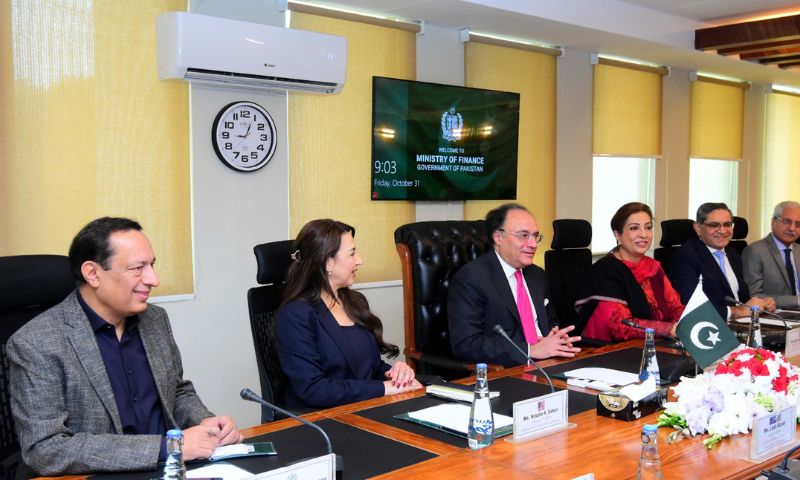
The meeting concluded with both sides agreeing to continue engagement aligned with Pakistan’s reform agenda and shared objectives for sustainable development.
Context: A new phase in Pakistan-U.S. economic ties
The meeting comes at a time when Pakistan is actively positioning itself as a stable destination for investment in critical minerals, amid global efforts to diversify supply chains away from traditional sources. While U.S. interest in Pakistan’s minerals is not new, Friday’s engagement marks the first formal outreach since Islamabad accelerated its economic reforms and professionalised its mineral governance framework.
The dialogue, officials said, reflects a maturing economic conversation between Islamabad and Washington — one that moves beyond aid and geopolitics toward mutual economic interests in technology, minerals, and green growth.