


Key points
- Pakistan praised for strategic restraint, improving U.S. relations
- India faces high tariffs and stalled trade agreements
- China benefits from eased trade tensions and tariff rollback
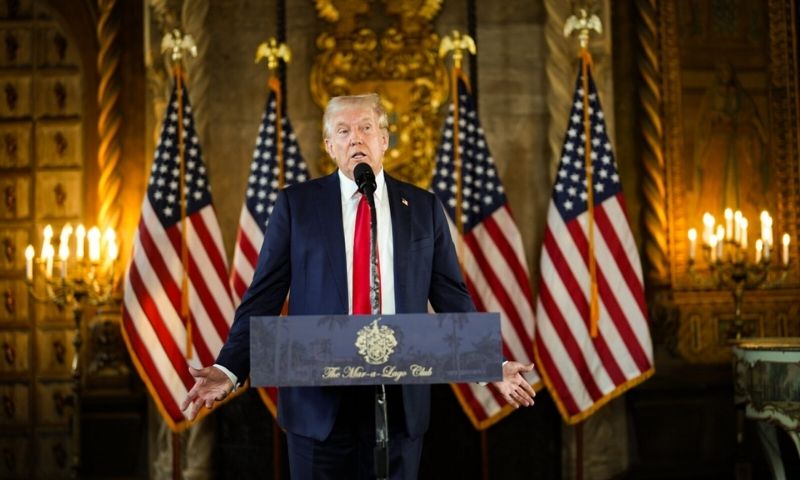
WASHINGTON: U.S. President Donald Trump’s second term has reshaped international relationships, producing both gains and setbacks for key global players, according to a recent review of his administration’s foreign policy moves.
Countries such as China, Saudi Arabia, Syria, Argentina, and Pakistan have seen improved ties with Washington, while Venezuela, Iran, South Africa, Canada, and India have faced heightened tensions and economic pressures.
Trump’s governing style is widely described as “mercurial” and “transactional,” with his decisions often shifting quickly based on meetings, negotiations, or political calculations, according to an article published in Foreign Policy.
Analysts note that while some allies have adapted successfully to his approach, others have struggled to navigate sudden policy reversals and new trade pressures.
Winners:
Pakistan
Pakistan regained favour with Washington after helping arrest a key terrorist figure in Afghanistan. Trump has engaged in dialogue with Pakistani leaders on issues ranging from cryptocurrency to critical minerals.
Pakistan’s ambassador to the U.S., Rizwan Saeed Sheikh, described the bilateral relationship as “as good as it has ever been.”
In May, Pakistan and India engaged in four days of military clashes, raising concerns over escalation between the nuclear-armed neighbours. The confrontation prompted urgent diplomatic engagement from the United States, China, and other international actors.
Following the conflict, US officials praised Pakistan’s strategic restraint, highlighting its role in maintaining regional stability. Analysts said the events underscored Pakistan’s continued relevance in South Asian security dynamics.
China
Despite being a major geopolitical rival, China has benefited from a de-escalation in U.S. trade tensions. Early in Trump’s term, tariffs on Chinese exports surged, but following a meeting between Trump and President Xi Jinping in Busan, South Korea, in October, many tariffs were rolled back, and a trade truce was established.
Restrictions on technology exports, including semiconductor chips and the potential TikTok ban, are reportedly under review. Analysts note that China’s leverage over critical minerals helped shape Washington’s concessions.
Saudi Arabia
Trump’s close ties with Saudi Arabia were reinforced with a visit by Mohammed bin Salman to Washington in November. The administration designated Saudi Arabia a major non-NATO ally and advanced plans to sell F-35 fighter jets.
The countries also agreed to expand cooperation on artificial intelligence, nuclear energy, and critical minerals. Trump hailed the strengthened relationship as advancing “the highest interest of peace.”
Syria
Syrian President Ahmed al-Sharaa visited the White House in November, the first Syrian head of state to do so in nearly eight decades. The visit followed the removal of former dictator Bashar al-Assad and led to the U.S. lifting most sanctions on Syria.
Trump praised Sharaa’s efforts to maintain dialogue with Israel, even as U.S. forces conducted targeted strikes against Islamic State positions in Syria in December.
Argentina
Trump publicly supported Argentine President Javier Milei during the country’s midterm elections and tied a proposed $20 billion U.S. bailout to Milei’s electoral success.
Although U.S. banks have reportedly scaled back the plan, Milei’s victory represents a political win for Trump in Latin America.
Losers:
India
Despite historic ties with Prime Minister Narendra Modi, U.S.-India relations cooled this year. Trump’s frustration over India’s trade policies, oil imports from Russia, and lack of acknowledgment for U.S.-brokered cease-fires with Pakistan led to high tariffs and stalled trade agreements.
A recent 10-year defense pact offers some continuity, but bilateral economic relations remain tense.
Venezuela
President Nicolás Maduro’s government faced U.S. military pressure, including strikes near the northern coast and continued threats of further action. The Trump administration has accused Maduro of collaborating with drug cartels, a charge that has intensified tensions.
U.S. officials describe Maduro’s regime as part of the hemisphere’s “narcoterrorists,” and Defense Secretary Pete Hegseth stressed that the U.S. is pursuing them with precision akin to counterterrorism operations.
Iran
Iran’s air defenses and nuclear infrastructure suffered significant setbacks from a June Israeli offensive, accompanied by U.S. B-2 bomber strikes on key nuclear facilities.
U.S. sanctions targeting Iran’s oil and finance networks, combined with regional developments such as Syria’s political shift and Israel-U.S. efforts against Hezbollah, have further strained Tehran’s regional influence.
South Africa
The Trump administration criticised Pretoria on multiple fronts, including its policies to reduce racial inequality and its stance on the Gaza conflict at the International Court of Justice.
Washington cut hundreds of millions of dollars in aid, imposed 30% tariffs on South African imports, and reportedly barred the country from U.S.-hosted G-20 events.
Canada
Relations with Canada fell to a low point following Trump’s repeated threats of annexation during the early months of his term.
While territorial threats have eased, Canada continues to face steep tariffs, collapsed trade negotiations, and confrontational rhetoric from U.S. officials, including Ambassador Pete Hoekstra and Vice President J.D. Vance.
Trump’s approach has been described as transactional, favoring direct deals and bilateral leverage over multilateral consensus. Critics argue that this unpredictability complicates traditional alliances, while supporters highlight the administration’s willingness to renegotiate terms to achieve perceived strategic advantages.