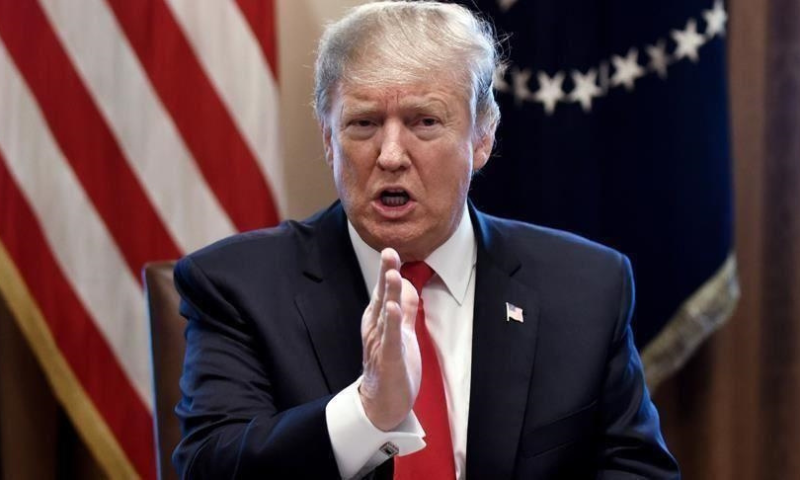



WASHINGTON, DC: US President Donald Trump has warned that the United States would respond “very hard” if Iranian authorities intensify their crackdown on protesters, as demonstrations driven by economic hardship continue to spread across the country.
“If they start killing people, which they tend to do during their riots, we’re going to hit them very hard,” Trump said in an interview with conservative radio host Hugh Hewitt. “They’ve been told very strongly that if they do that, they’re going to have to pay hell.”
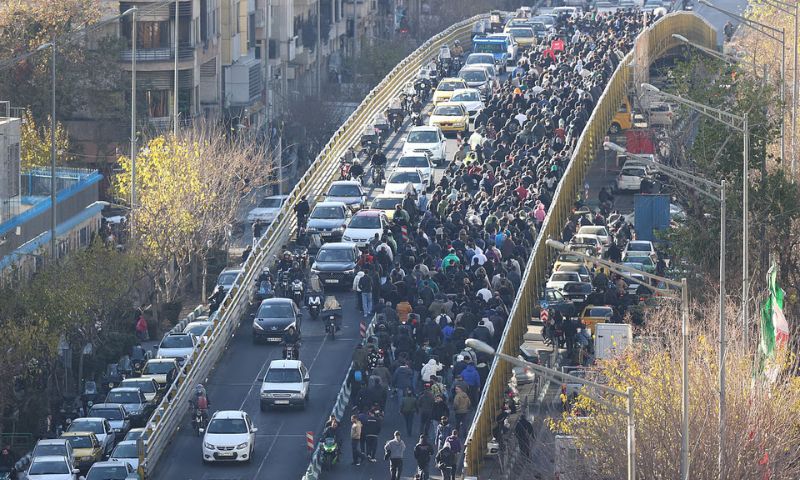
Iran has been gripped by protests since late December, sparked by the rapid collapse of the national currency and worsening living conditions. The Iranian rial has fallen past 1,350,000 to the US dollar, fuelling anger over inflation, unemployment and economic mismanagement.
Vice President JD Vance struck a more measured tone, saying Washington supports peaceful protesters worldwide, including in Iran.
“We certainly stand by anybody who’s engaged in peaceful protests and advocating for their rights,” Vance told reporters at the White House. He also emphasised the importance of renewed negotiations over Iran’s nuclear programme, saying the “smartest thing” for Tehran would be to pursue “real negotiations” with the United States.
The protests began on December 28 at Tehran’s Grand Bazaar, the commercial heart of the capital, before spreading to multiple cities across the country.
Iranian authorities have not released official casualty figures. However, the Human Rights Activists News Agency (HRANA) reported on Wednesday that at least 38 people have been killed during 11 days of unrest, including four members of the security forces. The agency said more than 2,200 people have been arrested and dozens injured.
Iranian media have reported significant injuries among security personnel. Tasnim news agency said 568 police officers and 66 members of the paramilitary Basij forces were wounded during clashes with protesters.
The unrest comes as Iran faces deepening economic pressure amid international sanctions and stalled diplomacy over its nuclear programme, with analysts warning that prolonged instability could further strain relations between Tehran and Washington.