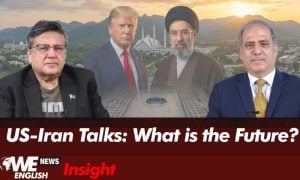



WASHINGTON: US President Donald Trump has instructed aides to prepare for an extended US naval blockade of the Strait of Hormuz, the Wall Street Journal reported, in what is seen as a move to intensify economic pressure on Iran.
In meetings with senior advisers, Trump decided to continue targeting Iran’s oil exports by stopping vessels heading to or from the country’s ports, the report said.
Trump said on Truth Social earlier Tuesday that Iran had asked Washington to lift the naval blockade while negotiations to end the two-month conflict continue.
“Iran has just informed us that they are in a ‘State of Collapse’. They want us to ‘Open the Hormuz Strait,’ as soon as possible, as they try to figure out their leadership situation (Which I believe they will be able to do!).”
Good news from President Trump on the Strait of Hormuz https://t.co/Xpsk5gQIOH
— Commentary Donald J. Trump Posts From Truth Social (@TrumpDailyPosts) April 28, 2026
Iran’s latest proposal to resolve the conflict would postpone discussions on its nuclear programme until the war ends and shipping disputes are addressed. However, Trump, who expressed dissatisfaction with the offer, wants nuclear issues addressed from the outset, according to a US official briefed on the discussions.
‘Irrational demands’
Iranian defence ministry spokesman Reza Talaei-Nik said Washington “must abandon its illegal and irrational demands.”
“The United States is no longer in a position to dictate its policy to independent nations,” he said, according to state TV and reported by AFP.
Asked about Iran’s proposal, US Secretary of State Marco Rubio told Fox News it was “better than what we thought they were going to submit,” but questioned its sincerity.
“They’re very good negotiators,” he said, adding any eventual deal had to be “one that definitively prevents them from sprinting towards a nuclear weapon.”
Deputy Defense Minister IRGC General Reza Talaei-Nik: Iran Continues to Produce Over 1,000 Types of Weapons Domestically Despite Enemy Attacks; Even if the Enemy Believes It Has Struck Production Lines, Iran’s Weapons Supply Remains Intact pic.twitter.com/jGSzSiCM5u
— MEMRI (@MEMRIReports) April 27, 2026
Iran has largely blocked shipping through the Gulf — except for its own vessels — since the war began on February 28. The US this month began blockading Iranian ships, further restricting maritime traffic through the Strait of Hormuz, a critical chokepoint for global energy supplies.
Efforts to revive peace talks have faltered after Trump cancelled a planned visit by his envoy Steve Witkoff and his son-in-law Jared Kushner to mediator Pakistan.
Iranian Foreign Minister Abbas Araghchi travelled to Islamabad twice over the weekend as part of diplomatic efforts.
Risk of ‘frozen conflict’
Qatar warned Tuesday of the risk of a prolonged stalemate if a comprehensive agreement is not reached.
“We do not want to see a return to hostilities in the region anytime soon. We do not want to see a frozen conflict that ends up being thawed every time there is a political reason,” said foreign ministry spokesman Majed al-Ansari, calling for a “sustainable” peace.
Senior Iranian officials told Reuters the proposal conveyed by Araghchi envisioned a phased process, beginning with ending the war and securing guarantees that the US would not resume hostilities. Subsequent steps would address the naval blockade and the status of the Strait of Hormuz, which Iran seeks to reopen under its control.
Nuclear dispute and global impact
Only afterward would negotiations turn to broader issues, including Iran’s nuclear programme, with Tehran seeking recognition of its right to enrich uranium — echoing elements of the 2015 nuclear deal abandoned by Trump during his first term.
Domestic pressure on Trump has increased as the conflict drags on, with a Reuters/Ipsos poll showing his approval rating falling to 34 percent, down from 36 percent previously.
Tensions have also emerged with European allies. Trump criticised German Chancellor Friedrich Merz, saying he “doesn’t know what he’s talking about” regarding Iran policy.
Oil markets have reacted sharply, with Brent crude rising 2.8 percent to about $111.26 per barrel. The World Bank has warned that energy prices could surge by 24 percent in 2026 if disruptions linked to the conflict persist.
Ship-tracking data indicated at least six Iranian oil tankers had been forced to return due to the US blockade.
Iranian government spokesperson Fatemeh Mohajjerani said Tehran was using alternative trade routes to mitigate the impact.
Maritime traffic has dropped sharply, with only seven vessels transiting the strait in the past day compared with up to 140 before the conflict, according to shipping data.