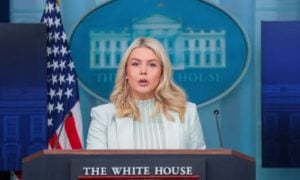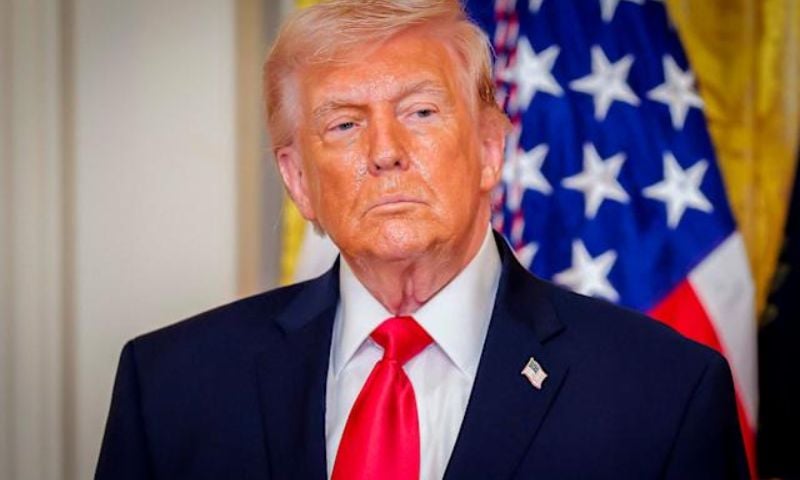



WASHINGTON: US President Donald Trump has said Washington is not prepared to strike a deal with Iran to end the ongoing conflict, indicating that the United States and its ally Israel will continue military operations until more favorable terms emerge.
In an interview with NBC News, Trump suggested that Tehran appeared eager to negotiate but insisted the current conditions were not acceptable to Washington, according to AFP.
He added that US forces could even consider further strikes on Iran’s strategic oil facilities, including Kharg Island, which serves as the country’s primary oil export hub.
The conflict, now more than two weeks old, has seen sustained military action from both sides since US and Israeli forces launched attacks on Iran on February 28.
Despite rising casualties and global economic concerns driven by surging oil prices, neither side has softened its stance.
Trump warned that US forces might intensify operations along Iran’s southern coastline near the Strait of Hormuz, aiming to restore the flow of oil shipments through the critical maritime corridor.
The strait, which normally handles around 20 percent of global oil supplies, has effectively been shut down amid escalating hostilities.
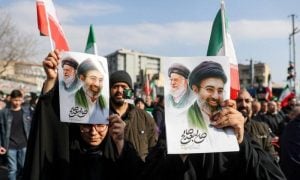
Meanwhile, Iran’s newly appointed supreme leader, Ayatollah Mojtaba Khamenei, has vowed to keep the Strait of Hormuz closed.
Trump cast doubt on his authority and even questioned whether the Iranian leader was alive, stating that there had been no public confirmation of his status.
Iranian officials, however, insisted on Saturday that there were no issues regarding the new leadership despite Khamenei’s absence from public appearances.
The Israeli military announced fresh strikes targeting positions in western Iran on Sunday. The escalation followed threats from Iran’s Revolutionary Guards, who labeled Israeli Prime Minister Benjamin Netanyahu a criminal and vowed to pursue and kill him.
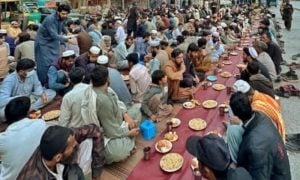
Despite the heightened rhetoric and ongoing attacks, daily life in parts of Tehran has begun to show signs of normalization.
Traffic in the capital appeared heavier compared with previous days, and several cafés and restaurants reopened as residents resumed routine activities.
In the Tajrish bazaar, a prominent market in northern Tehran, more than a third of the stalls had reopened as the country prepares for Nowruz, the Persian New Year.
Some residents were seen lining up at ATMs to withdraw cash after disruptions affected online services at Bank Melli, one of Iran’s largest banks.
Public transportation also appeared busier, with passengers waiting at bus stops that had remained largely deserted earlier in the conflict. Elsewhere in the region, tensions remain high.
The United States has advised its citizens to leave Iraq after pro-Iranian groups launched attacks targeting the US embassy and military bases hosting Western forces.
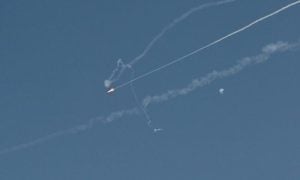
Several Gulf states reported intercepting projectiles over the weekend.
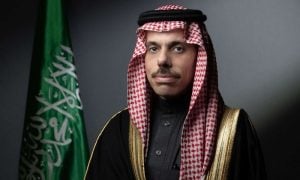
Authorities in Bahrain and Saudi Arabia said their air defenses had successfully intercepted incoming missiles, while air defense systems in Dubai also engaged targets after Iran warned civilians in the United Arab Emirates to avoid port areas.
The US military confirmed that recent strikes on Kharg Island targeted defensive infrastructure rather than the oil export terminals themselves, leaving the facility largely intact. However, the broader conflict has already inflicted significant damage.
Iran’s health ministry reported that more than 1,200 people have been killed in US and Israeli strikes, although these figures could not be independently verified.
The United Nations refugee agency estimates that up to 3.2 million people have been displaced within Iran, with many fleeing major cities including the capital.
According to the Pentagon, US and Israeli forces have struck more than 15,000 targets across Iran since the conflict began.
Reports in US media also indicate that the Pentagon has deployed the amphibious assault ship USS Tripoli along with approximately 2,500 Marines to the region to reinforce military operations.
Trump has also proposed the formation of an international naval coalition to escort oil tankers through the Strait of Hormuz in an effort to stabilize global energy markets.
He suggested that countries such as China, France, Japan, South Korea and the United Kingdom could contribute naval vessels to secure shipping lanes. Several governments have responded cautiously.
The United Kingdom said it was discussing possible measures with allies, while South Korea indicated it was closely monitoring Trump’s remarks.
Japanese officials also signaled that legal restrictions make deploying naval ships to the region difficult under current circumstances.
As diplomatic prospects remain uncertain and military activity intensifies, the conflict continues to raise concerns about regional stability, global energy supplies and the potential for a broader international confrontation.