


Key points
- Critics warn rollback will worsen climate change
- New rule targets 34.5 MPG by 2031
- Environmentalists say rollback undermines climate progress
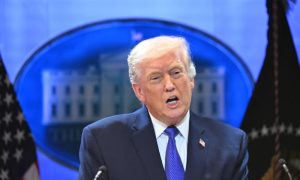
WASHINGTON, United States: President Donald Trump announced a reset of Joe Biden’s fuel-economy standards, arguing it will lower US car prices – but critics warned it would worsen climate change and leave drivers paying more at the pump.
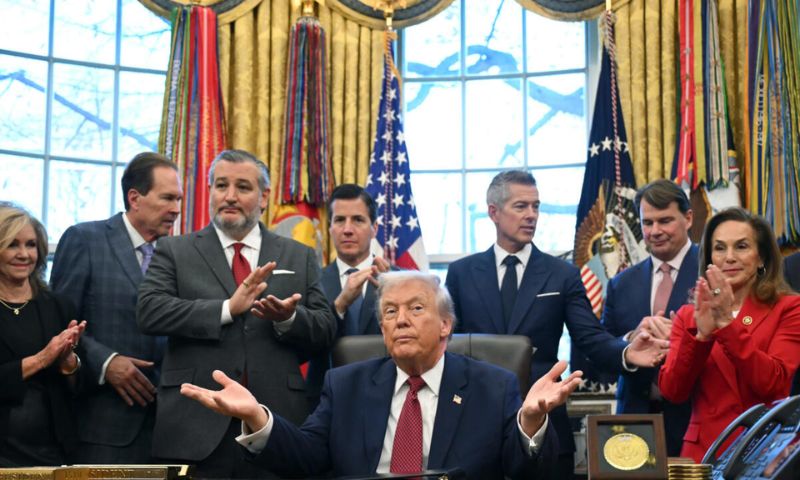
Trump was flanked in the Oval Office by the CEOs of Ford and Stellantis and a senior General Motors official, a show of buy-in from Detroit’s “Big Three,” reports AFP.
“My administration is taking historic action to lower costs for American consumers, protect American auto jobs and make buying a car much more affordable,” the US president said.
“Today is a victory (for) common sense and affordability,” Ford CEO Jim Farley chipped in.
“Trump is taking a wrecking ball to the biggest single step any nation has ever taken to combat oil use, global warming pollution, and helping save consumers money at the gas pump,” Dan Becker, an activist with the Center for Biological Diversity, told the media.
Under the proposed rule, the administration would roll back past and planned efficiency increases, targeting a fleetwide average of 34.5 miles per gallon by model year 2031 – “no better than what American cars are getting today,” said Becker, noting CAFE figures overstate real-world mileage by roughly 25 percent.
Hybrid vehicles
Trump’s Department of Transport argues that Biden officials improperly factored in electric and hybrid vehicles, saying the standards would be unattainable for gasoline-powered cars and would effectively force a shift in the market.
Gina McCarthy, a former senior official under Biden and Barack Obama, countered that the move would not only worsen climate change but harm the auto industry by slowing its shift to electric vehicles.
“The rest of the world will continue to innovate and create cleaner cars that people want to buy and drive, while we’re forced to sit in our clunkers, paying more for gas, and pumping out more tailpipe emissions.”
Trump has railed against what he calls an EV “mandate” – a stance that puts him at odds with his on-again, off-again billionaire ally Elon Musk, the Tesla CEO whose company still dominates the US EV market.
Republicans in Congress have repealed clean-energy tax credits in a major tax and spending bill and targeted California’s ability to set its own vehicle-emission limits.
Throughout 2025, GM and other US automakers have curtailed or pushed back new EV plant capacity.
EV investment
But whether savings from reduced EV investment will filter through to consumers remains unclear.
While the shift away from EVs does allow automakers to delay or forego billions of dollars in new investments, some funds are being steered into new initiatives to add US carbuilding capacity in light of Trump’s tariffs.
“Meeting high fuel economy standards has been challenging for the auto industry and has added to vehicle cost,” Charlie Chesbrough, an analyst with Cox Automotive, told the media.
“However, consumers like fuel-efficient vehicles. This year, traditional hybrids are up double digits from last year while gas vehicles are basically flat,” he added.
“Since most consumers don’t have transportation alternatives available, people fear high gas prices. And good MPG is a way to mitigate that risk.”