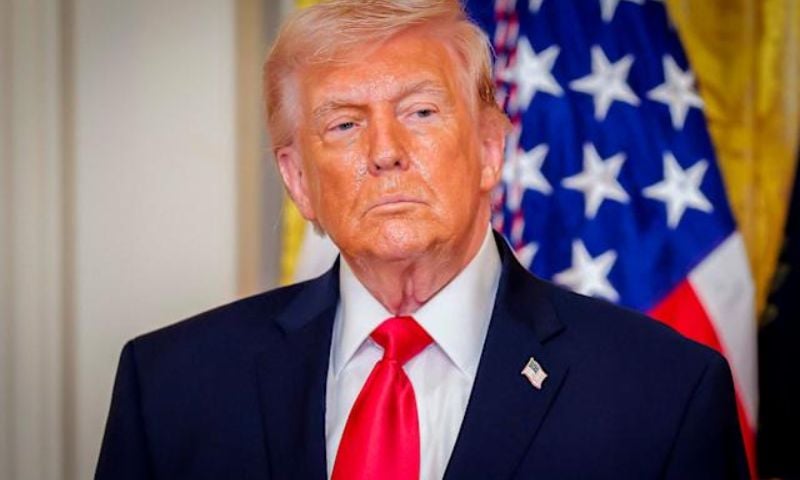



WASHINGTON: US President Donald Trump said Washington no longer “needs” assistance from allies in its military campaign against Iran, sharply criticising NATO members and partners for refusing to join operations in the Gulf.
In a post on Truth Social, Trump said allied countries had supported the objective of preventing Iran from acquiring nuclear weapons but had failed to participate in military action.
“I am not surprised by their action,” he said. “I always considered NATO… to be a one-way street — we will protect them, but they will do nothing for us, in particular, in a time of need.”
Trump added that the United States, which he described as “by far the most powerful country anywhere in the world”, no longer required support from the NATO alliance or partners including Japan, Australia and South Korea.
“Because of the fact that we have had such military success, we no longer ‘need’, or desire, the NATO countries’ assistance — we never did,” he said.
— Rapid Response 47 (@RapidResponse47) March 17, 2026
Trump claims military success
Trump said US forces had “decimated” Iran’s navy and air force and destroyed its air defence and radar systems.
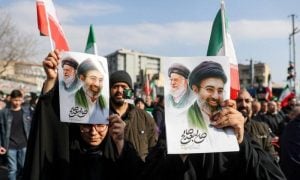
He also claimed that Iranian leadership structures had been severely weakened, saying leaders at “virtually every level” were no longer able to pose a threat.
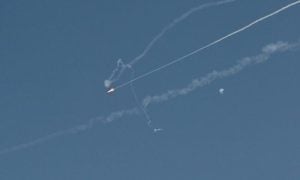
The remarks come as the United States continues military operations alongside Israel following strikes launched on February 28, which triggered a wider regional conflict.
US allies resist pressure
Trump’s comments follow repeated calls for allies to deploy naval forces to secure the Strait of Hormuz, a critical shipping route that carries around one-fifth of global oil supplies and has been effectively blocked by Iran.
In earlier remarks, Trump warned that failure to help reopen the waterway could be “very bad for the future of NATO”.
However, several allies have resisted or taken a cautious approach.
French President Emmanuel Macron said France would not take part in military operations to reopen the strait during active hostilities.
“We are not party to the conflict and therefore France will never take part in operations to open or liberate the Strait of Hormuz in the current context,” Macron said.
He added that France was working with partners on a future coalition to ensure freedom of navigation once the conflict subsides.
Germany has also ruled out military involvement.
Chancellor Friedrich Merz said there had been no joint European decision to intervene, while Defence Minister Boris Pistorius questioned the value of deploying limited European naval forces.
“This is not our war. We have not started it,” Pistorius said.
British Prime Minister Keir Starmer said London would not be “drawn into the wider war” but was working with partners on a “viable plan” to stabilise shipping.
Energy Secretary Ed Miliband said all options were being considered but stressed that ending the conflict remained the most effective way to reopen the waterway.
Asia and EU urge caution
China and US allies in Asia have also refrained from committing military support.
China called for an immediate halt to hostilities.
Chinese foreign ministry spokesperson Lin Jian said Beijing was in communication with relevant parties to de-escalate the situation and warned against further regional instability.
South Korea said it was closely monitoring developments.
Defence Minister Ahn Gyu-back told parliament that any decision to deploy a warship would require legislative approval.
Japan’s Prime Minister Sanae Takaichi said Tokyo had not received a formal request to send escort vessels and was reviewing possible measures within its legal framework.
Within Europe, the European Union has prioritised diplomacy. Foreign policy chief Kaja Kallas said there was no appetite to expand the bloc’s naval mission.
“Nobody is ready to put their people in harm’s way in the Strait of Hormuz,” she told Reuters, adding that diplomatic solutions were needed.
EU ministers have also declined to expand the mandate of the Red Sea naval mission, Operation Aspides.
Strait of Hormuz closure
The Strait of Hormuz has seen repeated attacks on commercial vessels during more than two weeks of fighting.
Several ships have been struck by “unknown projectiles”, with at least one fatality reported.
Iran has effectively restricted traffic through the passage, allowing only limited shipments, including oil exports to some countries.
Global oil prices have risen sharply, and some Asian countries have begun taking measures to conserve fuel.
Earlier, Trump said the US Navy could escort vessels through the strait, though no such operation has yet been confirmed.
Despite US pressure, divisions among allies highlight growing uncertainty over the scope and objectives of the conflict.
European leaders have called for greater clarity on Washington’s long-term strategy.