


KEY POINTS
- Trump urges Iran to make a “meaningful” nuclear deal, warning that “bad things happen”.
- He said the US may “take it a step further” and indicated developments could come within 10 days.
- US and Iran recently held second round of Oman-mediated talks in Geneva.
- US media reported Washington is prepared for possible strikes, with additional naval forces deployed in the region.
- Iran insists talks focus only on its nuclear programme and defends its right to uranium enrichment.
- Tehran issued a rocket launch notice and conducted military drills in the Strait of Hormuz and with Russia.
WASHINGTON: US President Donald Trump on Thursday urged Iran to strike a “meaningful” deal as a huge American military build-up takes shape in the Middle East amid US threats of action against Tehran.
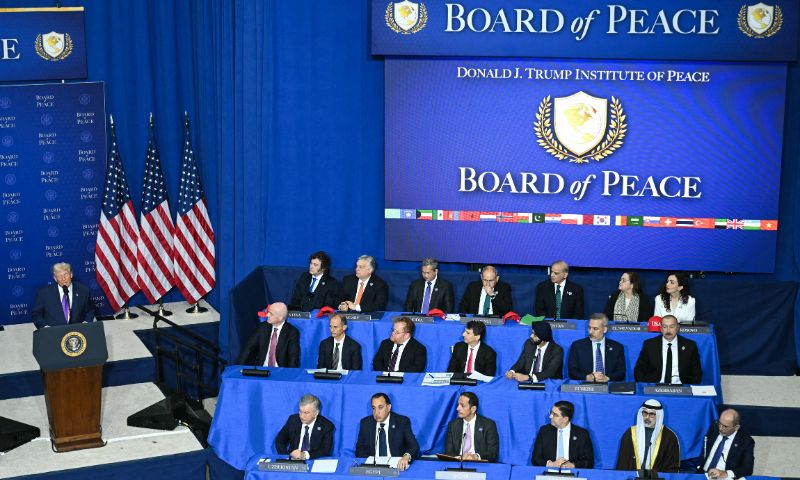
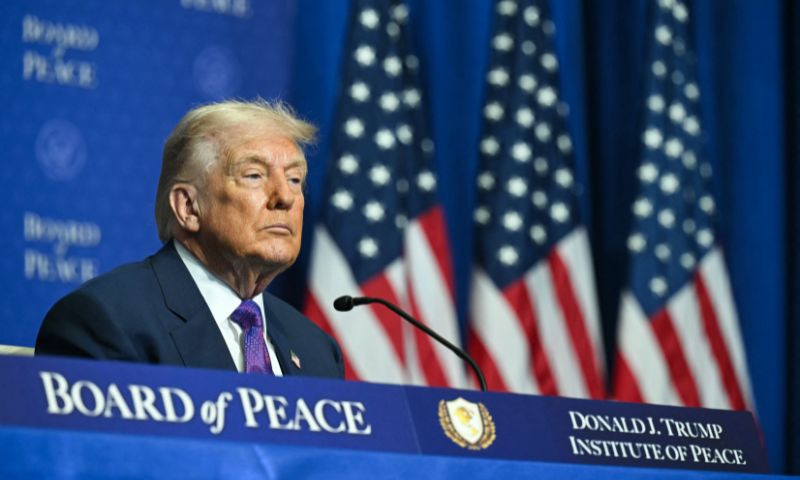
“It’s proven to be over the years not easy to make a meaningful deal with Iran. We have to make a meaningful deal otherwise bad things happen,” Trump told the inaugural meeting of the “Board of Peace,” his initiative to secure stability in Gaza.
He warned that Washington “may have to take it a step further” without any agreement, adding: “You’re going to be finding out over the next probably 10 days.”
Trump’s comments came shortly after Israeli Prime Minister Benjamin Netanyahu issued his own warning to Iran saying, “If they make a mistake and attack us, they will receive a response they cannot even imagine”.
The warnings were issued days after the US and Iran held a second round of Omani-mediated talks, this time in Geneva, with the US seeking to prevent Iran from getting a nuclear bomb, something it says it is not pursuing, and Iran seeking relief from US sanctions.
White House Press Secretary Karoline Leavitt warned on Wednesday there were “many reasons and arguments that one could make for a strike against Iran”.
“Iran would be very wise to make a deal with President Trump.”
Trump has repeatedly threatened military action against Iran over its nuclear programme.
Iran’s atomic energy chief on Thursday said “no country can deprive Iran of the right” to nuclear enrichment, following fresh US warnings that there were “many reasons” to strike the Islamic republic.
A previous attempt at negotiations collapsed when Israel launched surprise strikes on Iran last June, beginning a 12-day war that Washington briefly joined to bomb Iranian nuclear sites.
‘Do not want war’
CNN and CBS reported on Wednesday that the US military would be ready to launch strikes against Iran as early as this weekend, though Trump has reportedly not made a final decision yet.
The Wall Street Journal meanwhile reported that Trump had been briefed on his military options with “all of them designed to maximise damage”, including a campaign to “kill scores of Iranian political and military leaders, with the goal of overthrowing the government”, unnamed US officials told the newspaper.
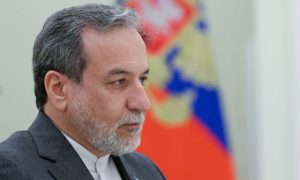
Iran’s Foreign Minister Abbas Araghchi said after the latest talks that Tehran had agreed with Washington on “guiding principles”, but US Vice President JD Vance said Iran had not yet acknowledged all of Washington’s red lines.
Speaking on Wednesday, Iranian President Masoud Pezeshkian insisted “We do not want war” but suggested Tehran could not give in to US demands.
Amid the escalating warnings, Poland on Thursday ordered all its citizens in Iran to “leave immediately”.
Germany meanwhile moved troops out of northern Iraq, reducing its footprint to the minimum necessary to keep its base there functional, citing regional tensions.
Russia called for restraint, with a Kremlin spokesperson saying, “We are currently witnessing an unprecedented escalation of tension in the region, but we still hope that political and diplomatic means and negotiations will continue to prevail in the search for a settlement”.
Displays of military might
Iran has insisted that the talks with the US be limited to the nuclear issue, though Washington has previously pushed for Tehran’s ballistic missiles programme to be on the table.
The US has meanwhile been building up its military forces near Iran, including warships, fighter jets, and refuelling aircraft, laying the foundation for a potentially sustained campaign against Iran — should Trump give the order, AFP reported.
Washington has ordered a second aircraft carrier to the region, with the first, the USS Abraham Lincoln and its nearly 80 aircraft, positioned about 700 kilometres (435 miles) from the Iranian coast as of Sunday, satellite images showed.
Iran has sought to display its own military might, with its Islamic Revolutionary Guard Corps holding war games earlier this week in the Strait of Hormuz.
Iranian politicians have repeatedly threatened to block the strait, a major global conduit for oil and gas.
Iran Issues Rocket Launch Notice
Iran on Thursday issued a Notice to Airmen (NOTAM) announcing planned rocket launches in its southern regions.
The NOTAM, circulated through international aviation channels including the US Federal Aviation Administration system, advises pilots and flight crews to exercise caution in designated airspace.
Earlier this week, Iran’s Islamic Revolutionary Guard Corps conducted drills in the Strait of Hormuz, a key global oil transit chokepoint.
Iranian state television reported that parts of the waterway would be closed temporarily for safety during the exercises.
ALSO READ: Iran Issues Rocket Launch Notice as US Signals Readiness for Possible Strikes
Tehran has also begun joint naval drills with Russia in the Sea of Oman and the northern Indian Ocean.
Iranian officials said the exercises are aimed at enhancing coordination to counter threats to maritime security and combat maritime terrorism.
Reuters reported that senior US national security officials met in the White House Situation Room to review military options.
Diplomatic efforts continue
Alongside military preparations, indirect diplomatic talks have resumed. Negotiations mediated by Oman were held in Geneva on Tuesday.
US envoys Steve Witkoff and Jared Kushner met indirectly with Iranian Foreign Minister Abbas Araqchi.
The talks aim to avert direct conflict and address tensions over Iran’s nuclear programme.
The White House acknowledged “a little bit of progress” but said significant gaps remain.
Araqchi said Tehran and Washington had agreed on “guiding principles”.
However, US Vice President JD Vance said Iran had not yet acknowledged all of Washington’s red lines.
Tehran is expected to submit a written proposal outlining steps to resolve the standoff.
Iran insists the discussions remain limited to nuclear issues.
Washington has previously sought to include Iran’s ballistic missile programme.
Earlier on Wednesday, Araqchi held a telephone call with Rafael Grossi, head of the International Atomic Energy Agency (IAEA).
According to Iran’s foreign ministry, Araqchi stressed Tehran’s focus on drafting an “initial and coherent framework” to advance future talks.
Iran has suspended some cooperation with the IAEA and restricted access to sites bombed during last year’s conflict with Israel and the United States, accusing the watchdog of bias.